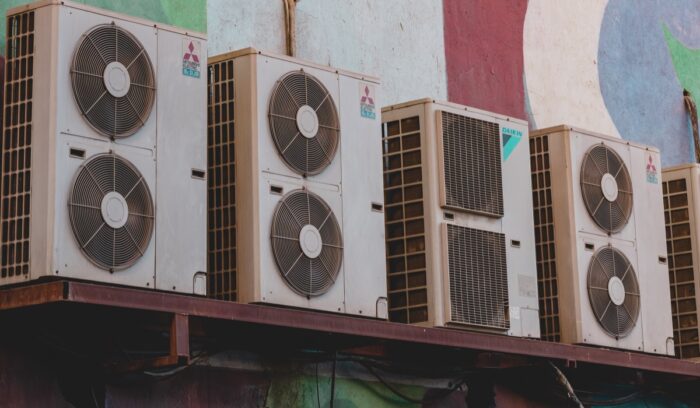
For the first time in American history, heat pumps outsold gas furnaces in 2023 C.E. — and the trend held into 2024 C.E., signaling a quiet but historic turning point in how the U.S. heats its homes. Heat pump sales have now exceeded gas furnace sales for two consecutive years, a shift that analysts and clean energy advocates have been watching for decades.
At a glance
- Heat pump sales: More than 4 million heat pumps were sold in the U.S. in 2023 C.E., outpacing gas furnace sales for the first time on record, according to data from the Air-Conditioning, Heating and Refrigeration Institute (AHRI).
- Gas furnace decline: Gas furnace shipments dropped to roughly 3.7 million units in the same period, continuing a multi-year downward trend as electrification incentives gained traction.
- Federal incentives: The Inflation Reduction Act of 2022 C.E. made heat pumps eligible for tax credits of up to $2,000 per household, dramatically lowering the upfront cost barrier that had slowed adoption for years.
Why this moment matters
Home heating accounts for roughly 10% of U.S. greenhouse gas emissions. Gas furnaces burn natural gas directly, releasing carbon dioxide and, in leaky systems, methane — a greenhouse gas many times more potent than CO₂ over a short time horizon.
Heat pumps work differently. Rather than burning fuel, they move heat — from the outside air, ground, or water — into the home. In a mild climate, a heat pump can deliver three to four units of warmth for every unit of electricity it consumes. Even in colder regions, modern cold-climate heat pumps perform well below freezing.
That efficiency gap matters enormously. As the U.S. electrical grid adds more renewable generation, each heat pump installed becomes cleaner over time — automatically, without the homeowner doing a thing. A gas furnace, by contrast, will burn gas for its entire 20-year lifespan.
The policy engine behind the shift
The milestone didn’t happen by accident. The International Energy Agency had long identified heat pumps as one of the highest-impact technologies for cutting building emissions. U.S. policymakers took note.
The Inflation Reduction Act, signed in August 2022 C.E., created a $2,000 annual tax credit for heat pump installations and additional rebates under the High-Efficiency Electric Home Rebate Act (HEEHRA) program. Several states layered on their own incentives. Massachusetts, New York, Colorado, and California all launched rebate programs that brought heat pump costs into closer competition with gas alternatives.
Manufacturers responded. Daikin, Carrier, Lennox, and Bosch all expanded their U.S. heat pump lineups. Some companies announced domestic manufacturing investments — part of a broader industrial bet that electric heating is where the market is headed.
The story echoes broader clean energy momentum. Just as breakthroughs in medicine often follow decades of steady research, the heat pump surge is the visible result of years of standards development, efficiency improvements, and policy groundwork largely invisible to the public.
Who’s benefiting — and who still faces barriers
The shift is real, but it isn’t reaching everyone equally. Heat pump adoption has been strongest in the Sun Belt — particularly the Southeast, where mild winters made the technology an easy sell long before the current surge. Colder northern states are catching up, but more slowly.
Low-income households face the steepest obstacles. Upfront installation costs can still run $5,000 to $15,000 depending on the home, the existing ductwork, and the region. While the HEEHRA rebate program was designed specifically to help lower-income families — offering up to $8,000 for a heat pump — many states have been slow to stand up the program, meaning the rebates aren’t yet reaching the people who need them most.
Renters face a separate problem: landlords control heating systems, and few have strong incentives to upgrade when tenants pay the utility bills. Energy efficiency advocates argue that closing this “split incentive” gap will require dedicated renter-protection policies beyond what current federal law provides.
Environmental justice researchers have also noted that communities near gas infrastructure — often lower-income communities of color — have disproportionately borne the health costs of fossil fuel combustion. The transition to heat pumps represents a potential health benefit for these communities, but only if the rollout reaches them.
What comes next
The heat pump sales milestone is a signal, not a finish line. Natural gas still heats roughly half of all U.S. homes. The installed base of gas furnaces numbers in the tens of millions, and most will remain in service for years or decades. The transition to a predominantly electric heating system — if it happens — will take generations, not years.
The pace of change also depends on policy stability. Some of the incentive programs driving adoption face political uncertainty, and the build-out of the electrical grid needed to support mass electrification is itself a multi-decade project.
Still, the direction is clear. Heat pump technology has crossed a commercial threshold in the U.S. that few predicted this soon. The economics are working. The policy architecture is in place, however imperfectly. And for a growing number of Americans — from Georgia to Minnesota — the question is no longer whether to go electric, but when. Momentum like this, once it builds, tends to compound. Much like the steady expansion of protected spaces around the world, small gains accumulate into lasting change.
Read more
For more on this story, see: CleanTechnica
For more from Good News for Humankind, see:
- Ghana creates a major new marine protected area at Cape Three Points
- Alzheimer’s risk cut in half by drug in landmark prevention trial
- The Good News for Humankind archive on climate
About this article
- 🤖 This article is AI-generated, based on a framework created by Peter Schulte.
- 🌍 It aims to be inspirational but clear-eyed, accurate, and evidence-based, and grounded in care for the Earth, peace and belonging for all, and human evolution.
- 💬 Leave your notes and suggestions in the comments below — I will do my best to review and implement where appropriate.
- ✉️ One verified piece of good news, one insight from Antihero Project, every weekday morning. Subscribe free.
More Good News
-

COP30 pledges recognition of 160 million hectares of Indigenous land rights
At the COP30 World Leaders Summit in Belém, Brazil in November 2025, 15 governments pledged to formally recognize Indigenous land rights over 160 million hectares by 2030 — an area the size of Iran — through the Intergovernmental Land Tenure Commitment. Brazil committed at least 59 million hectares. More than 35 donors renewed a $1.8 billion Forest and Land Tenure Pledge. The Tropical Forest Forever Facility secured nearly $7 billion, with 20% directed to Indigenous peoples. It was the largest Indigenous participation in COP history.
-

Ghana creates its first marine protected area to rescue depleted fish stocks
Ghana has declared its first marine protected area near Cape Three Points on the Gulf of Guinea, marking a historic step to reverse decades of overfishing. The protected zone aims to restore fish populations that have collapsed under pressure from industrial trawling and illegal fishing. The decision supports 2.7 million Ghanaians whose livelihoods depend on healthy coastal fisheries and aligns Ghana with the global goal of protecting 30 percent of the world’s oceans by 2030.
-

U.S. researchers cut Alzheimer’s risk by half in first-ever prevention trial
For the first time, researchers have evidence that removing amyloid plaques from the brain before symptoms appear can cut Alzheimer’s risk by roughly half. A clinical trial published in The Lancet Neurology, led by Washington University School of Medicine in St. Louis, found that long-term treatment with the antibody drug gantenerumab significantly delayed dementia onset in people with a rare genetic form of the disease. The findings provide the clearest signal yet that intervening years before symptoms emerge can change the course of Alzheimer’s disease.