

Hawaii has made history by becoming the first U.S. state to require visitors to pay a dedicated fee for climate adaptation and environmental protection. Governor Josh Green signed Senate Bill 1396 into law in May 2025 C.E., establishing a Hawaii climate resilience fee that will direct revenue from tourism directly toward protecting the natural ecosystems that draw tens of millions of visitors each year.
At a glance
- Hawaii climate resilience fee: Visitors to Hawaii will pay a fee — estimated at around $25 per trip — that goes into a dedicated fund for climate adaptation, coral reef restoration, and natural infrastructure protection.
- Tourism revenue: Hawaii welcomes roughly 10 million visitors annually, meaning the fee could generate hundreds of millions of dollars per year for conservation and resilience projects.
- First in the U.S.: No other U.S. state has tied a direct visitor fee to climate resilience funding, making Hawaii a national model for sustainable tourism finance.
Why Hawaii needed a new approach
Hawaii’s environment has been absorbing the costs of mass tourism for decades. Coral reefs bleached by warming ocean temperatures. Coastal trails eroded by foot traffic. Freshwater systems strained by visitor demand on top of a resident population already facing housing and infrastructure pressure.
At the same time, the state has faced growing climate threats — rising seas, intensifying hurricanes, and the kind of catastrophic wildfire that destroyed Lahaina on Maui in August 2023 C.E., killing at least 100 people and displacing thousands. The connection between a warming climate and the vulnerability of island ecosystems is not abstract in Hawaii. It is visible and urgent.
The fee acknowledges a simple principle: if visitors benefit from Hawaii’s natural beauty, they should help pay to protect it.
How the money will work
Revenue from the fee will flow into a dedicated climate resilience fund, separate from general state revenue. Eligible uses include coral reef restoration, coastal protection, watershed management, and adaptation infrastructure for communities facing sea-level rise.
Supporters of the bill, including environmental groups and some tourism industry leaders, argue this model is more sustainable than relying on state general funds or federal grants — both of which are uncertain and often insufficient. By tying the revenue source directly to the volume of visitors, the fund grows when tourism is strong and focuses resources where the pressure is greatest.
Hawaii’s approach echoes strategies used in Bhutan, the Galápagos Islands, and Iceland, where visitor fees fund conservation and limit environmental degradation. But in the U.S. context, it is genuinely new territory.
Native Hawaiian voices and the limits of a fee
The bill’s passage was welcomed by many conservation advocates, and some Native Hawaiian organizations have long called for stronger protections for wahi pana — sacred and culturally significant landscapes — that are among the most visited and most vulnerable places in the archipelago. Several Native Hawaiian voices pushed for the legislation to ensure that fee revenue reaches community-led stewardship efforts, not just state agency programs.
Whether the fund’s governance will meaningfully include Indigenous-led priorities remains an open and important question. Much will depend on how the implementing rules are written and who sits on the boards overseeing distribution.
The fee alone will not reverse the damage already done to Hawaii’s reefs or its coastlines. Global emissions reductions remain the only long-term solution to ocean warming and sea-level rise. And critics note that charging visitors without simultaneously managing visitor volume may simply generate revenue without reducing ecological pressure. These are real tensions the state will need to navigate as the program takes shape.
A signal to the rest of the world
What makes Hawaii’s move significant beyond its borders is the signal it sends. Tourism is one of the world’s largest industries, generating roughly $9.9 trillion in economic activity globally in 2023 C.E. according to the World Travel and Tourism Council. Yet the environmental costs of that industry — reef destruction, carbon emissions from flights, water consumption, coastal erosion — are largely externalized onto local ecosystems and communities.
Hawaii’s climate resilience fee is a step toward making those costs visible in the price of a visit. It will not solve the climate crisis. But it creates a direct, recurring, and scalable funding stream for adaptation at a moment when marine and coastal ecosystems worldwide are under severe pressure.
Other island states and coastal destinations are watching. If the fund proves effective and transparent, it could become a template for sustainable tourism finance far beyond the Pacific.
And for a state that has spent generations welcoming the world, this is also a statement about what it means to be a good host — not just offering beauty, but taking responsibility for its future.
Globally, progress on building historic firsts in policy and leadership has often started at the local and regional level, where the consequences are most immediate and the will to act most concrete.
Read more
For more on this story, see: USA Today
For more from Good News for Humankind, see:
- Ghana protects a stretch of Atlantic coastline as a marine reserve
- Marie-Louise Eta makes history as first female head coach in men’s top-flight European football
- The Good News for Humankind archive on climate
About this article
- 🤖 This article is AI-generated, based on a framework created by Peter Schulte.
- 🌍 It aims to be inspirational but clear-eyed, accurate, and evidence-based, and grounded in care for the Earth, peace and belonging for all, and human evolution.
- 💬 Leave your notes and suggestions in the comments below — I will do my best to review and implement where appropriate.
- ✉️ One verified piece of good news, one insight from Antihero Project, every weekday morning. Subscribe free.
More Good News
-
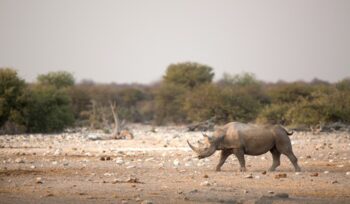
Rhinos return to Uganda’s wild after 43 years in landmark conservation milestone
For the first time in 43 years, wild rhinos are roaming Uganda again. After poaching wiped out the population in the early 1980s, conservation authorities have successfully reintroduced rhinos into Kidepo Valley National Park — the result of decades of breeding, community engagement, and anti-poaching work. The milestone is one of Africa’s most significant wildlife recovery achievements in recent memory and offers a model for rewilding efforts across the continent.
-

UK cancer death rates fall to lowest level ever recorded in historic milestone
Cancer death rates in the United Kingdom have fallen to their lowest level ever recorded, Cancer Research UK announced in March 2026. Decades of investment in screening programs, early detection, and new treatments are behind the milestone. Despite the progress, researchers warn that geographic and socioeconomic inequalities in cancer outcomes remain significant, and that sustained funding and equitable access to care will be essential to drive further gains.
-

California condors nest on Yurok land in Pacific Northwest for first time in over a century
California condors are nesting in the Pacific Northwest for the first time in more than a century, confirmed on Yurok Tribe territory in Northern California. The Yurok, who regard condors as sacred relatives, launched their restoration program in 2003 and released the first birds in 2022. The nesting confirmation marks a milestone for both species recovery and Indigenous-led conservation, showing that when Native peoples lead ecological restoration on their own lands, the results can be extraordinary.
