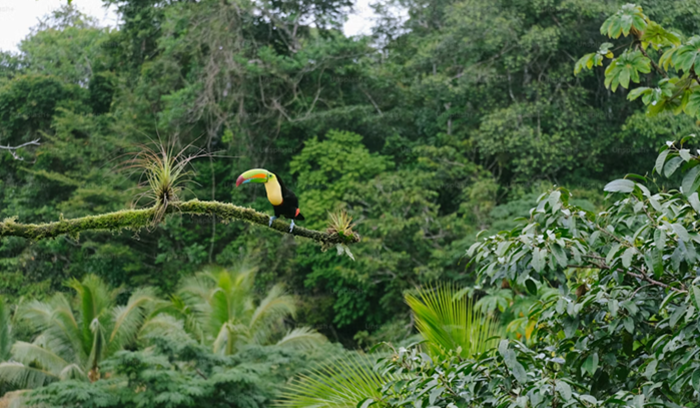
Ghana’s parliament has voted to repeal a law that opened the country’s protected forest reserves to surface mining — a decision celebrated by environmental advocates, Indigenous forest communities, and scientists who had warned the policy was accelerating deforestation in one of West Africa’s most biodiverse regions.
At a glance
- Ghana forest reserves: Ghana holds roughly 1.6 million hectares of gazetted forest reserves, home to hundreds of plant and animal species found nowhere else on Earth, including threatened primates and migratory birds.
- Mining repeal vote: Parliament voted to reverse the amendment to the Minerals and Mining Act that had allowed surface mining — commonly called galamsey — to operate legally inside protected forest zones, removing a legal shield that had accelerated habitat loss.
- Community impact: Forest-edge farming communities, many of them from Indigenous and rural groups disproportionately exposed to mining pollution, stood to gain the most from the repeal, as illegal and legal mining alike had contaminated local water sources and degraded farmland.
Why the original law was so damaging
The amendment that parliament has now repealed was widely criticized from the moment it passed. It created a legal pathway for surface mining inside forest reserves — areas that had been protected under Ghanaian law for decades specifically because of their ecological and hydrological value.
Forest reserves in Ghana do far more than shelter wildlife. They anchor watersheds that supply drinking water and irrigation to millions of people. They store significant quantities of carbon. And they sustain the livelihoods of farming communities who depend on intact forest systems for rainfall patterns, soil health, and clean rivers.
When the law opened those reserves to mining, the consequences were rapid. Global Forest Watch data showed accelerating tree cover loss in reserve areas where mining activity expanded. Waterways ran orange with sediment and chemicals. Communities near mining operations reported contaminated wells and declining crop yields.
A vote with deep roots
The repeal did not happen in a vacuum. It followed years of sustained pressure from Ghanaian civil society organizations, environmental lawyers, traditional rulers, and scientists who documented the damage and pushed back through public campaigns, court challenges, and legislative advocacy.
The International Union for Conservation of Nature has long flagged Ghana’s forests as globally significant, with the high-forest zone in the south representing one of the last large intact sections of the Upper Guinean Forest — a biodiversity hotspot shared across several West African nations.
Traditional authorities in forest regions, whose communities have stewarded these landscapes for generations, were among the most vocal opponents of mining in reserves. Their opposition carried moral and political weight that formal advocacy alone could not always achieve.
What the repeal means in practice
By removing the legislative cover for surface mining in protected areas, parliament has restored the full legal status of Ghana’s forest reserve protections. Enforcement agencies now have clearer authority to act against mining operations inside reserve boundaries — a tool they lacked when the law effectively legitimized certain activities.
The Food and Agriculture Organization has identified Ghana as a country with strong technical capacity for forest governance when political will aligns with legal frameworks. This repeal represents exactly that alignment.
The decision also sends a signal regionally. Several West African nations face similar tensions between mineral extraction revenues and forest protection obligations. A high-profile legislative reversal in Ghana — one of the region’s more institutionally stable democracies — may encourage parallel reform efforts elsewhere.
The work still ahead
The repeal is a legal victory, but it does not automatically reverse the physical damage already done to reserves where mining activity took place under the previous law. Illegal mining — galamsey — remains a serious and persistent problem across Ghana, and repealing a law is easier than enforcing the boundaries it protects. Restoration of degraded forest areas will require sustained investment, community partnerships, and monitoring capacity that Ghana’s forestry institutions are still building.
WWF’s West Africa programme and local partners have emphasized that legal reform must be paired with on-the-ground restoration and genuine benefit-sharing with the communities most affected by both mining damage and conservation restrictions.
Still, what parliament did represents the kind of course correction that environmental advocates rarely get to celebrate: a government acknowledging that a law caused harm and acting to undo it.
Read more
For more on this story, see: Ghana repeals legislation that opened forest reserves to mining
For more from Good News for Humankind, see:
- Ghana creates a new marine protected area at Cape Three Points
- Alzheimer’s risk cut in half by drug in landmark prevention trial
- The Good News for Humankind archive on Ghana
About this article
- 🤖 This article is AI-generated, based on a framework created by Peter Schulte.
- 🌍 It aims to be inspirational but clear-eyed, accurate, and evidence-based, and grounded in care for the Earth, peace and belonging for all, and human evolution.
- 💬 Leave your notes and suggestions in the comments below — I will do my best to review and implement where appropriate.
- ✉️ One verified piece of good news, one insight from Antihero Project, every weekday morning. Subscribe free.
More Good News
-
Doctors hail first breakthrough in asthma and COPD treatment in 50 years
Benralizumab, a single injection given during an asthma or COPD attack, cut treatment failures fourfold over 90 days compared to the steroid pills doctors have relied on since the 1970s. In a trial of 158 patients arriving at UK emergency departments, the shot eased coughing, wheezing, and breathlessness more effectively than steroids — and could eventually be given at home or in a GP’s office. Because it targets the specific inflammation behind roughly half of asthma attacks, it could spare millions of people from the diabetes and bone-loss risks that come with repeated steroid use. After a 50-year wait for…
-

Mexico launches universal healthcare for all 133 million citizens
Mexico universal healthcare is now officially a reality, with the country launching a system designed to cover all 133 million citizens through the restructured IMSS-Bienestar network. Before this reform, an estimated 50 million Mexicans had no formal health insurance, with rural and Indigenous communities bearing the heaviest burden of untreated illness and medical debt. The new system severs the long-standing tie between employment and healthcare access, providing free consultations, medicines, and hospital services regardless of income. If implemented effectively, Mexico’s move could serve as a powerful model for other middle-income nations still navigating fragmented, inequitable health systems.
-
Ghana declares its first marine protected area to rescue depleted fish stocks
Ghana’s marine protected area — the country’s first ever — marks a historic turning point for a nation gripped by a quiet fisheries crisis. Established near Cape Three Points in the Western Region, the protected zone restricts or bans fishing activity to allow severely depleted fish populations to recover. Ghana’s coastal stocks have fallen by an estimated 80 percent from historic levels, threatening food security and the livelihoods of millions of small-scale fishers. The declaration also carries regional significance, potentially inspiring neighboring Gulf of Guinea nations to establish coordinated protections of their own.