

A chain of 18 windswept islands sitting roughly halfway between Norway and Iceland formally entered the Kingdom of Norway in 1035 C.E. — the culmination of centuries of seafaring, settlement, and cultural mixing that few historical narratives fully capture. The story of how the Faroe Islands became part of the Norse world is not simply a Viking tale. It is a story about Irish monks, mixed-heritage pioneers, and a remote Atlantic archipelago that people had been finding, losing, and rediscovering for generations.
What the evidence shows
- Faroe Islands Norway: The Faroe Islands formally joined the Kingdom of Norway in 1035 C.E., according to historical records — though Norse settlers had been present since at least the 9th century C.E.
- Pre-Viking settlement: Scientific analysis of burnt barley grains and sheep DNA in lake-bed sediments suggests humans were present on the islands as early as 500 C.E., centuries before the Norse arrived — likely from Ireland or Britain.
- Norse-Gaelic settlers: The first named Norse settler, Grímr Kamban, bore a Gaelic surname, and Faroese vocabulary contains words derived from Middle Irish — evidence of deep cultural exchange between Norse and Celtic peoples from the earliest period of settlement.
Before the Vikings arrived
The standard version of Faroese history begins with Viking settlers in the 9th century C.E. The fuller picture starts much earlier.
Researchers have found deposits of burnt, domesticated barley and peat ash on the islands dating to between the mid-4th and mid-6th centuries C.E., with a second phase extending to the late 8th century. Sheep DNA in lake-bed sediments has been dated to around 500 C.E. Neither barley nor sheep arrived on their own — humans brought them. The Irish monk Dicuil, writing around 825 C.E., recorded accounts of islands in the northern ocean where Irish hermits had lived for nearly a hundred years before Norse seafarers drove them out.
These monks — known as the Papar — left a quieter mark on the landscape than the Vikings who followed. Wooden devotional crosses found at Toftanes on Eysturoy appear to have been modeled on Irish or Scottish exemplars. The curvilinear stone enclosures around early ecclesiastical sites echo the circular enclosures of early Christian sites in Ireland. Genetic research has found that many Norse settler women in the Faroe Islands had Celtic ancestry — suggesting that whoever came first, the Irish and Celtic presence did not simply disappear.
A Norse-Gaelic world
The first named settler of the Faroe Islands, according to the Færeyinga saga, was Grímr Kamban. His first name is Norse. His surname, Kamban, is of Gaelic origin. He may have been a Norse-Gael — part of a mixed cultural community that had developed across the British Isles where Norse and Irish populations had intermarried for generations.
The linguistic fingerprints of this blending survive in Faroese to this day. Words for buttermilk, animal tail, head, hand, bull, and mountain pasture all derive from Middle Irish. Place names tell a similar story: “Vestmanna-havn” — Irishmen’s harbour — preserves the memory of the “westmen,” the Irish and Scottish settlers who were there before or alongside the Norse.
A runestone found at Sandavágur on Vágoy Island records a Norwegian settler calling himself an “eastman” — a term that only makes sense as a counterpart to “westman.” The islands were already a crossroads.
Integration into the Kingdom of Norway
By the late 9th and early 10th centuries C.E., the Faroe Islands had a functioning Norse society, governed by a local assembly called the løgting — one of the oldest parliaments in the world, still in operation today. The islands were converted to Christianity around 1000 C.E., as part of the broader Christianization of the Norse world under King Óláfr Tryggvason.
Formal incorporation into the Kingdom of Norway followed in 1035 C.E. This was less a conquest than a consolidation — the Norse had been the dominant cultural and political force in the islands for over a century. What changed was the official recognition of the islands as part of the Norwegian realm, with the administrative and legal structures that brought.
Norwegian rule continued until 1380 C.E., when the Faroe Islands passed into the dual Denmark–Norway kingdom under King Olaf II of Denmark. They would remain under Danish administration — with a brief British occupation during World War II — until 1948 C.E., when the Home Rule Act granted the islands extensive self-governance within the Danish Realm. Today, the Faroe Islands hold a unique status — self-governing but not fully independent, part of the Danish Realm but outside the European Union.
Lasting impact
The formal union of the Faroe Islands with Norway in 1035 C.E. helped establish the political and legal frameworks that shaped North Atlantic governance for centuries. The løgting, which likely predates Norwegian rule, became one of the enduring institutions of this world — a model of local assembly governance that outlasted every empire that tried to absorb it.
More broadly, the Faroese story is a case study in how cultures blend across ocean distances. The islands that Norse settlers found were not empty. They were already shaped by Irish monks, Celtic practices, and mixed-heritage communities whose traces survive in the language, the genetics, and the stonework of the islands. The question of who arrived first has never been fully settled — and that uncertainty is itself part of the story.
The Faroe Islands became part of Norway not because Vikings conquered an empty rock, but because centuries of human movement, adaptation, and cultural exchange had already made it a place worth joining.
Blindspots and limits
The primary medieval source for early Faroese history, the Færeyinga saga, is a 13th-century document whose historical reliability is widely questioned by scholars — and whose original manuscript no longer exists. The Irish and Celtic communities who preceded the Norse left almost no written record of their own, meaning their presence is reconstructed almost entirely through archaeology and genetics rather than their own voices. What they actually experienced as the Norse arrived — and whether the transition was peaceful or violent — is not known.
Read more
For more on this story, see: History of the Faroe Islands — Wikipedia
For more from Good News for Humankind, see:
- Indigenous communities secure recognition of 160 million hectares at COP30
- Ghana creates a new marine protected area at Cape Three Points
- The Good News for Humankind archive on the Middle Ages
About this article
- 🤖 This article is AI-generated, based on a framework created by Peter Schulte.
- 🌍 It aims to be inspirational but clear-eyed, accurate, and evidence-based, and grounded in care for the Earth, peace and belonging for all, and human evolution.
- 💬 Leave your notes and suggestions in the comments below — I will do my best to review and implement where appropriate.
- ✉️ One verified piece of good news, one insight from Antihero Project, every weekday morning. Subscribe free.
More Good News
-

Nearly 20 million measles deaths averted in Africa since 2000
Measles vaccines in Africa have prevented an estimated 19.5 million deaths since 2000 — roughly 800,000 lives saved every year for nearly a quarter century. A new WHO and Gavi analysis credits steady investment in cold-chain systems, community health workers, and political will, with coverage for the critical second measles dose climbing more than tenfold over that stretch. This year, Cabo Verde, Mauritius, and Seychelles became the first sub-Saharan nations to officially eliminate measles and rubella, a milestone once considered out of reach. The story is a powerful reminder that global health progress, though uneven, compounds quietly over decades —…
-
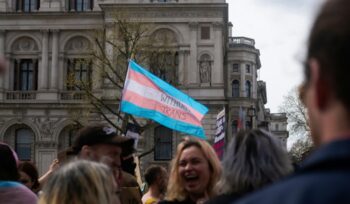
Romania finally recognizes trans man’s identity in landmark E.U. victory
Romanian trans rights took a real leap forward this week, as courts finally ordered the government to legally recognize Arian Mirzarafie-Ahi as male — a recognition the U.K. granted him back in 2020. For years, he lived with two identities depending on which border he crossed, until his case climbed all the way to the E.U.’s top court and came home with a binding answer. That ruling now obligates every E.U. member state to honor gender recognition documents issued by another. It’s a quiet but powerful shift: transgender people across Europe gain stronger footing not through new laws, but through…
-
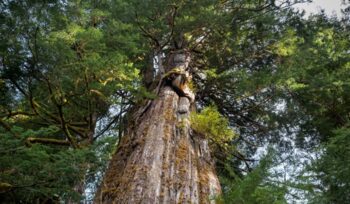
Alaska judge permanently shields Tongass old-growth forests from logging
The Tongass National Forest just won a major day in court, with a federal judge ruling in March 2026 that the U.S. Forest Service is not legally required to ramp up logging to meet timber industry demand. The decision protects the world’s largest temperate old-growth rainforest — home to roughly a third of what remains of this ecosystem globally, along with wild salmon runs, brown bears, and trees older than 800 years. Tribal nations, fishing crews, and tourism operators stood alongside federal defenders in the case, a reminder that the forest’s value reaches far beyond timber. Wins like this give…
