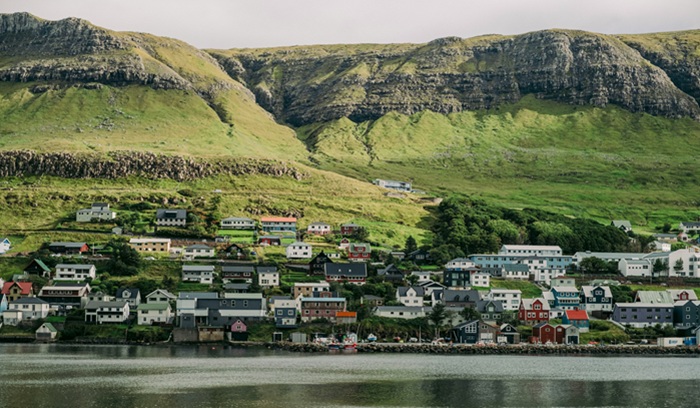
For the first time in the history of the Faroe Islands, people can now legally access abortion services — a right that women in most of Europe have held for decades. The semi-autonomous Danish archipelago passed legislation in 2024 C.E. granting the right to abortion, ending a near-total ban that had made it one of the last places in Western Europe where the procedure remained illegal.
At a glance
- Faroe Islands abortion rights: The Løgting, the Faroese parliament, voted to legalize abortion, allowing terminations up to a defined gestational limit for the first time under local law.
- Historical context: Previously, residents seeking abortions were forced to travel to Denmark, placing a significant financial and logistical burden on those with the fewest resources.
- Regional significance: The vote makes the Faroe Islands one of the final jurisdictions in Northern Europe to formally enshrine reproductive rights in law.
Why this took so long
The Faroe Islands operates under a unique political arrangement. While part of the Kingdom of Denmark — which legalized abortion in 1973 C.E. — the islands govern many of their own domestic affairs through the Løgting. Abortion law fell under local jurisdiction, and for decades, conservative social attitudes and the strong influence of the Faroese Christian community kept reform off the table.
Activists had pushed for change for years. Women who needed abortions were required to travel to Denmark at their own expense, a journey that could cost thousands of kroner and require taking time off work. For low-income residents, this was often an insurmountable barrier.
The debate intensified in the early 2020s C.E. as a new generation of Faroese women brought renewed energy to the campaign. International coverage helped put pressure on legislators, and polling showed growing public support for reform, particularly among younger Faroese voters.
What the new law means in practice
The legislation gives residents the legal right to access abortion services locally — no longer requiring them to leave their home islands to exercise a basic healthcare choice. For a remote island community in the North Atlantic, that difference is not small.
The World Health Organization classifies safe abortion access as a component of essential healthcare. When access requires international travel, the burden falls disproportionately on people with lower incomes, younger people, and those with caregiving responsibilities — a pattern well-documented across contexts where legal restrictions exist without full prohibition.
With the new law, those disparities are significantly reduced for Faroese residents. Healthcare providers on the islands can now offer services that were previously off-limits under local law.
A small place, a clear signal
The Faroe Islands has a population of roughly 55,000 people — smaller than many cities. But legislative shifts in small jurisdictions carry meaning beyond their borders. They signal changing norms, they close gaps in human rights frameworks, and they matter enormously to the individuals directly affected.
The vote drew attention across Europe and was celebrated by reproductive rights organizations internationally. It was also noted in the context of global debates about abortion access, where progress in some regions has been accompanied by setbacks in others.
The Faroe Islands joins a long list of European nations where legal abortion is now the standard — but arriving at this point required real political courage from Faroese legislators willing to push past decades of institutional resistance.
What remains unresolved
The passage of a law is not the same as seamless access to care. The Faroe Islands has a small healthcare system, and building the infrastructure — trained providers, clinical protocols, patient support — to make abortion services genuinely accessible in practice will take time. Advocates have noted that the legal victory is significant, but implementation will require continued attention and resources.
There is also ongoing social tension in communities where religious and cultural opposition to abortion remains strong. Legal change does not erase that tension, and some residents who need care may still face stigma or social pressure. The broader global picture on reproductive rights remains mixed, with gains in some places offset by restrictions in others.
Read more
For more on this story, see: Good News for Humankind
For more from Good News for Humankind, see:
- Ghana expands marine protection at Cape Three Points
- Alzheimer’s risk cut in half by drug in landmark prevention trial
- The Good News for Humankind archive on global health
About this article
- 🤖 This article is AI-generated, based on a framework created by Peter Schulte.
- 🌍 It aims to be inspirational but clear-eyed, accurate, and evidence-based, and grounded in care for the Earth, peace and belonging for all, and human evolution.
- 💬 Leave your notes and suggestions in the comments below — I will do my best to review and implement where appropriate.
- ✉️ One verified piece of good news, one insight from Antihero Project, every weekday morning. Subscribe free.
More Good News
-
Doctors hail first breakthrough in asthma and COPD treatment in 50 years
Benralizumab, a single injection given during an asthma or COPD attack, cut treatment failures fourfold over 90 days compared to the steroid pills doctors have relied on since the 1970s. In a trial of 158 patients arriving at UK emergency departments, the shot eased coughing, wheezing, and breathlessness more effectively than steroids — and could eventually be given at home or in a GP’s office. Because it targets the specific inflammation behind roughly half of asthma attacks, it could spare millions of people from the diabetes and bone-loss risks that come with repeated steroid use. After a 50-year wait for…
-
Mexico launches universal healthcare for all 133 million citizens
Mexico universal healthcare is now officially a reality, with the country launching a system designed to cover all 133 million citizens through the restructured IMSS-Bienestar network. Before this reform, an estimated 50 million Mexicans had no formal health insurance, with rural and Indigenous communities bearing the heaviest burden of untreated illness and medical debt. The new system severs the long-standing tie between employment and healthcare access, providing free consultations, medicines, and hospital services regardless of income. If implemented effectively, Mexico’s move could serve as a powerful model for other middle-income nations still navigating fragmented, inequitable health systems.
-

Ghana declares its first marine protected area to rescue depleted fish stocks
Ghana’s marine protected area — the country’s first ever — marks a historic turning point for a nation gripped by a quiet fisheries crisis. Established near Cape Three Points in the Western Region, the protected zone restricts or bans fishing activity to allow severely depleted fish populations to recover. Ghana’s coastal stocks have fallen by an estimated 80 percent from historic levels, threatening food security and the livelihoods of millions of small-scale fishers. The declaration also carries regional significance, potentially inspiring neighboring Gulf of Guinea nations to establish coordinated protections of their own.