
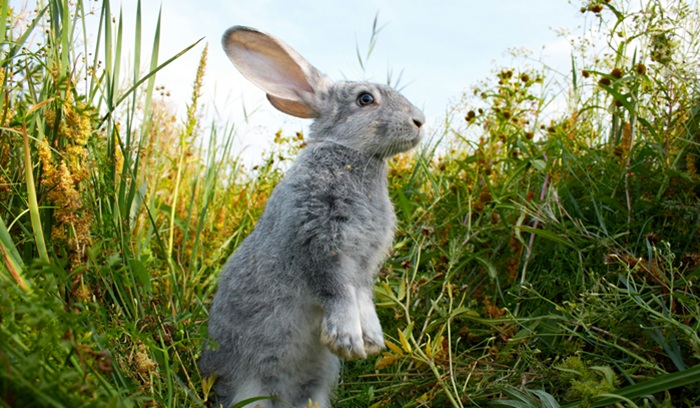
The European Parliament has voted to end animal testing for all household detergents and their chemical ingredients, marking a historic shift in how the European Union evaluates the safety of everyday products. The ban covers finished goods like dish soap, laundry pods, and floor cleaners, as well as the individual chemicals used to make them. Modern non-animal methods — including computer modeling and lab-grown human cell cultures — will now take the place of toxicological experiments on live animals.
- The vote is part of a broader revision of the E.U. Detergents Regulation, which governs how the safety of cleaning products is assessed across all 27 member states.
- Non-animal testing methods such as “organs-on-a-chip” and high-speed digital toxicity simulations are now recognized as scientifically valid replacements for traditional lab experiments.
- Animal welfare groups and progressive lawmakers across the political spectrum drove the push for the ban, arguing that the old system was outdated and often less accurate than newer alternatives.
How the E.U. animal testing ban on detergents will work
For decades, chemical companies argued that animal testing was the only reliable way to confirm that a product would not harm human skin or eyes. That argument has steadily lost ground as researchers developed faster and more precise tools. Technologies like organ-on-a-chip platforms can replicate how human tissue responds to chemicals at a level of detail that animal models rarely matched.
The new rules require manufacturers to rely exclusively on these non-animal approaches when bringing cleaning products to market in E.U. countries. Companies that once budgeted for animal trials will now be expected to invest in the next generation of chemical safety research. Regulatory bodies, including the European Chemicals Agency, will be responsible for interpreting the data produced by these methods.
Supporters of the ban say the shift is not only more ethical — it is also faster and, in many cases, less expensive for manufacturers to implement. A single round of in-vitro cell culture testing can screen dozens of compounds simultaneously, something that animal trials cannot easily replicate. That speed advantage gives companies a practical incentive to adopt the new standards quickly.
The E.U. animal testing ban and what it means for global standards
One of the most striking features of the parliamentary vote was the breadth of support across different countries and political parties. Lawmakers from nations with strong traditions of animal advocacy pushed hardest for the measure, but the final margin reflected agreement well beyond that base. Animal welfare advocates say this political convergence suggests that protecting animals in laboratories is no longer a fringe issue — it is mainstream policy.
The influence of the E.U. market gives the ban real global weight. When a bloc representing more than 400 million consumers sets a safety standard, multinational corporations that sell into Europe must meet it regardless of where they manufacture their products. Critics have raised a legitimate concern: some testing could simply be relocated to countries with weaker animal protection laws. International cooperation, including coordination through bodies like the Eurogroup for Animals, will be essential to prevent that kind of regulatory arbitrage.
Researchers at the Joint Research Centre of the European Commission have published extensive findings on how to close the gap between ethical goals and practical safety verification. Their work provides regulators with a clear roadmap for training staff to evaluate non-animal data rigorously. That institutional knowledge will be critical as the transition moves from legislative intent to everyday enforcement.
A measured step toward a more humane future
Passing a law and fully implementing it are two different things. The cleaning products industry includes thousands of distinct chemical formulations, and confirming that each one has been properly screened under the new system will take time. Regulators have acknowledged that the rollout will require additional funding for alternative research infrastructure and ongoing training for safety assessors.
Still, the vote represents something larger than a single regulatory update. It demonstrates that a major economic power can realign its safety standards with both scientific progress and public values without undermining consumer protection. Other industrial sectors — cosmetics, pharmaceuticals, agrochemicals — will be watching closely to see how smoothly the detergents transition unfolds. If the E.U. can make it work here, the template becomes available for far broader application.
More good news from the world of animal and environmental protection
This vote sits within a wider global conversation about how humans choose to share the planet with other living things. Ghana recently took a bold step of its own, establishing a marine protected area at Cape Three Points to shield ocean ecosystems and the species that depend on them. Meanwhile, Uganda made history by reintroducing rhinos to Kidepo Valley after a decades-long absence — proof that deliberate policy choices can reverse wildlife loss. These stories, along with the E.U.’s detergent testing ban, reflect a broader pattern of governments choosing protection over exploitation. You can find more stories like these in the Good News for Humankind archive, sign up for the daily newsletter to get them delivered each morning, or explore the deeper forces behind positive change through the Antihero Project.
Sourcing
This story was generated by AI based on a template created by Peter Schulte. It was originally reported by Zhihu Selection.
More Good News
-

Canada commits 3.8 billion to protect 30% of its lands and waters by 2030
Canada has announced a .8 billion investment to protect 30% of its lands and waters by 2030, one of the largest conservation commitments in the country’s history. Prime Minister Mark Carney unveiled the funding to meet international biodiversity targets, with Indigenous communities playing a central role in stewarding conserved lands. The announcement positions Canada as a global leader in nature protection at a moment when biodiversity loss is accelerating worldwide.
-

132 nations add 40 migratory species to UN protection list in historic summit
One hundred thirty-two nations extended international legal protection to 40 new migratory species at the UN Convention on the Conservation of Migratory Species COP15 summit in Campo Grande, Brazil, on March 29, 2026. The newly protected animals include the snowy owl, giant otter, striped hyena, and great hammerhead shark. A new UN report released at the summit found that 49% of populations already covered by the treaty are in decline, raising the stakes for implementation between now and the next conference in 2029.
-
For the first time, human-caused extinction rate falls below 0.001%
For the first time in recorded history, the rate at which human activity drives species to extinction has dropped below 0.001% per year. Scientists call it the most consequential ecological recovery in human history — built on protected areas, Indigenous stewardship, and decades of coordinated global action.
