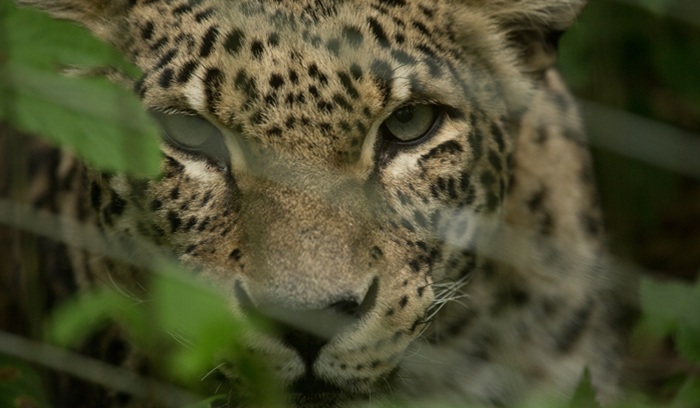
One of the world’s most elusive big cats is quietly reclaiming its territory. Persian leopards — listed as Endangered on the IUCN Red List, with fewer than 1,000 estimated to remain in the wild — are showing signs of recovery in the rugged mountain ranges of Turkmenistan, one of Central Asia’s most isolated and least-visited nations. Camera trap images and field surveys have confirmed sightings in areas where the cats had been absent for years, offering rare evidence that conservation efforts in a politically closed country can still produce results.
At a glance
- Persian leopard: Classified as Endangered, this subspecies ranges across Iran, the Caucasus, Central Asia, and parts of Afghanistan — making Turkmenistan’s Kopet Dag mountains a critical corridor in the species’ fragmented range.
- Camera trap evidence: Field cameras deployed in Turkmenistan’s protected areas have recorded individual leopards, including females and cubs, suggesting the population is not just surviving but potentially breeding.
- Wildlife corridors: Conservation organizations working in the region believe cross-border habitat connectivity — particularly between Turkmenistan and Iran — is essential to sustaining any population rebound.
Why Turkmenistan matters for this cat
The Persian leopard once ranged widely across Southwest and Central Asia. Hunting, prey depletion, and habitat loss drove the species to the brink in much of that range during the 20th century. Turkmenistan’s Kopet Dag mountain range, which forms a long border with northern Iran, offers some of the last contiguous habitat left in the region.
The country’s political isolation — it is one of the world’s most closed societies — has paradoxically created a buffer against certain human pressures. Lower levels of industrial development and limited road access in mountainous zones have left pockets of habitat largely undisturbed. That doesn’t mean leopards are safe there: the IUCN notes that poaching, snaring intended for prey species, and retaliatory killing by herders all remain threats across the Persian leopard’s range.
The role of international conservation partnerships
Progress in places like Turkmenistan rarely happens in isolation. Organizations including Panthera and WWF have worked across the broader Persian leopard range to support anti-poaching patrols, camera trap monitoring, and community-based programs that reduce conflict between herders and big cats. These efforts depend on cooperation with governments that are not always easy to engage.
Iran and Turkmenistan share a habitat corridor that leopards cross without awareness of international borders. Researchers have documented individual cats moving between the two countries, which means conservation outcomes in one nation directly affect the other. The Cat Specialist Group of the IUCN has emphasized that transboundary coordination is among the highest priorities for the species’ survival.
What recovery actually looks like
Confirmed breeding — the presence of cubs — is the metric that matters most. Adult sightings can reflect animals passing through. Cubs mean the habitat is productive enough to sustain a population, and that females feel secure enough to raise young. Reports from Turkmenistan have included both, which is the kind of signal conservationists have been working toward for decades.
Still, the word “comeback” requires caution. Persian leopard population counts remain deeply uncertain. Camera trap data from a single range doesn’t translate easily into regional population estimates, and Turkmenistan’s limited research infrastructure means monitoring is thin. The species remains Endangered, and threats across its broader range — including in the Caucasus and Afghanistan — have not meaningfully eased. What’s happening in the Kopet Dag is a genuine reason for measured optimism, not a declaration of recovery.
A signal worth watching
The Persian leopard’s tentative return in Turkmenistan is a reminder that wildlife can rebound when pressure is reduced — even partially, even imperfectly. It also points to something easy to miss: some of the most consequential conservation stories are unfolding in countries that receive almost no international attention. The leopards in the Kopet Dag don’t know they’re in one of the world’s most closed nations. They’re just finding their way back to where they belong.
Read more
For more on this story, see: Good News Network
For more from Good News for Humankind, see:
- Ghana establishes a major new marine protected area at Cape Three Points
- Alzheimer’s risk cut in half by drug in landmark prevention trial
- The Good News for Humankind archive on wildlife conservation
About this article
- 🤖 This article is AI-generated, based on a framework created by Peter Schulte.
- 🌍 It aims to be inspirational but clear-eyed, accurate, and evidence-based, and grounded in care for the Earth, peace and belonging for all, and human evolution.
- 💬 Leave your notes and suggestions in the comments below — I will do my best to review and implement where appropriate.
- ✉️ One verified piece of good news, one insight from Antihero Project, every weekday morning. Subscribe free.
More Good News
-
Botswana officially strikes anti-sodomy law from its national penal code
Botswana has officially erased its colonial-era anti-sodomy law from the national penal code in 2026, transforming a 2019 court victory into permanent written statute. The original provision, imported under British rule in the 19th century, had once threatened same-sex couples with up to seven years in prison. Striking the language itself matters because unconstitutional laws left on paper can still be used to harass and stigmatize, even when unenforceable. Botswana now joins a small group of African nations that have gone beyond court rulings to fully cleanse discriminatory language from their books. With more than 60 countries still criminalizing same-sex…
-

More than 10% of the world’s oceans now officially protected
Ocean protection just crossed a historic line: as of April 2026, 10.01% of the world’s seas are officially designated as protected, up from 8.6% just two years ago. That leap represents roughly 5 million square kilometers of newly safeguarded waters — an expanse larger than the entire European Union. The milestone fulfills a promise the world first made back in 2010, and it arrived thanks to thousands of small wins: national designations, community-led projects, and Indigenous stewardship of some of the most intact marine ecosystems on Earth. With the UN High Seas Treaty now in force, nations finally have a…
-
Nearly 20 million measles deaths averted in Africa since 2000
Measles vaccines in Africa have prevented an estimated 19.5 million deaths since 2000 — roughly 800,000 lives saved every year for nearly a quarter century. A new WHO and Gavi analysis credits steady investment in cold-chain systems, community health workers, and political will, with coverage for the critical second measles dose climbing more than tenfold over that stretch. This year, Cabo Verde, Mauritius, and Seychelles became the first sub-Saharan nations to officially eliminate measles and rubella, a milestone once considered out of reach. The story is a powerful reminder that global health progress, though uneven, compounds quietly over decades —…