
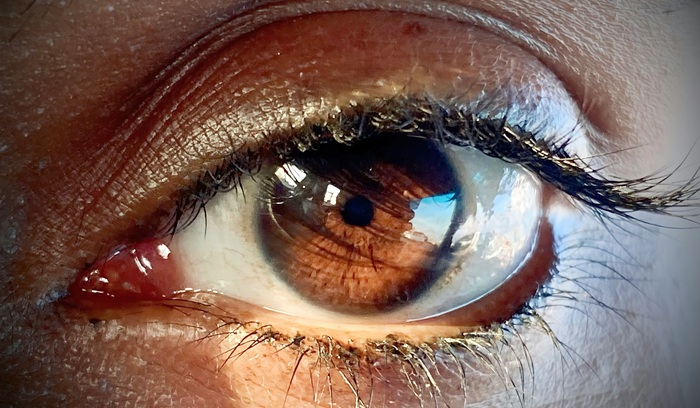
Egypt has officially ended trachoma as a public health problem — a bacterial eye disease that has blinded people in the Nile Valley for more than 3,000 years. The World Health Organization formally validated the achievement, making Egypt the 27th country in the world to reach this milestone and the seventh in the Eastern Mediterranean region. For rural communities across the Nile Delta and Upper Egypt, the threat of losing sight to a preventable infection is now, officially, gone.
At a glance
- Trachoma elimination: WHO validated Egypt’s status after the Ministry of Health and Population completed disease surveillance across all 27 governorates between 2015 C.E. and 2025 C.E.
- Ancient disease: The Ebers Papyrus, an Egyptian medical text written around 1500 B.C.E., describes symptoms that match trachoma — making this one of the longest fights against a single disease in recorded history.
- Global count: Roughly 30 nations still face endemic trachoma, concentrated in sub-Saharan Africa and parts of Asia, meaning Egypt’s validation adds both evidence and momentum to the WHO’s goal of global elimination by 2030 C.E.
How two decades of strategy brought down a disease
Egypt’s path ran through the WHO-endorsed SAFE strategy — Surgery, Antibiotics, Facial cleanliness, and Environmental improvement. The country began piloting the approach in 2002 C.E. and scaled it over the following two decades to cover every endemic district.
The four-part model works by attacking the disease from multiple directions simultaneously. Surgery addresses advanced cases where scarring has already pulled eyelashes inward against the cornea. Mass distribution of azithromycin clears active bacterial infection at the community level. Hygiene education and investments in clean water and sanitation cut the conditions that allow the disease to spread. Sightsavers, the International Trachoma Initiative, and the Fred Hollows Foundation all provided technical support and donor funding that reached populations in remote areas.
Over two decades, infection rates fell sharply — especially among children, who are the most vulnerable group. The number of adults requiring corrective eyelid surgery dropped as earlier interventions prevented new cases from reaching advanced stages.
Infrastructure and integration sealed the gains
A turning point came in 2024 C.E., when trachoma surveillance was integrated into Egypt’s national electronic disease reporting system. That step means any resurgence can be detected and addressed quickly — protecting more than 20 years of accumulated progress.
Egypt’s national “Haya Karima” (Decent Life) development program also contributed by expanding water access and sanitation infrastructure in underserved rural communities. Aligning disease control with broader development investment accelerated results in ways a standalone health campaign likely could not have matched.
The WHO’s 2030 road map for neglected tropical diseases targets global trachoma elimination within the decade. Egypt’s achievement, in a country of more than 100 million people and complex rural geography, strengthens the case that the goal is reachable.
What closing a 3,000-year chapter means
Trachoma did not affect all Egyptians equally. Rural women and children bore a disproportionate share of the disease burden — women because they typically care for infected children, children because infection during early childhood drives the scarring that leads to adult blindness. Removing that burden matters economically as much as medically: trachoma-related blindness pulled children from school, reduced adult productivity, and deepened poverty across generations in affected communities.
Validation confirms elimination “as a public health problem,” not eradication. Sustaining clean water infrastructure and hygiene programs requires continued political and financial commitment, and ongoing surveillance remains essential. Those obligations don’t end on validation day.
Still, a disease documented in ancient papyrus and declared eliminated by modern public health officials represents a remarkable distance traveled — and a clear demonstration of what sustained, evidence-based effort can accomplish when governments, international organizations, and local communities work toward the same goal.
Read more
For more on this story, see: Good News for Humankind — Egypt eliminates trachoma
For more from Good News for Humankind, see:
- Renewables now make up at least 49% of global power capacity
- U.K. cancer death rates down to their lowest level on record
- The Good News for Humankind archive on global health
About this article
- 🤖 This article is AI-generated, based on a framework created by Peter Schulte.
- 🌍 It aims to be inspirational but clear-eyed, accurate, and evidence-based, and grounded in care for the Earth, peace and belonging for all, and human evolution.
- 💬 Leave your notes and suggestions in the comments below — I will do my best to review and implement where appropriate.
- ✉️ One verified piece of good news, one insight from Antihero Project, every weekday morning. Subscribe free.
More Good News
-

Botswana officially strikes anti-sodomy law from its national penal code
Botswana has officially erased its colonial-era anti-sodomy law from the national penal code in 2026, transforming a 2019 court victory into permanent written statute. The original provision, imported under British rule in the 19th century, had once threatened same-sex couples with up to seven years in prison. Striking the language itself matters because unconstitutional laws left on paper can still be used to harass and stigmatize, even when unenforceable. Botswana now joins a small group of African nations that have gone beyond court rulings to fully cleanse discriminatory language from their books. With more than 60 countries still criminalizing same-sex…
-

More than 10% of the world’s oceans now officially protected
Ocean protection just crossed a historic line: as of April 2026, 10.01% of the world’s seas are officially designated as protected, up from 8.6% just two years ago. That leap represents roughly 5 million square kilometers of newly safeguarded waters — an expanse larger than the entire European Union. The milestone fulfills a promise the world first made back in 2010, and it arrived thanks to thousands of small wins: national designations, community-led projects, and Indigenous stewardship of some of the most intact marine ecosystems on Earth. With the UN High Seas Treaty now in force, nations finally have a…
-

Nearly 20 million measles deaths averted in Africa since 2000
Measles vaccines in Africa have prevented an estimated 19.5 million deaths since 2000 — roughly 800,000 lives saved every year for nearly a quarter century. A new WHO and Gavi analysis credits steady investment in cold-chain systems, community health workers, and political will, with coverage for the critical second measles dose climbing more than tenfold over that stretch. This year, Cabo Verde, Mauritius, and Seychelles became the first sub-Saharan nations to officially eliminate measles and rubella, a milestone once considered out of reach. The story is a powerful reminder that global health progress, though uneven, compounds quietly over decades —…
