For roughly 2,000 years, a resourceful and artistically remarkable people thrived in one of the harshest environments on Earth. Beginning around 500 B.C.E., the Dorset culture spread across the Canadian Arctic and into Greenland, hunting through sea ice, carving miniature figures by lamplight, and sustaining communities across an enormous frozen territory — long before any other people would attempt it.
What the evidence shows
- Dorset culture: First identified by Western science in 1925 C.E., when anthropologist Diamond Jenness received artifacts from Cape Dorset (now Kinngait) in Nunavut, Canada — objects so distinct from Inuit material culture that they pointed to a separate, earlier civilization entirely.
- Arctic settlement: The culture spanned from Newfoundland and Labrador in the east to the High Arctic and into Greenland, enduring across four distinct phases from approximately 500 B.C.E. to somewhere between 1000 C.E. and 1500 C.E.
- Paleo-Eskimo technology: The Dorset people developed soapstone oil lamps (qulliq), triangular harpoon end-blades, and sophisticated miniature carvings — evidence of both practical mastery and a rich shamanistic spiritual tradition.
A people shaped by ice
The world the Dorset people inhabited was defined almost entirely by sea ice. Unlike the Thule people who followed them, the Dorset did not hunt large whales or use bows and arrows. Instead, they specialized in hunting seals and other sea mammals at breathing holes in the ice — a demanding technique requiring intimate knowledge of Arctic conditions and animal behavior.
Their clothing, though not preserved in detail by the archaeological record, must have been extraordinarily effective. Temperatures in the High Arctic during winter routinely fall to -40°C or below. Communities from Newfoundland to Greenland, separated by vast distances, maintained a remarkably consistent material culture. The same lamp shapes, the same harpoon blade styles, the same carving traditions appear across thousands of kilometers.
This consistency suggests not isolation but connection — periodic movement, shared knowledge, perhaps long-range contact across the frozen sea routes that linked the Arctic world together.
Art at the edge of the world
Among the most striking aspects of Dorset culture is its art. The Dorset were exceptional carvers, producing refined miniature figures of humans and animals in bone, ivory, and wood. They crafted striking masks that scholars believe were connected to shamanistic practices — rituals designed to communicate with the spirit world and maintain balance between people, animals, and the land.
These carvings are not crude survival objects. They are technically accomplished works, made with care and intention. Women’s figures feature elaborately detailed hairstyles. Human and animal forms are rendered with precision far beyond practical necessity.
That a people living at the margins of habitability invested so much in artistic and spiritual expression says something important about what humans carry with them everywhere they go: not just tools, but meaning.
Reaching Greenland
Greenland sits at the northeastern edge of the Dorset world. Scholars have identified regional variations in Dorset culture there — subtle differences in tool styles and artifact patterns that mark a distinct local tradition, adapted to Greenland’s particular geography and wildlife.
How the Dorset reached Greenland remains a question of ongoing research. The most likely route was across the sea ice and frozen straits connecting the High Arctic islands of what is now Canada to Greenland’s western coast. These crossings would have required extraordinary navigational skill and confidence in reading ice conditions — skills built over generations of Arctic travel.
The presence of Dorset people in Greenland is significant in the long human story of that island. When Norse settlers arrived in southern Greenland around 985 C.E., they encountered a landscape that had been shaped by human presence for centuries. The archaeological record in Greenland shows Dorset sites predating both the Norse and the Thule Inuit who would later become the ancestors of today’s Greenlandic Inuit people.
Lasting impact
The Dorset culture demonstrated something that no civilization had proved before at this scale: that human beings can sustain complex, spiritually rich, technologically sophisticated communities in the Arctic, not for a generation but for two millennia.
The Dorset are a direct part of the long human story of Arctic habitation that continues today. Inuit communities across Nunavut, Greenland, and Labrador live in landscapes where Dorset artifacts still surface. Canadian archaeological research into the Dorset has reshaped understanding of how long and how deeply the Arctic has been home to human life.
The qulliq — the soapstone oil lamp the Dorset developed — was later adopted and adapted by the Thule people and became central to Inuit material culture. An innovation born in the Dorset world has burned in Arctic homes for more than 2,500 years.
The Dorset also left something less tangible. Inuit oral histories, recorded across the 20th century C.E., remember a people called the Tuniit — described as tall, gentle, and shy, living scattered across the Arctic land, easily startled and easily displaced. Whether these stories directly describe encounters with Dorset people is uncertain. But they suggest that the memory of the Dorset, or of people like them, survived in oral tradition long after the physical culture disappeared.
A landmark 2014 C.E. genetic study published in Science confirmed what the archaeological record suggested: the Dorset were a genetically distinct population, showing virtually no evidence of interbreeding with the Thule people who replaced them. They were not absorbed — they vanished, leaving behind objects, legends, and a landscape reshaped by their long presence.
Blindspots and limits
The Dorset culture remains only partially understood. Because the Dorset left no written language, almost everything known comes from physical artifacts and the fragmentary evidence of genetics. How they organized socially, what their spiritual practices meant to them in their own terms, and precisely how and why they disappeared — whether from climate change, disease, or displacement — remains genuinely uncertain.
The name “Dorset” itself reflects the circumstances of Western scientific discovery rather than any name the people used for themselves. What they called themselves, if they had a collective name at all, is unknown. The Smithsonian National Museum of the American Indian and other institutions continue working with Indigenous communities to ensure that the framing of these ancient peoples respects the living descendants of Arctic traditions.
It is also worth acknowledging that the story of the Dorset reaching Greenland is reconstructed from archaeological evidence that remains incomplete. Exact dates of Greenland settlement are still debated, and new excavations regularly revise what is known.
Read more
For more on this story, see: Wikipedia — Dorset culture
For more from Good News for Humankind, see:
- Indigenous land rights reach a new milestone at COP30
- Ghana creates a new marine protected area at Cape Three Points
- The Good News for Humankind archive on prehistory
About this article
- 🤖 This article is AI-generated, based on a framework created by Peter Schulte.
- 🌍 It aims to be inspirational but clear-eyed, accurate, and evidence-based, and grounded in care for the Earth, peace and belonging for all, and human evolution.
- 💬 Leave your notes and suggestions in the comments below — I will do my best to review and implement where appropriate.
- ✉️ One verified piece of good news, one insight from Antihero Project, every weekday morning. Subscribe free.
More Good News
-

Renewables hit 49% of global power capacity for the first time
Renewable energy capacity crossed a landmark threshold in 2025, with global installed power surpassing 5,100 gigawatts and representing 49% of all capacity worldwide for the first time in history. The International Renewable Energy Agency reported a single-year addition of 692 gigawatts, led overwhelmingly by solar power, which alone accounted for 75% of new renewable installations. Clean energy now represents 85.6% of all new power capacity added globally, signaling that the transition has moved from aspiration to economic reality. The milestone carries implications beyond climate — nations with strong renewable bases demonstrated measurably greater energy security amid ongoing geopolitical instability.
-

Global suicide rate has dropped nearly 40% since the 1990s
Global suicide rates have dropped nearly 40% since the early 1990s, falling from roughly 15 deaths per 100,000 people to around nine — one of modern public health’s most significant and underreported victories. This decline was driven by expanded mental health services, crisis intervention programs, and proven strategies like restricting access to lethal means. The progress spans dozens of countries, with especially sharp declines in East Asia and Europe. Critically, this trend demonstrates that suicide is preventable at a population level — making the case for sustained investment in mental health infrastructure worldwide.
-
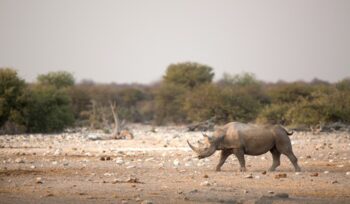
Rhinos return to Uganda’s wild after 43 years of absence
Uganda rhino reintroduction marks a historic milestone: wild rhinoceroses are roaming Ugandan soil for the first time in over 40 years. In 2026, rhinos bred at Ziwa Rhino Sanctuary were released into Kidepo Valley National Park, ending an absence caused entirely by poaching and political collapse during the Idi Amin era. The release represents decades of careful breeding, conservation funding, and community engagement. For local communities, conservationists, and a watching world, it proves that deliberate, sustained human effort can reverse even the most painful wildlife losses.