
At a glance
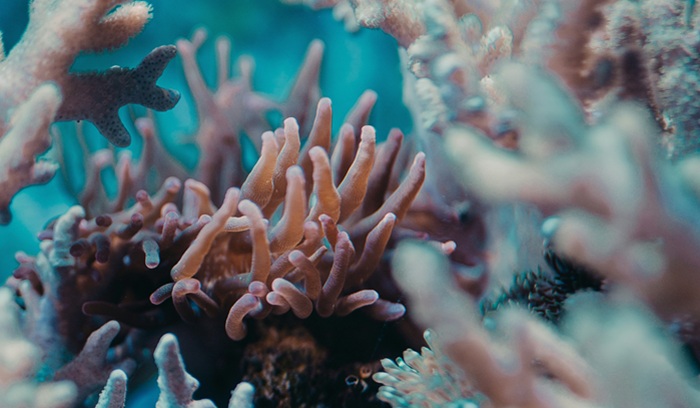
- Coral reef protection: The Panaon Island Protected Seascape spans 151,000 acres in the Pacific Coral Triangle, one of the most biodiverse marine regions on Earth.
- Coral reef protection coverage: A 2020 Oceana expedition found coral cover in the area runs three times higher than the Philippine national average, signaling exceptional reef health.
- Community governance: A dedicated Protected Area Management Board — made up of local fisherfolk, community representatives, and government agencies — will set and enforce rules for the seascape.
Why this reef matters
The waters surrounding Panaon Island are not simply beautiful. They function as a critical corridor for some of the ocean’s most endangered species. Whale sharks pass through. Sea turtles breed here. The seagrass beds and healthy mangrove forests lining the coast act as natural buffers against storm surges and coastal erosion — protections that communities in this part of the Philippines depend on directly. Fish stocks in the area provide food security for local fishing families. The reef’s above-average coral cover also makes it more resilient to bleaching events driven by rising ocean temperatures, which have devastated reefs elsewhere across the Pacific and Indian Oceans. That resilience is increasingly rare and increasingly valuable.A community-led path to legal protection
This outcome did not happen quickly or easily. Local fisherfolk, scientists, and municipal officials spent years building the case for formal legal protection — a process that required sustained coordination across communities with different economic pressures and priorities. In May 2025 C.E., advocates organized a cultural event specifically to rally support for the law’s passage, blending celebration with civic urgency. That moment of public momentum helped carry the legislation forward. The model is worth examining closely. Rather than imposing conservation rules from the national government downward, the Panaon Island framework places decision-making authority in a management board that includes the people who live and fish there. Science guides the rules. Local needs shape how those rules are applied. Similar community-driven approaches have shown promise elsewhere. Ghana’s Cape Three Points marine protected area offers a comparable example of coastal communities taking an active role in stewarding their waters — and the parallels are instructive.The 30×30 pledge and what it means in practice
The Philippines is a signatory to the global 30×30 initiative, which commits participating nations to protecting 30% of the world’s lands and oceans by 2030. That target remains ambitious — and contested. Critics have pointed out that some protected areas exist mainly on paper, with little enforcement or community buy-in. The Panaon Island designation attempts to address that concern directly. The management board structure creates accountability at the local level. Fishing and tourism are not banned outright — they are regulated, balancing livelihoods with conservation outcomes. Still, legal protection is only the beginning. Enforcement capacity, funding continuity, and climate conditions will all shape whether the seascape thrives or gradually erodes under pressure. The Intergovernmental Science-Policy Platform on Biodiversity and Ecosystem Services has documented how even well-designed protected areas can fall short without sustained political and financial commitment.A signal for the broader ocean
The Panaon Island Protected Seascape is one data point in a larger story. Globally, the push to expand marine protection has gained real momentum. More countries are translating international pledges into domestic law — and doing so in ways that center the communities who know these waters best. The Philippines, as one of the world’s most biodiverse archipelagos, carries particular weight in this conversation. What happens to its reefs matters far beyond its own coastlines. Oceana, whose 2020 expedition documented the area’s exceptional coral cover, has called the region among the most important marine ecosystems in the western Pacific. That exceptional quality is now legally protected. The question — as with every protected area — is whether the protection holds. Progress elsewhere suggests reason for cautious optimism. Clean energy investment and marine conservation have emerged as twin priorities for nations trying to meet climate and biodiversity commitments simultaneously. Global renewable energy capacity has crossed the 49% threshold, reflecting the same international momentum that is now reaching the ocean floor off Panaon Island. The Philippine government and local advocates have shown that ambitious conservation goals can move from pledge to law. For the fishers, the reef, and the species that depend on both, that distinction is everything.Read more
For more from Good News for Humankind, see:
- Ghana’s marine protected area at Cape Three Points
- Renewables now make up at least 49% of global power capacity
- The Good News for Humankind archive on ocean conservation
About this article
- 🤖 This article is AI-generated, based on a framework created by Peter Schulte.
- 🌍 It aims to be inspirational but clear-eyed, accurate, and evidence-based, and grounded in care for the Earth, peace and belonging for all, and human evolution.
- 💬 Leave your notes and suggestions in the comments — I will do my best to review and implement where appropriate and possible.
- 📬 One verified piece of good news, one insight from Antihero Project, every weekday morning. Subscribe free.
More Good News
-
COP30 pledges recognition of 160 million hectares of Indigenous land rights
At the COP30 World Leaders Summit in Belém, Brazil in November 2025, 15 governments pledged to formally recognize Indigenous land rights over 160 million hectares by 2030 — an area the size of Iran — through the Intergovernmental Land Tenure Commitment. Brazil committed at least 59 million hectares. More than 35 donors renewed a $1.8 billion Forest and Land Tenure Pledge. The Tropical Forest Forever Facility secured nearly $7 billion, with 20% directed to Indigenous peoples. It was the largest Indigenous participation in COP history.
-
Ghana creates its first marine protected area to rescue depleted fish stocks
Ghana has declared its first marine protected area near Cape Three Points on the Gulf of Guinea, marking a historic step to reverse decades of overfishing. The protected zone aims to restore fish populations that have collapsed under pressure from industrial trawling and illegal fishing. The decision supports 2.7 million Ghanaians whose livelihoods depend on healthy coastal fisheries and aligns Ghana with the global goal of protecting 30 percent of the world’s oceans by 2030.
-

U.S. researchers cut Alzheimer’s risk by half in first-ever prevention trial
For the first time, researchers have evidence that removing amyloid plaques from the brain before symptoms appear can cut Alzheimer’s risk by roughly half. A clinical trial published in The Lancet Neurology, led by Washington University School of Medicine in St. Louis, found that long-term treatment with the antibody drug gantenerumab significantly delayed dementia onset in people with a rare genetic form of the disease. The findings provide the clearest signal yet that intervening years before symptoms emerge can change the course of Alzheimer’s disease.
