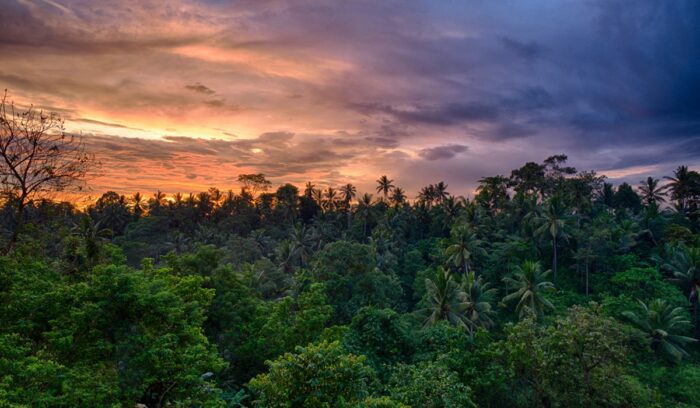
Deep in the Colombian Amazon, a plateau world older than the Andes rises above the jungle canopy. In 1989 C.E., the Colombian government drew a boundary around it — protecting a place so remote, so layered with life and human memory, that scientists are still cataloguing what lives there.
Key facts
- Chiribiquete National Park: Established in 1989 C.E., the park covers what would later become 43,000 km² — making it the largest national park in Colombia and the largest tropical rainforest national park in the world.
- Rock art at Chiribiquete: More than 600,000 individual traces — roughly 20,000 petroglyphs and pictographs — have been documented across the park’s tepui cliffs, with the oldest believed to date back around 20,000 years B.P.
- Endemic biodiversity: The park shelters species found nowhere else on Earth, including the Chiribiquete emerald, a hummingbird unique to this ecosystem, and sits on the western edge of the ancient Guiana Shield.
A landscape older than almost anything
The Serranía de Chiribiquete is a series of tepuis — table-top mountains of sandstone that predate the Andes by hundreds of millions of years. The Guiana Shield beneath them is among the oldest geological formations on Earth, some of it more than a billion years old.
This deep antiquity shaped everything above it. Isolated by sheer cliffs and surrounded by lowland rainforest, the tepuis became evolutionary islands. Species here evolved separately from relatives elsewhere, producing the extraordinary levels of endemism — life found only here — that drew scientists and conservationists to the region in the first place.
The Colombian government’s 1989 C.E. decision to protect this area came as global awareness of Amazon deforestation was rising. The initial protected zone was already vast. But the story of what it contained was just beginning to be understood.
Tens of thousands of years of human presence
Chiribiquete is not wilderness in the sense of being untouched by humanity. It is wilderness in the sense of being deeply, continuously inhabited — and then painted.
The rock art at Chiribiquete is among the most extensive in the Western Hemisphere. Images of hunts, ceremonies, animals, and abstract forms cover vertical cliff faces across the massif. The oldest may date to around 20,000 years B.P., making this one of the longest-running traditions of human expression anywhere in the Americas. Paintings continued, layer upon layer, until the 16th century C.E. — the moment of European contact.
American botanist Richard Evans Schultes was the first outsider to document the rock art, in the 1940s C.E. Dutch botanist Thomas van der Hammen later deepened that record. But the communities whose ancestors made these images remain partially unidentified — some Indigenous groups in the surrounding region have historically avoided contact, and the full human history of Chiribiquete is still being carefully interpreted.
Expansion and world recognition
In 2018 C.E., Colombian President Juan Manuel Santos announced a major expansion of the park, adding 15,000 km² to bring it to its current size of 43,000 km². Later that same year, UNESCO designated Chiribiquete a World Heritage Site, citing its outstanding universal value for both its biodiversity and its cultural heritage.
The dual recognition — natural and cultural — was unusual and significant. Most protected areas are classified primarily as one or the other. Chiribiquete is formally both: a living ecosystem and an archaeological archive of tens of thousands of years of human life.
Colombia has made significant investments in its national parks system over recent decades, though enforcement in remote areas remains a persistent challenge. Illegal mining, coca cultivation, and deforestation near park boundaries continue to threaten buffer zones. The park’s interior has remained largely intact, but the pressures around it are real.
Lasting impact
Chiribiquete’s protection helped anchor conservation across a broader Amazonian corridor. The park forms part of a connected mosaic of protected lands in the Colombian Amazon that together represent one of the largest contiguous conservation zones in South America.
The rock art, still being documented and studied, has reshaped scientific understanding of when and how humans moved through the Americas. Some researchers argue the images at Chiribiquete may help trace migration routes and cultural connections across the continent during the late Pleistocene and early Holocene eras.
Beyond science, the park has become a symbol of Colombia’s ecological identity — a country that contains roughly 10% of the world’s biodiversity despite covering less than 1% of its land surface. Chiribiquete, at the heart of it, is a reminder of what protection can preserve when it comes early enough.
The International Union for Conservation of Nature has pointed to large tropical protected areas like Chiribiquete as essential for global climate regulation, not just biodiversity. The park sequesters vast amounts of carbon and regulates water cycles across a huge region of northern South America.
Blindspots and limits
The 1989 C.E. designation protected the land but did not fully resolve the question of who speaks for it. Indigenous communities connected to the Chiribiquete region were not consistently included in early management decisions, a pattern common in Latin American conservation history. The identities and descendants of the peoples who created the rock art over 20,000 years remain only partially known, and their relationship to the park’s formal governance continues to evolve. Protection was a genuine achievement — but in conservation, the line between preservation and exclusion is one that requires constant attention.
Read more
For more on this story, see: Serranía de Chiribiquete — Wikipedia
For more from Good News for Humankind, see:
- Ghana creates a new marine protected area at Cape Three Points
- Indigenous land rights gain global momentum ahead of COP30
- The Good News for Humankind archive on Colombia
About this article
- 🤖 This article is AI-generated, based on a framework created by Peter Schulte.
- 🌍 It aims to be inspirational but clear-eyed, accurate, and evidence-based, and grounded in care for the Earth, peace and belonging for all, and human evolution.
- 💬 Leave your notes and suggestions in the comments below — I will do my best to review and implement where appropriate.
- ✉️ One verified piece of good news, one insight from Antihero Project, every weekday morning. Subscribe free.