
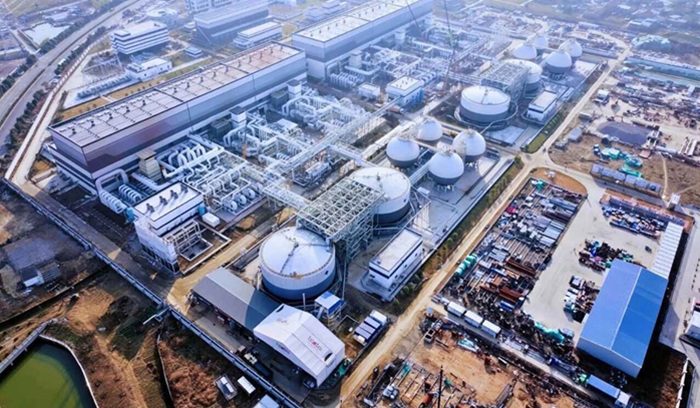
China has switched on the world’s largest compressed air energy storage plant — a 300-megawatt facility in Shandong province that pushes the boundaries of what grid-scale clean energy storage can do. Built by state-owned China Huaneng Group, the plant can store surplus electricity by compressing air into underground caverns and release it later to generate power on demand, helping to stabilize a grid increasingly fed by wind and solar.
At a glance
- Compressed air energy storage: The Shandong plant operates at 300 MW of capacity, more than double the previous world record for this storage technology, with a storage duration of roughly six hours.
- Grid-scale storage: The facility can release enough electricity to supply approximately 300,000 households, providing dispatchable power when the sun isn’t shining and the wind isn’t blowing.
- Clean energy transition: China now leads global investment in grid storage technologies, with compressed air joining pumped hydro and batteries as a key pillar of the country’s push toward carbon neutrality by 2060 C.E.
Why compressed air?
Batteries get most of the attention in energy storage conversations, but they face real constraints — cost, materials, and the challenge of holding large amounts of energy for long durations. Compressed air energy storage sidesteps some of these problems.
The basic principle is elegant: when renewable electricity is abundant and cheap, powerful compressors push air into sealed underground rock formations or caverns, essentially bottling energy as pressure. When demand peaks, the compressed air is released, heated, and used to spin turbines. No exotic minerals required. No chemical degradation over charge cycles. The U.S. Department of Energy has highlighted compressed air as a promising long-duration storage option precisely because of its scalability and relatively low environmental footprint.
China’s Shandong plant improves on older compressed air designs by recovering heat that would otherwise be lost during compression — making the round-trip energy efficiency meaningfully higher than first-generation systems built decades ago in Germany and the United States.
The scale of China’s storage push
This facility doesn’t stand alone. It is part of a sweeping national effort to build storage capacity alongside China’s record-breaking renewable buildout. The International Energy Agency reported in 2024 C.E. that China accounted for roughly 60% of all new renewable energy capacity installed globally — wind and solar farms that produce power in surges and lulls that don’t always match when people need electricity.
Storing that surplus is the central engineering challenge of the energy transition, and China is attacking it on multiple fronts. The country has the world’s largest pumped hydro fleet, an enormous and fast-growing battery storage sector, and now the world’s benchmark compressed air facility. The Shandong plant demonstrates that compressed air can operate at a scale previously untested, providing engineers and grid planners worldwide with real performance data to work from.
What this means beyond China
Compressed air energy storage has been a technology in search of the right moment for decades. Early plants in Germany and Alabama showed the concept worked but remained outliers — too expensive, too site-specific, too small to matter at grid scale. Research from the U.S. National Renewable Energy Laboratory identified geologic compressed air storage as one of the highest-potential long-duration technologies, capable in principle of storing energy for hours or even days.
China’s willingness to build at this scale — and to operate it as a commercial grid asset — generates the kind of real-world data that helps bring costs down and attract investment elsewhere. Countries in Europe, North America, and sub-Saharan Africa are all examining compressed air as part of their storage mix, and each new demonstration at commercial scale improves the economic case.
The technology isn’t a perfect solution. It still requires suitable geology — not every region has accessible salt caverns or porous rock formations that can safely hold compressed air at pressure. Efficiency losses during compression and expansion mean some energy is always sacrificed in the process. And the full climate accounting depends on what heat source is used to warm the expanding air before it hits the turbines — a step where some facilities have historically relied on natural gas.
A record that may not hold for long
The 300 MW Shandong plant sets the bar, but China has additional compressed air projects in the pipeline at similar or larger scales. The speed of development reflects how seriously grid planners are taking the storage problem — renewable energy is now cheap enough to build rapidly; the bottleneck is holding onto it until people need it.
For a world trying to phase out fossil fuel power plants while keeping lights on reliably, every new storage technology that proves itself at scale is a genuine step forward. Compressed air won’t replace batteries or pumped hydro, but it may carve out a durable role alongside them — especially for long-duration storage, where the International Renewable Energy Agency identifies a significant global gap that needs filling over the coming decades.
Read more
For more on this story, see: China turns on the world’s largest and most efficient compressed air energy storage plant
For more from Good News for Humankind, see:
- Switzerland builds the world’s largest water battery to store surplus renewable energy
- Germany builds the world’s first wind turbines with built-in hydroelectric storage
- The Good News for Humankind archive on renewable energy
About this article
- 🤖 This article is AI-generated, based on a framework created by Peter Schulte.
- 🌍 It aims to be inspirational but clear-eyed, accurate, and evidence-based, and grounded in care for the Earth, peace and belonging for all, and human evolution.
- 💬 Leave your notes and suggestions in the comments below — I will do my best to review and implement where appropriate.
- ✉️ One verified piece of good news, one insight from Antihero Project, every weekday morning. Subscribe free.


