More than 5,000 years ago, people began building a permanent home on a small island where a river met the Mediterranean Sea. The site they chose would eventually become Beirut — one of the oldest continuously inhabited cities on Earth, a place where the foundations of urban life were laid long before anyone called it by that name.
What the evidence shows
- Early settlement: Beirut’s downtown archaeological layers reveal organized habitation dating back more than 5,000 years, with the earliest settlement on an island in the Beirut River before the separating channel silted up.
- Prehistoric presence: Flint tools from the Middle Palaeolithic — possibly 100,000 years old or more — have been found within Beirut’s urban area, showing human activity in the region long before any city existed.
- Bronze Age foundations: Excavations beneath the modern city have uncovered Phoenician, Neolithic, and Bronze Age remains stacked in layers, confirming continuous occupation across multiple cultural eras.
A city built on water
The name “Beirut” traces back to a Phoenician word meaning “wells” — a reference to the site’s accessible water table. That name is first confirmed in writing in the 14th century B.C.E., when three Akkadian cuneiform tablets discovered among the Amarna letters mentioned a place called Biruta, ruled by a king named Ammunira, who corresponded with the pharaoh Amenhotep III or IV of Egypt.
The fact that a local ruler was writing directly to the Egyptian court tells us something important: by the Bronze Age, Beirut was already a recognized political and commercial entity, embedded in a web of regional diplomacy that stretched from the Levant coast to the Nile Delta.
Its location helped. Positioned on a peninsula at the midpoint of Lebanon’s Mediterranean coast, the site offered natural harbor access, fresh water, and defensible ground. These were not accidents of choice — they reflect the careful reasoning of people who understood geography, trade, and survival.
Layers beneath the city
Downtown Beirut has yielded one of the most remarkable archaeological stratigraphies in the world. Excavations have uncovered layers belonging to Phoenician, Hellenistic, Roman, Byzantine, Arab, Crusader, Persian, and Ottoman periods — a vertical timeline of civilization stacked beneath modern streets.
Seven prehistoric archaeological sites have been identified within Beirut’s urban footprint. One, at Furn esh-Shebbak along the Beirut River, produced around 50 bifaces attributed to the Acheulean period — stone tools associated with early human ancestors dating back hundreds of thousands of years. Another site, near the Bourj district, revealed Middle Bronze Age tombs and is believed to mark the location of the ancient tell, or settlement mound, at the core of the original city.
A Canaanean blade javelin recovered from near the Patriarchate district — held today in a school library — suggests sophisticated tool-making consistent with early to middle Neolithic traditions, linking Beirut’s prehistoric inhabitants to a broader Levantine cultural world stretching north to Byblos and beyond.
The Phoenician port, located between what are now Rue Foch and Rue Allenby on the north coast, was excavated and documented before being buried again beneath the city. Its existence confirms that by the time the settlement had grown into a recognizable urban center, maritime trade was already central to its identity.
The longer human story
It is easy to focus on 3000 B.C.E. as a starting point, but the human story at Beirut is far older. The Middle Palaeolithic flint tools found at several sites within the city suggest that people were moving through and camping in this landscape tens of thousands of years before anyone built a permanent structure here. The Levant as a whole has long been understood as a crossroads of early human migration — a corridor between Africa, Asia, and Europe where populations mingled, adapted, and passed on knowledge.
The transition from seasonal or semi-permanent presence to organized settlement — marked by hut circles, pottery, polished axes, and eventually a harbor — was not a sudden invention. It was a slow accumulation of decisions made by countless unnamed people over generations. Jesuit priests and French archaeologists in the late 19th and early 20th centuries documented many of these sites, though urban development has since destroyed several of them entirely, erasing physical evidence that can never be recovered.
Lasting impact
Beirut’s early emergence as a coastal settlement set a pattern that has defined it ever since: a city oriented toward the sea, toward commerce, and toward connection with the wider world. The Phoenicians who later inhabited and expanded the city became among the ancient world’s most accomplished maritime traders and alphabet-transmitters, spreading a writing system that eventually gave rise to Greek, Latin, Arabic, and dozens of other scripts.
The Roman city of Berytus, built on the same foundations, housed one of the ancient world’s most influential law schools — the School of Law of Berytus — whose graduates shaped Roman legal codes that still echo in European and international law today. That lineage runs directly through the Neolithic and Bronze Age communities who first recognized this peninsula’s value and stayed.
In 2025 C.E., Greater Beirut is home to 2.4 million people — nearly half of Lebanon’s total population. The city has survived civil war, regional conflict, and the catastrophic 2020 C.E. port explosion. It has been rebuilt after each. Something in its location and its long memory keeps drawing people back.
Blindspots and limits
The archaeological record for early Beirut is fragmentary and, in many cases, permanently lost. Rapid urbanization throughout the 20th century C.E. destroyed at least four of the seven known prehistoric sites before they could be fully studied. A 2012 C.E. controversy, in which Lebanese authorities authorized a private construction company to demolish an archaeological site (BEY194) of potentially significant maritime history, illustrated how the pressures of development continue to compete with preservation. The exact date range of Beirut’s first organized settlement remains difficult to pin down — the “5,000 years ago” figure is widely cited but represents an approximation, not a precisely excavated founding event.
Read more
For more on this story, see: Wikipedia — Beirut: Prehistory
For more from Good News for Humankind, see:
- Ghana establishes a landmark marine protected area at Cape Three Points
- Indigenous land rights recognized across 160 million hectares ahead of COP30
- The Good News for Humankind archive on the ancient world
About this article
- 🤖 This article is AI-generated, based on a framework created by Peter Schulte.
- 🌍 It aims to be inspirational but clear-eyed, accurate, and evidence-based, and grounded in care for the Earth, peace and belonging for all, and human evolution.
- 💬 Leave your notes and suggestions in the comments below — I will do my best to review and implement where appropriate.
- ✉️ One verified piece of good news, one insight from Antihero Project, every weekday morning. Subscribe free.
More Good News
-

Renewables hit 49% of global power capacity for the first time
Renewable energy capacity crossed a landmark threshold in 2025, with global installed power surpassing 5,100 gigawatts and representing 49% of all capacity worldwide for the first time in history. The International Renewable Energy Agency reported a single-year addition of 692 gigawatts, led overwhelmingly by solar power, which alone accounted for 75% of new renewable installations. Clean energy now represents 85.6% of all new power capacity added globally, signaling that the transition has moved from aspiration to economic reality. The milestone carries implications beyond climate — nations with strong renewable bases demonstrated measurably greater energy security amid ongoing geopolitical instability.
-

Global suicide rate has dropped nearly 40% since the 1990s
Global suicide rates have dropped nearly 40% since the early 1990s, falling from roughly 15 deaths per 100,000 people to around nine — one of modern public health’s most significant and underreported victories. This decline was driven by expanded mental health services, crisis intervention programs, and proven strategies like restricting access to lethal means. The progress spans dozens of countries, with especially sharp declines in East Asia and Europe. Critically, this trend demonstrates that suicide is preventable at a population level — making the case for sustained investment in mental health infrastructure worldwide.
-
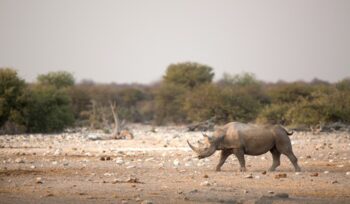
Rhinos return to Uganda’s wild after 43 years of absence
Uganda rhino reintroduction marks a historic milestone: wild rhinoceroses are roaming Ugandan soil for the first time in over 40 years. In 2026, rhinos bred at Ziwa Rhino Sanctuary were released into Kidepo Valley National Park, ending an absence caused entirely by poaching and political collapse during the Idi Amin era. The release represents decades of careful breeding, conservation funding, and community engagement. For local communities, conservationists, and a watching world, it proves that deliberate, sustained human effort can reverse even the most painful wildlife losses.