
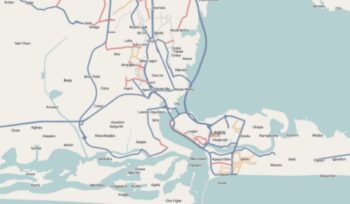
Sometime around the middle of the 15th century C.E., the Awori people — an Ijebu subgroup of the Yoruba of West Africa — made their home along a narrow coastline of creeks, barrier islands, and long sand spits at the southwestern mouth of Lagos Lagoon. That settlement, modest in its beginnings, would eventually grow into the largest city in Africa.
What the evidence shows
- Awori people Lagos: The Awori, a Yoruba subgroup, established a farmstead settlement along the coastal creeks and lagoon edges of what is now Lagos Island in the 15th century C.E. — the earliest documented human community in the area.
- Yoruba settlement: The Awori called the land Eko, derived from the Yoruba word Ereko, meaning farmstead — a name that survives today as the indigenous name for Lagos and reflects the agricultural roots of the founding community.
- Lagos Lagoon geography: The physical landscape shaped the settlement profoundly: creeks separated the land into islands and spits, barrier formations shielded it from the Atlantic Ocean, and the lagoon provided both food and transport routes stretching up to 100 kilometers east and west.
Who the Awori were
The Awori were not newcomers to the region. Before settling along the coastal strip that would become Lagos, they had already farmed the surrounding areas for generations. Their identity as an Ijebu subgroup placed them within the broader Yoruba cultural world — one of the most sophisticated civilizational traditions in West Africa, with deep roots in governance, art, trade, and spiritual practice.
They brought that knowledge with them to the coast. The settlement they built was shaped by intimate understanding of the lagoon ecology — how to navigate the creeks, how to fish the shallow coastal waters, and how to use the barrier islands as natural protection. This was not a frontier outpost. It was a community built on accumulated knowledge of place.
The name Eko tells a quiet story. A farmstead — practical, grounded, productive. It captures the Awori’s orientation toward the land not as a resource to be extracted but as a place to be worked and lived in. That name persists today among Yoruba speakers as the authentic name of the city the world calls Lagos.
The geography that shaped a megacity
The Awori chose their location well, or perhaps the location shaped what the Awori became. The southwestern mouth of Lagos Lagoon sits at the intersection of ocean and interior West Africa — a natural meeting point for trade, migration, and communication. The barrier islands and sand spits that stretch for dozens of kilometers in both directions created sheltered waters behind them, making the area navigable and relatively safe.
That geography would later make Lagos irresistible to Portuguese traders, who arrived in the late 15th century C.E. and named the area after Lagos, Portugal, then the main center of Portuguese maritime expeditions down the African coast. The Awori had already been there. The Portuguese named what the Awori had built.
The lagoon landscape that defined early Eko — divided by creeks, spread across islands — is still legible in the city today. Lagos Island, Eti-Osa, Amuwo-Odofin, and Apapa correspond to the original zones of Awori settlement. The physical logic of the 15th-century C.E. farmstead still underlies one of the 21st century’s great urban forms.
Lasting impact
From an Awori farmstead in the 1450s C.E., Lagos has grown into a city of somewhere between 17 and 21 million people — the most populous urban area on the African continent and one of the fastest-growing megacities in the world. It holds the second-highest GDP in Africa, houses one of the continent’s largest seaports, and sits at the heart of an emerging transnational coastal corridor stretching across five sovereign states from Abidjan to Lagos.
The Awori’s choice of location set in motion a chain of consequences that no founding community could have anticipated. Their lagoon-side farmstead became a Portuguese trading post, then a center of the transatlantic slave trade, then a British colonial capital, then the first capital of an independent Nigeria, and finally the financial and cultural engine of the most populous country in Africa.
The United Nations tracks Lagos as one of the handful of cities that will define the shape of human civilization in the coming century. The Yoruba cultural world — its language, music, fashion, and spiritual traditions — radiates outward from Lagos across the African continent and the global diaspora. Afrobeats, Nollywood, and Lagos’s emerging technology sector are contemporary expressions of a city that has been at the center of West African life for more than 500 years.
The Awori community remains present in Lagos today, recognized as the original inhabitants of the land, even as the city has grown to encompass dozens of ethnic communities from across Nigeria and beyond.
Blindspots and limits
The historical record of the Awori settlement is thin. No written documents from the 15th century C.E. describe the founding community’s internal life, governance, or experiences in detail — what survives is primarily oral tradition, later colonial-era accounts, and the physical and linguistic traces embedded in place names. The year 1450 C.E. used here is a reasonable midpoint estimate for “the 15th century,” not a documented date.
The growth of Lagos that followed the Awori settlement also came at serious cost: the city became a major node in the transatlantic slave trade under both African and European actors, and rapid 20th- and 21st-century urbanization has brought severe infrastructure strain, inequality, and environmental pressure to millions of its residents. The Awori founding is a genuine milestone — and it is the beginning of a long, complicated story.
Read more
For more on this story, see: Wikipedia — Lagos
For more from Good News for Humankind, see:
- Lapita people navigate to Samoa, founding a civilization that lasts to today
- Indigenous communities take ownership of what is now Ethiopia’s largest community conservation area
- The Good News for Humankind archive on Nigeria
About this article
- 🤖 This article is AI-generated, based on a framework created by Peter Schulte.
- 🌍 It aims to be inspirational but clear-eyed, accurate, and evidence-based, and grounded in care for the Earth, peace and belonging for all, and human evolution.
- 💬 Leave your notes and suggestions in the comments below — I will do my best to review and implement where appropriate.
- ✉️ One verified piece of good news, one insight from Antihero Project, every weekday morning. Subscribe free.


