
At a glance
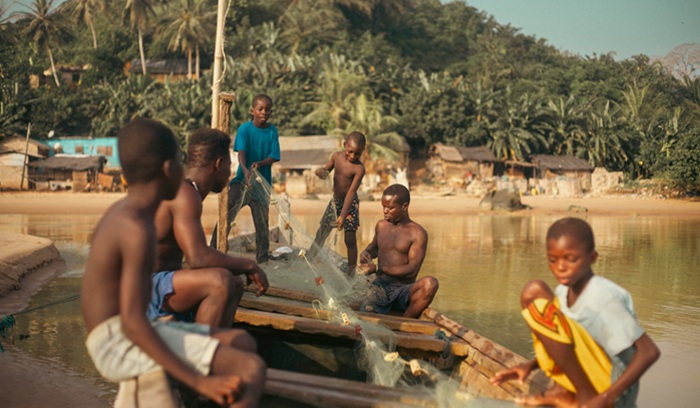
- Artisanal fishing Ghana: The law expands Ghana’s Inshore Exclusive Zone from 6 to 12 nautical miles, reserving that entire coastal band for small-scale fishers and barring industrial trawlers from entering.
- Scale of impact: Around 120,000 small-scale fishers stand to benefit directly, with fish stocks of sardinella, anchovies, and mackerel — all near collapse — expected to recover inside the protected zone.
- Enforcement teeth: The Act mandates electronic monitoring systems on all industrial fishing vessels and imposes tougher penalties for illegal, unreported, and unregulated (IUU) fishing violations.
Why fish stocks collapsed in the first place
Ghana’s coastal fisheries have been unraveling for years. Industrial trawlers — many operating illegally or under falsified licenses — pushed deep into inshore waters, competing directly with canoe fishers and devastating breeding grounds. Pelagic species like sardinella and anchovies, which form the backbone of West African diets, declined sharply. Fish accounts for more than 60 percent of the animal protein consumed in Ghana. That single statistic explains why this is not just an environmental story. It is a food security story, a public health story, and an economic story all at once. Small-scale fishing communities bore the heaviest burden of that collapse. Many had fished the same coastal waters for generations, using traditional canoe methods with minimal ecological impact. Industrial encroachment pushed them further out and left them competing for scraps.What the new law actually does
The doubling of the Inshore Exclusive Zone is the headline change, but the law does more than draw a new line on a map. It creates a legally enforceable buffer where artisanal fishers operate without industrial competition — protecting breeding grounds at exactly the depth range where many key species reproduce. The mandatory electronic monitoring requirement for industrial vessels is a significant enforcement step. Previously, trawlers could misreport catches or operate in restricted zones with little consequence. Real-time tracking changes that equation. The Act also establishes an independent Fisheries Commission to manage marine resources in line with international standards. That matters beyond Ghana’s borders: the European Union issued Ghana a “yellow card” warning over IUU fishing concerns in recent years, threatening access to a key export market. With seafood exports worth more than $425 million annually, sustainable governance is an economic imperative, not just an ethical one.Communities and advocates respond
The Canoe and Fishing Gear Association of Ghana (CaFGOAG) welcomed the law with enthusiasm, saying fishing communities finally felt heard. Their statement emphasized that strict enforcement and meaningful community participation in monitoring would determine whether the law delivers on its promise. The Environmental Justice Foundation called it a “historic advance” — protecting livelihoods, improving food security, and laying the groundwork for marine ecosystems to recover. Fisheries Minister Emelia Arthur received particular credit for steering the bill through parliament and maintaining support from both industry and small-scale fishing associations. Mongabay, which covered the legislation closely, noted that the zone expansion had been a long-standing demand from fishing communities and researchers who argued that the original 6-nautical-mile limit was insufficient to protect key nursery habitats. This story connects to broader conservation work happening along Ghana’s coast. Earlier efforts, including the establishment of a marine protected area at Cape Three Points, showed that Ghana’s coastal ecosystems can recover with the right protections in place — and that community buy-in is essential to making those protections stick.The road ahead
The law is a beginning, not an ending. Enforcement along a 12-nautical-mile zone requires patrol vessels, trained officers, functioning monitoring systems, and political will that outlasts any single administration. Ghana’s enforcement capacity has historically been stretched thin. There is also the challenge of illegal fishing by vessels operating under flags of convenience — a problem that no single national law can fully resolve and that requires regional and international cooperation to address meaningfully. The Maritime Executive noted that the Act’s success will depend heavily on how quickly the new Fisheries Commission becomes operational and whether it receives adequate funding. Still, the direction is clear. Ghana has placed artisanal communities at the center of its fisheries policy — not as an afterthought, but as the explicit rationale for a major legislative overhaul. That framing matters. It signals that the people who have fished these waters sustainably for centuries have a legal right to keep doing so.Read more
For more from Good News for Humankind, see:
- Ghana’s marine protected area at Cape Three Points
- Alzheimer’s risk cut in half in landmark prevention trial
- The Good News for Humankind archive on oceans
About this article
- 🤖 This article is AI-generated, based on a framework created by Peter Schulte.
- 🌍 It aims to be inspirational but clear-eyed, accurate, and evidence-based, and grounded in care for the Earth, peace and belonging for all, and human evolution.
- 💬 Leave your notes and suggestions in the comments — I will do my best to review and implement where appropriate and possible.
- 📬 One verified piece of good news, one insight from Antihero Project, every weekday morning. Subscribe free.
More Good News
-
COP30 pledges recognition of 160 million hectares of Indigenous land rights
At the COP30 World Leaders Summit in Belém, Brazil in November 2025, 15 governments pledged to formally recognize Indigenous land rights over 160 million hectares by 2030 — an area the size of Iran — through the Intergovernmental Land Tenure Commitment. Brazil committed at least 59 million hectares. More than 35 donors renewed a $1.8 billion Forest and Land Tenure Pledge. The Tropical Forest Forever Facility secured nearly $7 billion, with 20% directed to Indigenous peoples. It was the largest Indigenous participation in COP history.
-
Ghana creates its first marine protected area to rescue depleted fish stocks
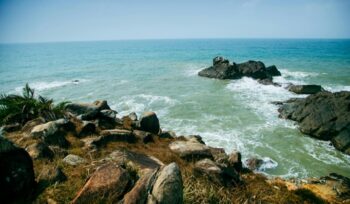
Ghana has declared its first marine protected area near Cape Three Points on the Gulf of Guinea, marking a historic step to reverse decades of overfishing. The protected zone aims to restore fish populations that have collapsed under pressure from industrial trawling and illegal fishing. The decision supports 2.7 million Ghanaians whose livelihoods depend on healthy coastal fisheries and aligns Ghana with the global goal of protecting 30 percent of the world’s oceans by 2030.
-

U.S. researchers cut Alzheimer’s risk by half in first-ever prevention trial
For the first time, researchers have evidence that removing amyloid plaques from the brain before symptoms appear can cut Alzheimer’s risk by roughly half. A clinical trial published in The Lancet Neurology, led by Washington University School of Medicine in St. Louis, found that long-term treatment with the antibody drug gantenerumab significantly delayed dementia onset in people with a rare genetic form of the disease. The findings provide the clearest signal yet that intervening years before symptoms emerge can change the course of Alzheimer’s disease.
