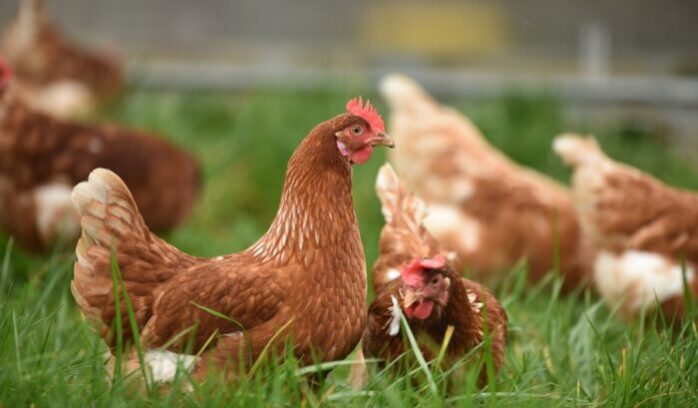
In October 2016 C.E., Arcos Dorados — the company that operates more McDonald’s restaurants than anyone else in Latin America — announced it would transition its entire egg supply to cage-free sources. The commitment covered roughly 2,200 restaurants across 20 countries, making it one of the largest cage-free pledges ever made by a food service company in the region.
Key findings
- Cage-free eggs: Arcos Dorados pledged to source 100% cage-free eggs across all of its Latin American operations, affecting millions of hens annually.
- Latin America food industry: The announcement represented a significant first for corporate food supply chains in the region, where cage-free standards had been almost entirely absent from major fast food operators.
- Animal welfare standards: The move came after sustained engagement by Humane Society International (HSI), which works across Latin America to advance farm animal welfare policy and corporate commitments.
What Arcos Dorados actually committed to
Arcos Dorados holds the master franchise agreement for McDonald’s across Latin America and the Caribbean. Its 2016 C.E. pledge was not a vague aspiration — it was a public, time-bound commitment to eliminate battery-cage eggs from its entire supply chain.
Battery cages, the standard housing system for laying hens in most of the world, confine each bird to a space roughly the size of a sheet of paper. Hens cannot spread their wings, dustbathe, or engage in most natural behaviors. Cage-free systems, while not without their own imperfections, give hens significantly more room and the ability to move freely.
The scale here matters. Arcos Dorados operates in Argentina, Brazil, Chile, Colombia, Mexico, and more than a dozen other countries. A single corporate commitment of this size has the potential to move entire regional supply chains — suppliers adapt to meet demand, and competitors often follow.
The role of sustained advocacy
This announcement did not arrive out of nowhere. Humane Society International had spent years building relationships with food companies across Latin America, making the business and ethical case for moving away from battery cages.
The strategy mirrors what animal welfare advocates had already achieved in the United States, where a wave of corporate cage-free pledges began around 2015 C.E. and swept through nearly every major food retailer and fast food chain within two years. HSI extended that momentum southward, working country by country and company by company.
What made Arcos Dorados significant was its reach. A pledge from a regional operator with more than 2,200 locations carries more weight — and more supply chain leverage — than dozens of smaller commitments combined.
Lasting impact
Corporate cage-free commitments, when fulfilled, drive real infrastructure change. Egg producers invest in new housing systems. Farmers retrain. Regulators sometimes follow with updated standards. The Arcos Dorados pledge helped signal to the Latin American food industry that cage-free sourcing was no longer a niche concern but an emerging baseline expectation.
By 2020 C.E. and beyond, the cage-free movement had secured thousands of corporate commitments worldwide, covering billions of hens. Researchers who study these campaigns have found that corporate pledges, even when partially fulfilled, tend to accelerate farm-level transitions far faster than regulatory timelines alone.
The Arcos Dorados announcement also helped establish HSI’s Latin America program as a credible force in regional food policy, opening doors for subsequent campaigns on other issues including gestation crates and live animal transport.
Blindspots and limits
Cage-free does not mean cruelty-free. Hens in cage-free systems can still face overcrowding, disease, beak trimming, and other significant welfare challenges. The commitment also came with no specific enforcement mechanism or public reporting requirement, raising legitimate questions about how fully and how quickly it would be implemented across such a geographically dispersed operation.
Supply chain transitions in Latin America face real logistical and economic barriers — cage-free eggs cost more to produce, and in lower-income markets, those costs can flow through to consumers or suppliers in ways that create friction. Progress has been uneven globally, and Latin America is no exception.
Read more
For more on this story, see: Humane Society International press release
For more from Good News for Humankind, see:
- Rhinos return to Uganda’s Kidepo Valley after decades
- Ghana protects critical ocean habitat at Cape Three Points
- The Good News for Humankind archive on animal welfare
About this article
- 🤖 This article is AI-generated, based on a framework created by Peter Schulte.
- 🌍 It aims to be inspirational but clear-eyed, accurate, and evidence-based, and grounded in care for the Earth, peace and belonging for all, and human evolution.
- 💬 Leave your notes and suggestions in the comments below — I will do my best to review and implement where appropriate.
- ✉️ One verified piece of good news, one insight from Antihero Project, every weekday morning. Subscribe free.