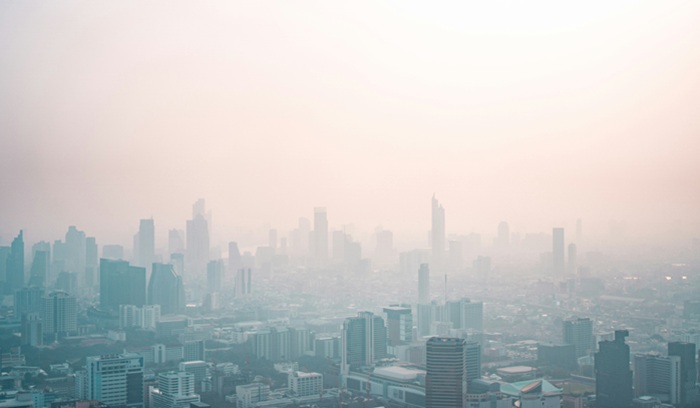
More than 19 major cities — including London, Beijing, and San Francisco — have achieved what experts once considered nearly impossible: cutting toxic air pollution by 20% to 45% in just over a decade. A new analysis shared with the Guardian found that deliberate local policies, from cycle lane expansions to coal phase-outs to restrictions on polluting vehicles, drove the improvements. For the hundreds of millions of people breathing that air every day, the numbers translate into fewer hospitalizations, healthier children, and longer lives.
At a glance
- Urban air pollution cuts: 19 cities reduced fine particulate matter (PM2.5) and nitrogen dioxide (NO2) by more than 20% since 2010 C.E., according to an analysis of nearly 100 cities in the C40 and Breathe Cities networks.
- Top performers: Beijing and Warsaw led PM2.5 reductions at more than 45%, while Amsterdam and Rotterdam cut nitrogen dioxide levels by more than 40%.
- Policy drivers: Key interventions included London’s ultra-low emission zones, China’s rapid shift to electric vehicles, Warsaw’s move away from coal home heating, and expanded cycling infrastructure in dense European cities.
What cities actually did
The results did not happen by accident. Each city’s path to cleaner air reflects specific choices made by local leaders, often in the face of political resistance.
London expanded its ultra-low emission zone, effectively pricing older, more polluting vehicles out of the city center. Beijing moved aggressively to replace coal-fired boilers with gas and electric heating systems while pushing a rapid transition to electric cars — a shift that moved the city off lists of the world’s most polluted capitals for the first time in decades. Warsaw focused on heating: by weaning residents off coal and wood-burning stoves, the city dramatically reduced the dense winter smog that had blanketed it for generations.
In Western Europe, cities like Amsterdam and Rotterdam expanded cycling infrastructure and restricted vehicle access in urban cores. San Francisco was the only U.S. city to cut both PM2.5 and NO2 by more than 20%, driven largely by California’s strict vehicle emissions standards and a steady move toward electrification. Nine of the 19 cities are in China and Hong Kong, with European cities making up the remainder.
Why this matters for human health
Air pollution is not a background inconvenience — it is one of the leading threats to human health worldwide. Fine particulate matter, small enough to pass through the lungs and into the bloodstream, damages the brain, heart, and other organs over time. Nitrogen dioxide injures the airways directly and reacts with moisture to form acid rain.
“Breathing polluted air affects our health through every stage of our lives,” said Dr. Gary Fuller, an air pollution scientist at Imperial College London. Fuller, who was not involved in producing the report, pointed to links between air pollution and low birth weight in infants, childhood asthma, adult cancer and heart disease, and — more recently identified — cognitive decline and dementia in old age. “All of these illnesses are preventable,” he said.
The World Health Organization estimates that no level of PM2.5 is truly safe, but doctors agree that millions of lives could be saved each year if cities met WHO guidelines. Right now, nearly every country on Earth falls short of those guidelines, according to the Swiss air quality firm IQAir’s annual World Air Quality Report.
The limits of what’s been achieved
The report’s authors are clear-eyed about how far there is still to go. Most of these 19 cities still do not meet WHO standards for clean air, and improvements have often been more pronounced in wealthier neighborhoods than in industrial zones or lower-income districts. Progress has not been equal.
Cities also cannot fully control their own air. Wildfire smoke, regional industrial emissions, and pollution drifting across borders regularly undermine local gains. Cecilia Vaca Jones, executive director of Breathe Cities — one of the organizations behind the report — acknowledged that the findings demonstrate tools already exist to address the crisis, but emphasized that city-level action alone is not sufficient. Stronger regional and national cooperation remains essential.
Experts also note that the most accessible policy wins — eliminating coal heating, introducing low-emission zones — have largely been captured in these 19 cities. The next phase will require harder shifts in building materials, food systems, and freight logistics.
A model for cities still growing
What makes this analysis significant beyond the 19 cities themselves is what it offers to the rest of the world. Rapidly urbanizing regions across South Asia, Sub-Saharan Africa, and Latin America are adding millions of new urban residents every year. Many face the pollution levels that Beijing and Warsaw confronted a decade ago.
The C40 Cities network, which connects mayors across more than 90 cities, has helped accelerate knowledge-sharing by making air quality data and policy frameworks openly available. That kind of collaborative urban governance — cities learning from each other rather than starting from scratch — is increasingly seen as one of the most practical tools for addressing global environmental challenges at scale.
The broader picture connects directly to energy: cleaner power grids reduce the emissions that flow into city air in the first place. Research published in The Lancet Planetary Health has documented that cleaner air also improves cognitive performance in students and boosts productivity in the workforce, compounding benefits over time. And a World Health Organization fact sheet on ambient air quality underscores that these health benefits are felt most powerfully in the communities that had the worst starting conditions.
For over a decade, clean air advocates were told the problem was too difficult and too politically toxic to solve. These 19 cities, on multiple continents, using different tools and different starting conditions, have now produced evidence to the contrary.
Read more
For more on this story, see: The Guardian
For more from Good News for Humankind, see:
- Alzheimer’s risk cut in half by drug in landmark prevention trial
- Renewables now make up at least 49% of global power capacity
- The Good News for Humankind archive on global health
About this article
- 🤖 This article is AI-generated, based on a framework created by Peter Schulte.
- 🌍 It aims to be inspirational but clear-eyed, accurate, and evidence-based, and grounded in care for the Earth, peace and belonging for all, and human evolution.
- 💬 Leave your notes and suggestions in the comments below — I will do my best to review and implement where appropriate.
- ✉️ One verified piece of good news, one insight from Antihero Project, every weekday morning. Subscribe free.
More Good News
-

More than 50 nations attend world-first conference on phasing out fossil fuels
Fossil fuel phaseout talks just crossed a real threshold: for the first time, more than 50 nations sat down together specifically to plan a way off coal, oil, and gas. The two-day gathering in Santa Marta, Colombia, brought together an unusually wide mix — major producers like Australia, Norway, and Canada alongside Pacific island nations like Tuvalu and Vanuatu, with Europe and emerging economies in between. No binding deals were expected, but the recommendations will feed into a voluntary roadmap being shaped under Brazil’s COP30 leadership. It’s a small, hopeful shift: producers and consumers finally talking openly about a transition…
-

Singapore stops sourcing and breeding dolphins
Resorts World Sentosa, home to more than 20 Indo-Pacific bottlenose dolphins, is halting both wild sourcing and captive breeding at its Singapore oceanarium. The resort is now assembling an independent expert panel to figure out what’s next for the animals in its care, including a 7-year-old named Kenzo. It’s a meaningful shift from one of Asia’s most prominent entertainment venues, and one animal welfare groups have pushed toward for over a decade. With Mexico, Canada, and France already banning cetacean captivity for entertainment, this quiet decision in Singapore signals that the tide is turning across Asia too, reshaping what travelers…
-

The Bahamas officially eliminates mother-to-child transmission of HIV
The Bahamas just became the 12th country or territory in the Americas certified by the World Health Organization for eliminating mother-to-child HIV transmission — meaning babies born there now enter the world free of the virus by design, not by luck. The country built this through a quietly powerful idea: every pregnant woman, regardless of nationality or legal status, gets HIV screening at her first prenatal visit and again later in pregnancy, with treatment and follow-up offered free. Reaching that standard across more than 700 scattered islands took years of coordination between nurses, doctors, and public clinics. More than half…