Post-modernity (1945 - 2016 C.E.)

Post-modernity spans 1945 to 2016 C.E., an era defined by rapid technological acceleration, decolonization, the rise of the internet, and expanding civil rights. This archive collects milestones in science, medicine, governance, and culture from those seven decades of sweeping human progress.

Wild tiger population roaming through natural forest habitat

Wild tiger numbers rise for the first time in over a century

Wild tigers hit their lowest recorded point around 2010, with just 3,200 left across Asia. Six years later, a global census counted 3,890 across 13 countries — the first uptick in over a century. Scientists caution better counting explains some of the rise, but in places like India, Nepal, and Russia, protection appears to be working.

Bear roaming through the misty old-growth forest of the Great Bear Rainforest agreement protected wilderness

Great Bear Rainforest agreement protects millions of acres under Indigenous leadership

The Great Bear Rainforest agreement, signed in February 2016, protected 85% of old-growth trees across 6.4 million hectares of British Columbia’s coast — a temperate rainforest roughly the size of Ireland. Reached after nearly 20 years of negotiation, it placed 26 First Nations at the center as co-managers, embedding Indigenous authority into conservation law.

Cyclists riding through Copenhagen's cycling infrastructure network with dedicated bike lanes along a city street

Copenhagen’s city centre now counts more bikes than cars

Bicycles outnumbered cars in Copenhagen’s historic centre for the first time in 2016, with about 265,700 bikes entering daily compared to 252,600 cars. The shift followed a billion-krone investment in dedicated lanes and 17 new bicycle bridges built between 2006 and 2019. A reminder that cycling cultures are engineered, not inherited.

Atlanta Georgia skyline where openly gay legislators have made history in state politics

Georgia voters send their first openly gay man to the state legislature

Georgia’s first openly gay state legislator was elected on a November night in 2016, when 28-year-old Sam Park flipped a Republican-held House seat in Gwinnett County. The son of Korean immigrants, Park campaigned on schools and healthcare rather than identity alone. In a Southern statehouse long without LGBTQ+ representation, his win cracked a door open.

Lighthouse symbolizing guidance in ranked-choice voting elections

Maine voters approve ranked-choice voting in historic ballot win

Ranked-choice voting went statewide for the first time in the U.S. when Maine voters approved it on Election Day 2016, passing the ballot initiative with about 52 percent support. The shift came after two governor’s races won with pluralities, including one victory at just 37 percent. A small state quietly rethinking what majority rule means.

image for article on giant panda recovery

Giant pandas are removed from the endangered species list

Giant pandas stepped back from the brink in 2016, when the IUCN downlisted them from Endangered to Vulnerable. China’s wild panda population had climbed to roughly 1,864, up from fewer than 1,100 in the 1980s, thanks to decades of reserves and reforestation. A rare, measurable recovery — and a reminder that decline isn’t destiny.

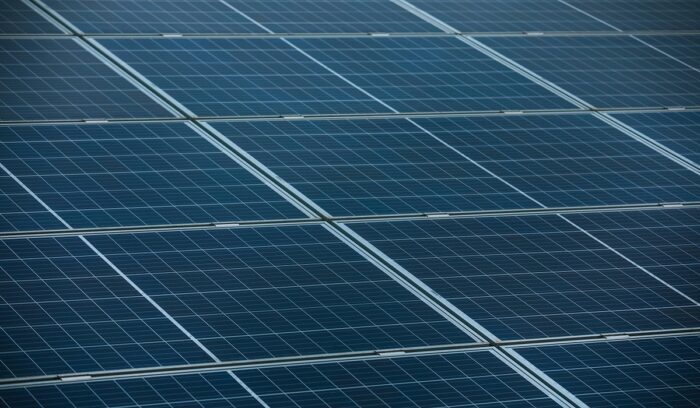
Solar panels installed on a rooftop representing solar power prices and renewable energy options, for article on domestic solar cell production, for article on silicon solar cell

U.S. solar power prices drop 25% in just five months

Solar power prices in the U.S. fell roughly 25% in just five months during early 2016, according to Lawrence Berkeley National Laboratory data on utility-scale contracts. That same year, solar was being installed faster than any other electricity source in the country — a quiet turning point in how America generates power.

A heat pump unit on a home exterior, representing U.S. heat pump sales growth supported by the Kigali Amendment

170 nations sign the Kigali Amendment to phase down HFCs

The Kigali Amendment, signed in October 2016 by around 170 nations, committed the world to phasing down hydrofluorocarbons — refrigerant gases thousands of times more heat-trapping than CO₂. Building on the ozone-saving Montreal Protocol, full implementation could prevent roughly half a degree Celsius of warming by 2100, a rare case of climate diplomacy working quickly and at scale.