
Captain James Cook becomes first human known to cross Antarctic Circle
In 1773, James Cook and his crew crossed the Antarctic Circle for the first time; however, although they discovered nearby islands, they did not catch sight of Antarctica itself.

In 1773, James Cook and his crew crossed the Antarctic Circle for the first time; however, although they discovered nearby islands, they did not catch sight of Antarctica itself.

The firm of Boulton and Watt became famous and Watt lived until August 19, 1819, long enough to see his steam engine become the greatest single factor in the upcoming new industrial era.

Cullen used a pump to create a partial vacuum over a container of diethyl ether, which then boiled, absorbing heat from the surrounding air.

“What began as a hostile merger would end in a full partnership in the most powerful going concern in the world… it was one of the most astonishing transformations in European history.”

Edmond Halley, in his 1705 Synopsis of the Astronomy of Comets, used Newton’s new laws to calculate the gravitational effects of Jupiter and Saturn on cometary orbits.

The Ladies Mercury was a weekly publication promising to respond to “all the most nice and curious questions concerning love, marriage, behaviour, dress and humour of the female sex, whether virgins, wives, or widows.”

Robert Hooke was a 17th century “natural philosopher” — an early scientist — noted for a variety of observations of the natural world.

The conservation movement can be traced back to Sylva, one of the most highly influential texts on forestry ever published.
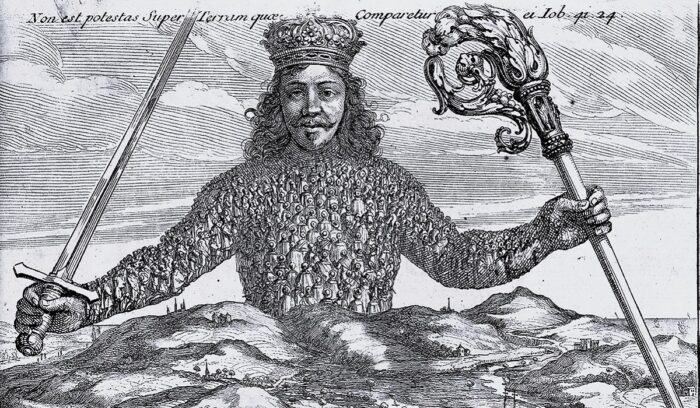
Leviathan rigorously argues that civil peace and social unity are best achieved by the establishment of a commonwealth through social contract.

Hamlet is Shakespeare’s longest play, and is considered among the most powerful and influential works of world literature, with a story capable of “seemingly endless retelling and adaptation by others”.