
Nestle creates wrapper that degrades in the sea within six months
“We know it will degrade in a marine environment within six months, which, compared to the flow wrap that it’s currently in, it’s about 450 years.”
This archive collects solutions-journalism stories and milestones from Switzerland — covering health, policy, environment, technology, and civic life. Each entry highlights measurable progress or constructive responses to real challenges.

“We know it will degrade in a marine environment within six months, which, compared to the flow wrap that it’s currently in, it’s about 450 years.”
A Switzerland-based startup called CRISPR Therapeutics just used gene-editing name to treat someone with the blood disease beta thalassemia. It marks the first time CRISPR gene editing has been used in a Western clinic.
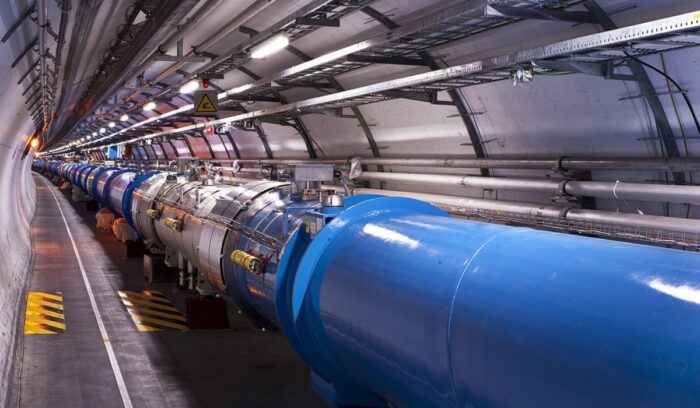
The Large Hadron Collider sent its first beam of protons around a 27-kilometer underground ring on September 10, 2008, beneath the French-Swiss border near Geneva. Built by CERN over a decade with more than 10,000 scientists from over 100 countries, it remains one of humanity’s most ambitious collaborative experiments in understanding matter itself.

CITES, the first global treaty governing the wildlife trade, became binding law on July 1, 1975, after 80 countries had gathered in Washington two years earlier to finalize the text. It now covers more than 40,900 species across 185 parties — a quiet paperwork revolution that showed nations could agree to police what crosses their borders for nature’s sake.

The 1864 Geneva Convention was the world’s first codified international treaty that covered the sick and wounded soldiers on the battlefield.

Cesarean birth survival entered medical memory around 1500 C.E., when a Swiss pig gelder named Jacob Nufer reportedly opened his wife’s abdomen after days of failed labor — and both lived. The story, written down 82 years later by a surgeon with an agenda, may be embellished, but it gave European medicine something powerful: proof that survival was even imaginable.