Switzerland

This archive collects solutions-journalism stories and milestones from Switzerland — covering health, policy, environment, technology, and civic life. Each entry highlights measurable progress or constructive responses to real challenges.

Flexbase redox flow battery in Switzerland, for article on redox flow battery

Switzerland begins work on the world’s most powerful redox flow battery

A redox flow battery rising from a 27-meter pit in northern Switzerland will become the world’s most powerful, capable of running 210,000 homes for a full day once it comes online in 2029. Unlike the lithium-ion batteries in our phones, this one stores energy in two liquid electrolytes pumped through a membrane — a design that’s non-flammable, almost fully recyclable, and built to cycle indefinitely without wearing out. It can respond to grid swings in milliseconds, soaking up excess wind power and releasing it when nearby AI data centers need a steady surge. Projects like this hint at what a renewables-first grid actually looks like: not just cleaner generation, but storage patient and powerful enough to make wind and solar genuinely dependable.

A healthcare worker caring for a newborn in a clinical setting for an article about newborn malaria treatment

World’s first malaria treatment approved for newborn babies

Newborn malaria treatment reached a historic milestone as regulators approved Coartem Baby, the first antimalarial drug designed specifically for infants weighing under 5 kilograms. Developed through a partnership between Novartis and the non-profit Medicines for Malaria Venture, the dissolvable, cherry-flavored medication fills a gap that persisted for decades, leaving the most fragile newborns without a safe, approved option. Approval has been fast-tracked across eight African countries where need is greatest, with Novartis committing to largely not-for-profit pricing. For the youngest infants born into high-transmission environments, this changes everything.

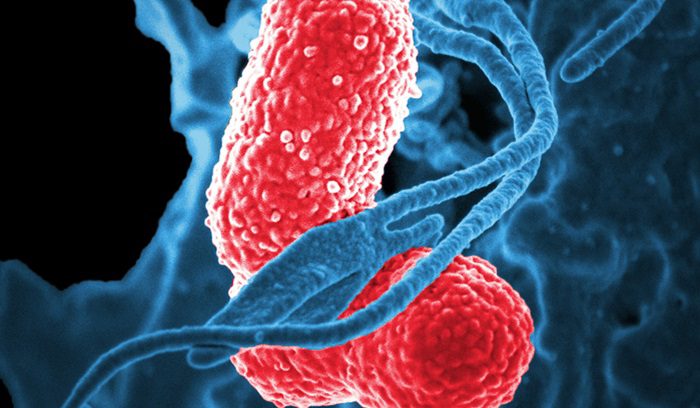
digitally colorized scanning electron microscopic (SEM) image, depicts a blue-colored, human white blood cell, (WBC) known specifically as a neutrophil, interacting with two pink-colored, rod shaped, multidrug-resistant (MDR), Klebsiella pneumoniae bacteria, for article on pneumococcal vaccine, for article on pneumococcal vaccines

Global child deaths from pneumonia have been cut in half since 2009

Childhood pneumonia deaths have been cut roughly in half since 2009, when a new kind of vaccine funding model launched and 438 million children across 64 countries received pneumococcal vaccines. The breakthrough wasn’t just the science — it was a $1.5 billion fund that guaranteed manufacturers a buyer, bringing prices down so lower-income countries could finally afford to protect their kids. In Kenya, invasive pneumococcal disease in young children dropped 92% within eight years of rollout. Now the vaccine is reaching fragile places like Chad, Somalia, and South Sudan, where a single dose can mean the difference between life and death. It’s a quiet reminder that when global health gets the funding right, millions of children grow up who otherwise wouldn’t.

Two men's hands with rings on them, for article on Switzerland same-sex marriage

First couples wed as Swiss same-sex marriage law takes effect

Marriage for All took effect in Switzerland on July 1, 2022, with same-sex couples saying their vows just months after voters approved the law by 64.1% in a national referendum. Among the first were Aline and Laure, a Geneva couple of two decades who married on the 19th anniversary of their civil union. “It’s normality that’s taking effect,” Laure said — a quiet way of describing a change that also brings full adoption rights, immigration sponsorship, and equal access to fertility care. With Switzerland on board, most of Western Europe now recognizes same-sex marriage, adding momentum to a global shift that began with the Netherlands in 2001 and continues to widen, country by country.