
Mexico City bans plastic bags
The new law went into effect January 1. By 2021, the same law will ban handing out plastic straws, spoons, coffee capsules and other single-use items.
This archive collects solutions-journalism stories and milestones from Mexico — covering environmental efforts, public health advances, community innovation, and social progress. Each entry highlights real developments reported from or about the country.

The new law went into effect January 1. By 2021, the same law will ban handing out plastic straws, spoons, coffee capsules and other single-use items.

The 50 built-to-last homes located in rural Tabasco, Mexico will be granted to local families currently living in extreme poverty and makeshift, unsafe shelter.

Mexico’s President Andrés Manuel López Obrador has argued the country should decriminalize all drugs in order to take power away from the cartels and criminal gangs.
“Boys can wear skirts if they want and girls can wear trousers if they want,” Mexico City Mayor Claudia Mayor Sheinbaum said.

Mexican lawmakers will hash out the details of a marijuana regulation bill during the upcoming summer recess, with the goal of passing the legislation ahead of an October deadline, a key committee leader said.

Mexican independence became official on August 24, 1821, when Spanish Viceroy Juan de O’Donojú signed the Treaty of Córdoba, ending more than three centuries of colonial rule. The agreement capped an eleven-year struggle that began with a priest ringing a church bell in the town of Dolores, and reshaped the political map of the Americas.

The Congress of Chilpancingo convened in September 1813, gathering insurgent representatives in a small mountain town in what is now Guerrero, Mexico. Led by José María Morelos, they formally declared independence from Spain and drafted the Sentimientos de la Nación, abolishing slavery and racial castes. Eight years before Mexican independence arrived, they sketched its moral blueprint under fire.

Eventually, Tenochtitlan came to be the capital of the vast Aztec Empire. At its peak, it was likely home to more than 200,000 people, making it one of the largest cities in the world at the time.

A codex known as the “Yuta Tnoho” that belonged to the Mixtec culture in the 1500s B.C.E. is the earliest historical record of psilocybin use in human history.
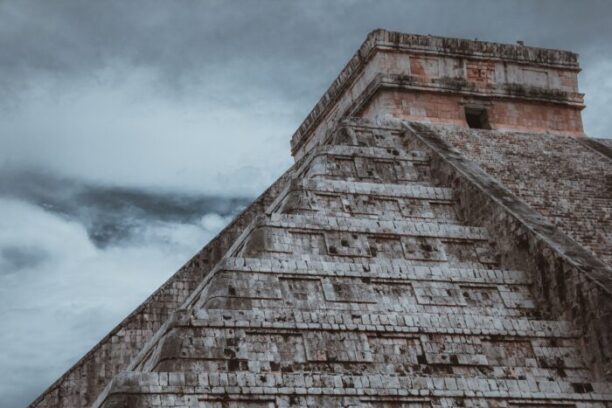
The Pyramid of Kukulcan rose at Chich’en Itza between 800 and 900 C.E., built by Maya hands as both temple and working calendar. Its four staircases hold 91 steps each, plus the top platform — 365 in all, one for every day of the solar year. A civilization writing mathematics into stone.