
World’s largest floating solar PV plant connected to grid in China
Chinese PV manufacturer announced that a 40MW aquaculture project had been grid connected in the flooded coal-mining region of Huainan, China.
This archive gathers solutions-journalism stories and milestones from China — covering advances in clean energy, public health, technology, conservation, and more. Each entry highlights progress worth knowing about.

Chinese PV manufacturer announced that a 40MW aquaculture project had been grid connected in the flooded coal-mining region of Huainan, China.

Slowing coal use in China and India has put the two most populous countries on a trajectory to beat their carbon emissions goals under the Paris Agreement, making up for rollbacks in U.S. climate action under the Trump administration

Giant pandas stepped back from the brink in 2016, when the IUCN downlisted them from Endangered to Vulnerable. China’s wild panda population had climbed to roughly 1,864, up from fewer than 1,100 in the 1980s, thanks to decades of reserves and reforestation. A rare, measurable recovery — and a reminder that decline isn’t destiny.

Renewable energy quietly crossed a threshold in 2015, when solar, wind, and other renewables made up roughly two-thirds of all new power capacity added worldwide, according to an IEA report released the following year. China led the wave, installing more solar and wind than any other country. It was the moment the energy transition stopped feeling hypothetical.

In 2006, a Beijing engineering team unveiled a wind turbine whose rotor floated on magnetic levitation, spinning without touching any bearing. By eliminating friction, the design could reportedly start generating power in breezes as slow as 1.5 meters per second. It was an early, imperfect signal of the engineering ambition now reshaping wind energy worldwide.

Macau’s handover at midnight on December 20, 1999 closed 442 years of Portuguese presence in the city and, with it, the last European colony in Asia. The transfer came not through conflict but through twelve years of patient negotiation between Lisbon and Beijing. It was the quiet final chapter of an empire that began in 1415.
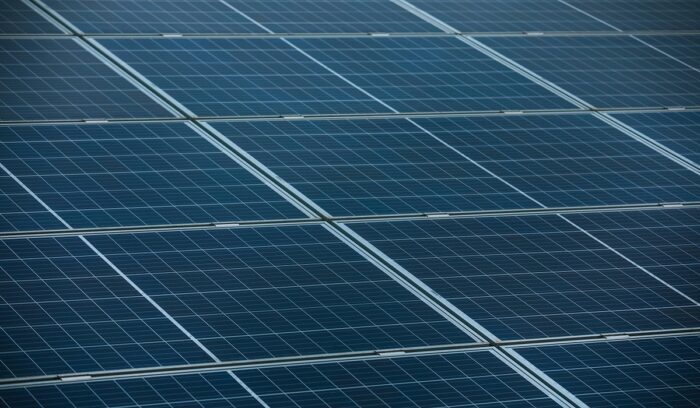
Solar manufacturing in China began quietly in 1975, when two factories — one in Ningbo, one in Kaifeng — started producing photovoltaic cells for civilian use, drawing on technology first developed for the country’s satellite program. Total installed capacity that year reached just half a kilowatt, a modest seed for what would grow into the world’s largest solar industry.

Traditional Chinese medicine, as we know it today, was largely shaped in 1949 when Mao Zedong’s new government unified centuries of competing herbal traditions, folk practices, and cosmological theory into a single standardized system. One legacy: artemisinin, drawn from an herb long used in Chinese medicine, became a modern malaria treatment and earned Tu Youyou the 2015 Nobel Prize.

New Culture Movement thinkers in 1915 Shanghai launched a magazine that would reshape modern China. Chen Duxiu’s New Youth called for “Mr. Science” and “Mr. Democracy” to replace Confucian tradition, while Hu Shih urged writers to abandon classical Chinese for the language people actually spoke. Four years later, those ideas spilled into the streets.

He traveled to Hong Kong in 1894 at the request of the Japanese government during an outbreak of the bubonic plague, and identified a bacterium that he concluded was causing the disease.