
Swiss scientists invent system that produces jet fuel from carbon dioxide, water, and sunlight
The amount of CO2 emitted during kerosene combustion in a jet engine equals that consumed during its production in the solar plant.
This archive covers milestones and breakthroughs from the scientific and academic world — researchers, universities, and institutions whose work advances human knowledge. Stories here highlight discoveries, studies, and scholarly efforts that point toward a better future.

The amount of CO2 emitted during kerosene combustion in a jet engine equals that consumed during its production in the solar plant.

The introduction of such a program, which is offered to any students registered to any of the state’s 22 federally recognized tribes, is the first of its kind in an Arizona public university.
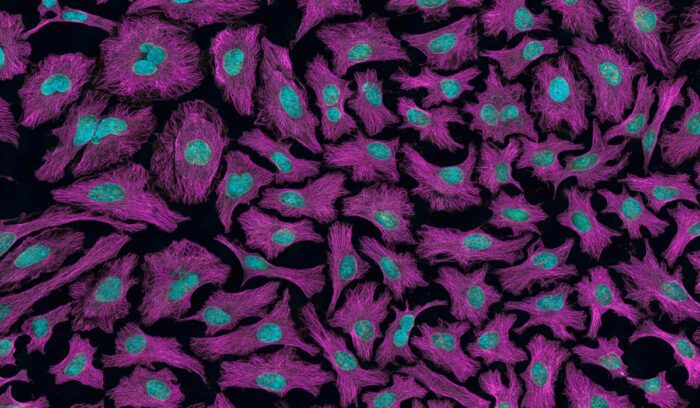
Experts are predicting that this new photoimmunotherapy will be the world’s fifth major cancer treatment following surgery, chemotherapy, radiotherapy, and immunotherapy.

The coating can be rinsed off with water and degrades in soil within three days, according to the study from Rutgers University.

This new method directly kills cancer cells via mechanical movements without anticancer medication, in contrast to the capsule-type nanocarriers that deliver therapeutic drugs.

Space solar power just cleared a milestone that researchers once thought was still years away. China’s test tower at Xidian University is the first facility anywhere to run the complete chain — concentrating sunlight, converting it to electricity, and beaming that power wirelessly to a ground receiver — all in one integrated system, completed roughly three years ahead of schedule. It’s a research milestone, not a power plant, but proving the full system works in one place gives scientists a permanent platform to push the technology forward.

The Tokyo Metropolitan University team’s new technology promises unprecedented performance and robustness in direct air capture systems.

A simple blood test that could catch Parkinson’s disease before symptoms take hold is now closer to reality. Researchers at Kobe University developed an assay that reads changes in enzyme activity in a blood sample, achieving 85 to 88 percent accuracy in both human and rat models. Because treatments like levodopa and exercise work better early in the disease’s progression, earlier detection could meaningfully change what’s possible for patients. With Parkinson’s cases more than doubling globally over the past 25 years, affordable, scalable screening tools like this one could reshape how the world responds to the fastest-growing neurological disorder.

“Implementation of legalized non-medical cannabis coincided with decreases in alcohol and cigarette use and pain reliever misuse,” the University of Washington researchers reported.

Clerkenwell Health’s opening marks a turning point for psychedelic medicine, moving it from university labs into dedicated commercial infrastructure built to carry promising compounds through late-stage clinical trials. The clinic’s first focus is patients facing terminal diagnoses — a population where conventional treatments often fall short, and where earlier psilocybin studies showed lasting reductions in anxiety and depression after just one or two sessions. By serving multiple drug developers at once, the facility could meaningfully accelerate how quickly different psychedelic compounds reach the people who need them. It’s a signal that this field is ready to scale.