International community

This archive collects stories in which the international community — nations, multilateral bodies, and coalitions acting collectively — plays a central role in driving positive change. Coverage spans diplomacy, global agreements, humanitarian efforts, and cross-border cooperation that produce measurable progress.

A child sleeping under a mosquito net in a tropical setting for an article about malaria prevention saving 14 million lives

Global malaria prevention has saved 14 million lives since 2000 C.E.

Malaria prevention programs have saved an estimated 14 million lives and averted 2.3 billion cases of the disease since 2000, according to the WHO World Malaria Report. In 2024 alone, more than 170 million cases and 1 million deaths were prevented, while the number of countries reporting fewer than 1,000 annual cases nearly tripled to 37. Twenty-four countries have now introduced WHO-approved malaria vaccines into routine childhood immunization, a rollout achieved in under four years. Serious challenges remain, including rising drug resistance and a global funding gap that reached 58% in 2024, leaving the gains fragile but undeniable.

Cargo ship, for article on shipping emissions framework

Countries reach historic deal to cut shipping emissions

Shipping emissions just got their first global climate framework — covering the large ocean-going vessels responsible for 85 percent of the industry’s CO₂. Negotiated at the International Maritime Organization in April 2025, the agreement pairs a progressively tightening fuel standard with a carbon price: ships exceeding emissions limits pay in, while near-zero vessels earn rewards. The revenue flows into a dedicated Net-Zero Fund supporting clean energy innovation and easing the transition for small island states and least developed countries already on the front lines of climate change. For an industry long considered one of the hardest to decarbonize — and one that operates beyond any single nation’s reach — this is a quietly historic turn toward cleaner seas and a fairer global transition.

Silhouette of baobob trees, for article on Svalbard Global Seed Vault

Seeds of 19 African tree species added to Svalbard Global Seed Vault

Seeds from 19 African tree species just made it into the Svalbard Global Seed Vault, the icy archive tucked into Norwegian permafrost that now safeguards 1.3 million seed samples from around the world. Thirteen of the newly deposited species are native to Africa, including the beloved baobab and Faidherbia albida, a quietly miraculous tree that fixes nitrogen, feeds livestock, shades crops, and offers food during the dry season. Scientists gathered the seeds alongside Indigenous groups and local seed networks, capturing genetic variations shaped by generations of stewardship. It’s a small, hopeful act of foresight: as forests face mounting pressure worldwide, preserving this living diversity — and honoring the communities who cultivated it — gives future restoration efforts a fighting chance.

digitally colorized scanning electron microscopic (SEM) image, depicts a blue-colored, human white blood cell, (WBC) known specifically as a neutrophil, interacting with two pink-colored, rod shaped, multidrug-resistant (MDR), Klebsiella pneumoniae bacteria, for article on pneumococcal vaccine, for article on pneumococcal vaccines

Global child deaths from pneumonia have been cut in half since 2009

Childhood pneumonia deaths have been cut roughly in half since 2009, when a new kind of vaccine funding model launched and 438 million children across 64 countries received pneumococcal vaccines. The breakthrough wasn’t just the science — it was a $1.5 billion fund that guaranteed manufacturers a buyer, bringing prices down so lower-income countries could finally afford to protect their kids. In Kenya, invasive pneumococcal disease in young children dropped 92% within eight years of rollout. Now the vaccine is reaching fragile places like Chad, Somalia, and South Sudan, where a single dose can mean the difference between life and death. It’s a quiet reminder that when global health gets the funding right, millions of children grow up who otherwise wouldn’t.

Earth's atmosphere glowing blue from space for an article about ozone layer recovery, for article on Montreal Protocol ozone layer, for article on HCFC atmospheric decline

For the first time, researchers detect significant dip in global atmospheric levels of HCFCs

Atmospheric HCFCs are finally falling — the first decline since scientists began tracking these ozone-depleting chemicals in the late 1970s, and it arrived about five years ahead of what the leading models predicted. Researchers at the University of Bristol pinpointed the turnaround to 2021, drawing on a global network of air-sampling stations that has quietly watched the skies for decades. The drop is a direct result of the Montreal Protocol, the only environmental treaty ratified by every UN member state, which paired firm timelines with real financial help for lower-income countries making the switch. It’s a hopeful reminder that patient, well-designed international cooperation actually works — a template worth studying as the world tackles the harder climate fights ahead.

African girl sleeping on mother's shoulder, for article on global child mortality

‘Historic milestone’ as global child mortality hits record low of 4.9 million in 2022

Child deaths worldwide have fallen to 4.9 million in 2022 — the lowest number ever recorded, and roughly half the toll of the year 2000. Behind that drop is decades of unglamorous, working-everyday care: vaccines, bed nets, oral rehydration, skilled midwives, and community health workers showing up in their own neighborhoods. Rwanda offers a remarkable glimpse of what’s possible, having cut its under-five mortality rate by more than 80% since the aftermath of the 1994 genocide through community-based insurance and a serious investment in primary care. The number is still far too high, and newborns and children in conflict zones remain especially vulnerable. But the trend is one of humanity’s quiet, steady triumphs — proof that coordinated care, sustained over decades, saves millions of lives.

River dolphin, for article on river dolphin declaration

11 countries sign global pact to protect endangered river dolphins

River dolphins just got their first global lifeline: 11 countries have signed the Global Declaration for River Dolphins, a pact aiming to double Asian populations and halt declines across South America by 2030. It’s a meaningful turn for a group of species that has lost nearly three-quarters of its numbers since the 1980s. The hope isn’t abstract — China’s Yangtze finless porpoise population grew 23% over five years under strict protections, and the Indus river dolphin has nearly doubled in two decades. Because dolphins signal the health of the rivers nearly a billion people depend on, their recovery points toward something larger: that coordinated, community-rooted conservation can still pull ecosystems back from the brink.

Front of totaled car

Road traffic deaths have fallen significantly across the globe since 2010

The new 2023 World Health Organization report on road safety shows that, since 2010, road traffic deaths have fallen by 5%—and that would translate into a 16% drop if the rise in global population was accounted for. 108 countries reported a drop in road traffic-related deaths between 2010 and 2021. Ten countries succeeded in reducing road traffic deaths by over 50%.

Aerial view of a turquoise French Polynesian atoll for an article about French Polynesia marine protected area, for article on debt-for-nature swap, for article on coral reef protection

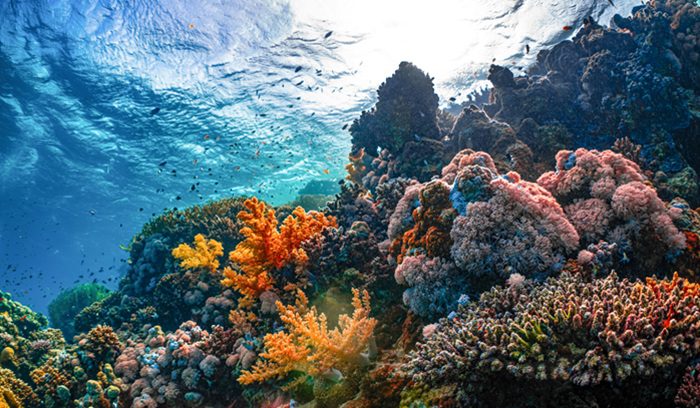
Countries pledge to raise $12 billion to fund coral reef protection

Coral reef protection just got a major boost: more than 40 nations have pledged $12 billion by 2030 to safeguard the ocean ecosystems that roughly a billion people rely on for food, income, and storm protection. It’s the largest coordinated commitment of its kind, blending public, private, and philanthropic money so the work outlasts any one government’s budget. A meaningful share is aimed at frontline communities in the Pacific, Caribbean, and East Africa, where reefs sustain daily life but conservation funding has rarely reached. Scientists have spent years developing heat-tolerant coral strains that this funding could finally scale up. For a global movement long short on resources, this pledge marks a new baseline of ambition — and a recognition that reefs are worth fighting for.