Civil society

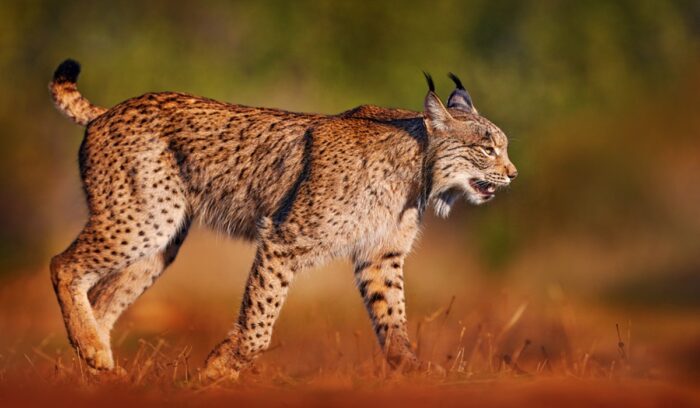
Iberian lynx

Iberian lynx no longer endangered after numbers improve in Spain and Portugal

Less than a quarter of a century after the Iberian lynx was feared to be only a whisker away from extinction, populations of the animal have recovered enough across Spain and Portugal for it to be moved from “endangered” to “vulnerable” on the global red list of threatened species. According to the latest census, the lynx population on the peninsula has risen from just 94 in 2002 to 2,021 last year.

Alive sturgeon in aquarium

Atlantic sturgeon reintroduced in Sweden for the first time after “functional extinction”

The Atlantic sturgeon – a keystone species – was driven to functional extinction in Europe in the middle of the twentieth century. Supported by a grant from Rewilding Europe’s European Wildlife Comeback fund, a pioneering initiative has seen this iconic fish reintroduced in a Swedish river for the first time. A total of 100 juvenile sturgeon were translocated from a breeding facility in the village of Born auf dem Darß, on Germany’s Baltic Sea coast, which is operated by the Mecklenburg-Vorpommern Research Center for Agriculture and Fisheries in Rostock.

Bison

Portugal welcomes first wild bison in 10,000 years as part of plan to rewild a quarter-million acres

From Poland to Romania to the U.K., European wood bison are now firmly recognized as one of the best tools for returning what little wilderness Europe has left to as wild a state as possible. In Portugal, the gradual abandonment of the Greater Côa Valley has presented an unprecedented opportunity for rewilding in the small country. The government has already set aside a quarter million acres of land for conservation.

A person preparing for planting the plant

Campesinos plant nearly a million trees in deforestation hotspot in the Colombian Amazon

More than 700 campesinos from the municipality of Cartagena del Chairá have started restoring more than 11,000 acres of degraded rainforest in one of Colombia’s deforestation hotspots. In collaboration with researchers from SINCHI, the Amazonian Scientific Research Institute, and the Association of Community Action Boards, the families have recorded more than 600 plant and more than 100 animal species in the area.

Karla Sofia Gascon

Karla Sofía Gascón becomes the first trans woman to win award for Best Actress at Cannes

For the first time in its 77-year history, the Cannes Film Festival’s jury bestowed the award for Best Actress on an out transgender woman. Spanish actress Karla Sofía Gascón received the award at Saturday night’s gala awards ceremony alongside Adriana Paz, Zoe Saldaña, and Selena Gomez, her co-stars in French film-maker Jacques Audiard’s Spanish-language musical Emilia Pérez.

A tiny olive ridley sea turtle crawling on sand

Bangladesh achieves major victory in olive ridley turtles conservation

This year, Bangladesh has seen its highest number of olive ridley turtle eggs, thanks to extensive conservation actions, including building awareness among local people and the vigilance of local conservation groups to ensure favorable conditions for the species. The number of eggs has increased by almost 53% compared with the previous year, from 8,096 to 12,425. Those tallies represent a significant jump from the 4,713 eggs recorded in 2020-2021 and 5,763 in 2022-23. The olive ridley is listed as an endangered turtle on the IUCN Red List.

Howler monkey

Brazil takes pioneering action to rewild howler monkeys

Brown howler monkeys, endemic to the Atlantic Forest in Brazil and Argentina, became one of the 25 most threatened primate species following a yellow fever outbreak in late 2016.
In response, Brazilian government agencies and other conservation organizations launched a nationwide population management plan, the first of its kind in the country, focused on coordinating captive facilities with experts who could relocate animals to areas where populations have vanished or declined.

Plastic pollution in the water

Plastic-choked rivers in Ecuador are being cleared with conveyor belts

Created by the tech start-up Ichthion, the Azure system’s simple design has the capacity to stop and collect around 80 tonnes of plastic per day. The Azure system is a boom device that stretches across the river to stop objects floating on the surface. It extends two feet down into the water, allowing fish and other organisms to move freely below and is placed at an angle allowing the natural water flow to direct all debris into one corner of the riverbank.