Business

This archive collects stories about businesses — from startups and local enterprises to multinational corporations — taking meaningful action on social, environmental, and economic challenges. These reports highlight moments when commerce and accountability intersect in constructive ways.

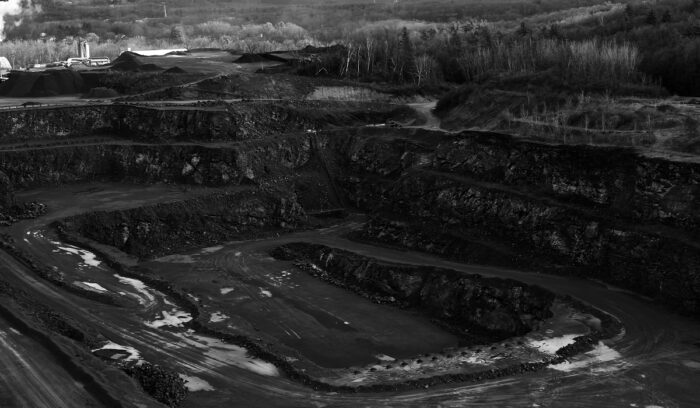
Aerial view of facility, for article on direct air capture

Heirloom Carbon Technologies opens first carbon capture facility in the U.S.

Direct air capture has gone commercial in the United States for the first time, with Heirloom Carbon Technologies opening a plant in Tracy, California that can pull 1,000 metric tons of CO2 straight from the sky each year. The company speeds up a natural process: heating limestone, then letting the mineral soak up atmospheric carbon on open-air trays in days rather than years. The captured CO2 is locked into concrete and stored underground, with companies like Microsoft and Shopify buying removal credits to fund operations. Heirloom went from capturing one kilogram to one million kilograms in just over two years, and hopes to keep copying the design. Tackling legacy emissions, not just new ones, may be essential to stabilizing the climate worldwide.

Ocean Thermal Energy Generator Barge, for article on ocean thermal energy conversion

World’s first commercial-scale ocean thermal energy generator to be built off the coast of São Tomé and Príncipe

Ocean thermal energy conversion just crossed a threshold that has eluded engineers for nearly 140 years. UK-based Global OTEC Resources received independent certification for the cold-water riser pipe at the heart of its floating platform — the very component that has sunk previous attempts to turn ocean temperature gradients into electricity. The flagship vessel, Dominique, is a 1.5-MW system planned for deployment off São Tomé and Príncipe, an island nation of about 220,000 people that currently leans on imported fossil fuels. Because deep ocean temperatures stay constant, a working OTEC plant generates power around the clock, offering tropical island communities something solar and wind cannot: steady, locally produced baseload clean energy on the front lines of climate change.

A fossil fuel-free ammonia plant at the Kenya Nut Company, for article on green ammonia fertilizer

The Kenya Nut Company to become world’s first farm to produce fossil-free fertilizer on site

Green ammonia is about to be made on a working farm for the first time anywhere, at a macadamia operation outside Nairobi producing one ton per day. The plant runs on solar power, splitting water for hydrogen and pulling nitrogen from the air — skipping the natural gas that fertilizer production has depended on for over a century. That matters because the average bag of fertilizer in sub-Saharan Africa travels 10,000 kilometers to reach a farm, leaving growers exposed to every global price shock. Built by U.S. startup Talus Renewables, the system is small enough for a single farm and designed for places where supply chains are long and fragile. If it works, it offers a glimpse of food systems that are both cleaner and more self-reliant.

Offshore wind farm, for article on floating offshore wind farm

World’s new largest offshore wind farm opens in Norway

Floating offshore wind just powered an oil rig for the first time — Norway’s Hywind Tampen now supplies roughly 35% of the annual electricity for five North Sea platforms, cutting around 200,000 tons of CO2 emissions each year. Its 11 turbines float in deep water where fixed-bottom towers can’t reach, and the cost per megawatt came in about 35% lower than its 2017 predecessor, Hywind Scotland. Norwegian suppliers won 60% of the contracts, turning decades of offshore oil expertise into a new green industry at home. The deeper hope: floating wind could eventually unlock more than 80% of the world’s offshore wind potential — energy reserves that were, until recently, simply out of reach.