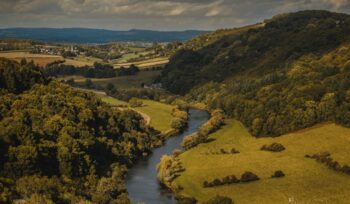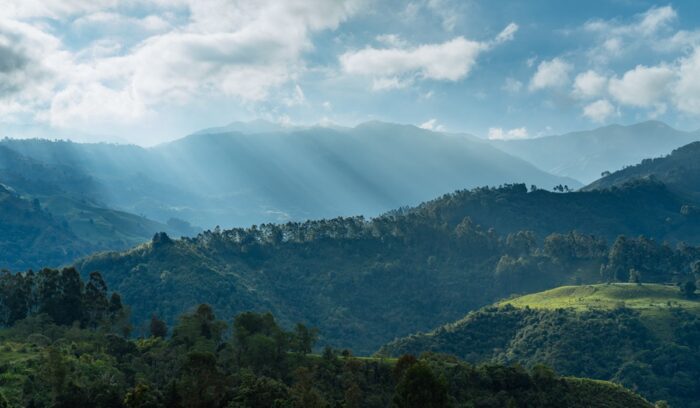
Colombia is putting $3.7 million toward healing one of its most biodiverse national parks after illegal gold mining stripped away forests, poisoned waterways, and pushed ecosystems toward a tipping point. The country’s Ministry of Environment and Sustainable Development has announced a long-term habitat restoration project for Farallones de Cali National Park — a step that follows a year of joint law enforcement operations to remove criminal mining groups from the protected area.
At a glance
- Forest restoration: Colombia’s government plans to reforest degraded land inside Farallones de Cali and test local waterways for mercury contamination left behind by illegal mining operations.
- Illegal gold mining: Criminal groups extracted around 78 kilograms of gold per month from the park’s highest peaks, destroying roughly 1,000 hectares of forest and forming a settlement of more than 800 people.
- Environmental crime arrests: Colombia reported an 80% increase in environmental crime arrests compared to 2021 C.E., with authorities shutting 11 mines and seizing about $1.2 million in heavy machinery and mining equipment.
Why this park matters
Farallones de Cali sits on Colombia’s Pacific coast just outside the city of Cali, covering 196,364 hectares. It is far more than a scenic mountain range.
The park holds over a thousand species of trees, orchids, bromeliads, and ferns, and more than 620 bird species, according to WWF. It functions as a critical biological corridor along one of the most species-rich coastlines on Earth. Its forests also act as a major aquifer, supplying freshwater to millions of people in and around Cali.
Losing this park is not just an ecological loss. It is a public health risk and a threat to urban water security for one of Colombia’s largest cities.
How the damage happened — and what’s being undone
The crisis deepened during the COVID-19 pandemic, when reduced government presence allowed illegal mining operations to expand rapidly. By the time authorities mobilized in earnest, the situation was severe: a settlement of over 800 people had formed inside park boundaries, and miners were pulling nearly 78 kilograms of gold out of the ground every month.
Mercury — used to separate gold from soil — was routinely dumped back into rivers and streams, poisoning wildlife, vegetation, and local communities downstream. Officials described the impact on the park’s soil as “disastrous.”
Last year, joint operations between environmental and law enforcement agencies removed the settlement, closed 11 mines, and arrested ten people. Confiscated equipment was valued at around $1.2 million. “The message is clear: together, we can control the territory and dismantle these criminal gangs,” said Susana Muhamad, Colombia’s Minister of Environment and Sustainable Development.
A long road back
Restoration will not be fast. Officials estimate it could take up to 20 years for the forest to grow back and 50 years for the park’s full ecosystem to recover. The $3.7 million investment will fund reforestation efforts and mercury-level analysis in local water bodies — a necessary step before ecological recovery can begin.
Luis Ortega, president of the International Union for the Conservation of Nature, called the effort a model for action. “You have to recognize that officials have made a very good effort,” he said. “Farallones is a priority. Although it might not seem like it, it’s one of the models for taking action against the threat of mining.”
Colombia has also seen a broader enforcement surge: environmental crime arrests rose more than 80% compared to 2021 C.E., signaling that the government is treating ecological protection as a serious law enforcement priority.
Reasons for cautious optimism
Colombia has attempted reforestation in other parts of the country before, with mixed results. In some cases, miners have returned after government attention moved elsewhere. Authorities have not yet released detailed plans for how the reforestation will be carried out or how the park will be protected from future encroachment over the decades-long recovery period.
Still, the combination of enforcement, investment, and institutional attention at Farallones de Cali represents something meaningful. Colombia’s national parks cover some of the most biodiverse land on the planet, and the decisions made here — about whether to hold the line against illegal extraction — carry weight far beyond one park’s borders.
The Colombian national parks authority has framed this as a long-term commitment, not a one-time operation. Whether that commitment holds through political transitions and economic pressures will determine whether Farallones de Cali becomes a story of genuine recovery — or a cautionary tale repeated elsewhere.
Read more
For more on this story, see: Mongabay
For more from Good News for Humankind, see:
- Indigenous land rights get a major push at COP30
- Ghana creates a new marine protected area at Cape Three Points
- The Good News for Humankind archive on Colombia
About this article
- 🤖 This article is AI-generated, based on a framework created by Peter Schulte.
- 🌍 It aims to be inspirational but clear-eyed, accurate, and evidence-based, and grounded in care for the Earth, peace and belonging for all, and human evolution.
- 💬 Leave your notes and suggestions in the comments below — I will do my best to review and implement where appropriate.
- ✉️ One verified piece of good news, one insight from Antihero Project, every weekday morning. Subscribe free.