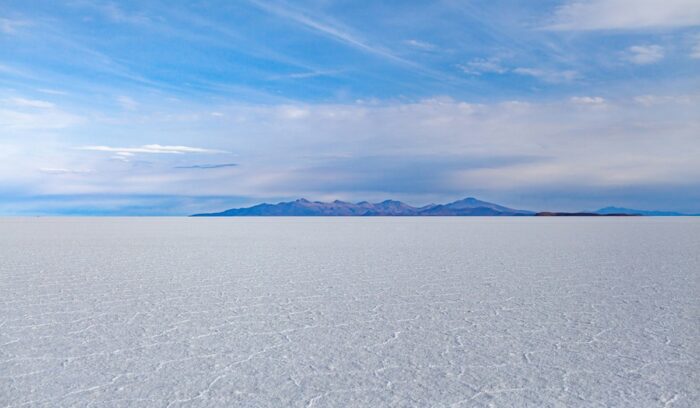
Chile’s government has announced a network of protected salt flats that will raise the share of these fragile ecosystems under formal protection from roughly 8% to 25%. The move comes as part of the country’s National Lithium Strategy of 2023 C.E. and represents one of the most significant conservation commitments for Andean high-altitude wetlands in the country’s history.
At a glance
- Salt flat protection: The new network covers 15 high-altitude wetlands in the Antofagasta region, 11 in the Atacama region, and the Lagunilla lagoon in Tarapacá — 14 salt flats and 13 lagoons in total.
- Biodiversity criteria: The government cited four variables for selecting protected sites: biodiversity conservation, water protection, soil carbon sequestration, and social and cultural benefits.
- 30×30 alignment: The expansion brings Chile closer to the global Convention on Biological Diversity’s target of protecting at least 30% of the planet’s ecosystems by 2030 C.E.
Why salt flats matter
Chile’s salt flats are not simply mineral deposits. They are living ecosystems — interlocking networks of wetlands, underground aquifers, and biogeochemical cycles that support species found nowhere else on Earth.
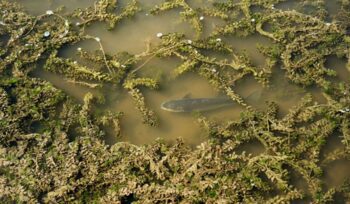
Three of the world’s six flamingo species breed and feed here: the Chilean flamingo (Phoenicopterus chilensis), the puna flamingo (Phoenicoparrus jamesi), and the Andean flamingo (Phoenicoparrus andinus). The first two are listed as near threatened on the IUCN Red List; the third is classified as vulnerable. The Ascotán salt flat is home to Orestias ascotanensis, a fish found in no other place on Earth.
Scientists also point to extremophiles — microorganisms adapted to extreme environments — that produce biomolecules with applications in cosmetics, pharmaceuticals, and mining. Tania Sauma, content adviser at Chile’s environment ministry, has described this biological richness as a “genetic heritage.”
The scale of Chile’s lithium ambition
Chile holds what are believed to be the world’s largest lithium reserves, locked in the brine of its salt flats. Currently, the country extracts lithium from just the Atacama salt flat, yet that single site accounts for more than 30% of global lithium production. Australia leads overall production, but Chile’s government has set a goal of reaching nearly 70% of global output by 2030 C.E. and doubling that by 2034 C.E.
State mining giant Codelco will hold a majority stake in lithium development at the Atacama and Maricunga salt flats — the country’s two largest reserves. The government has also opened 26 additional salt flats to bidding by national and international companies through a special lithium operation contract known as a CEOL. Seven more salt flats will be developed directly by state companies.
The lithium powering electric vehicles and grid-scale batteries is central to the global clean energy transition. International Energy Agency projections show lithium demand rising sharply through the 2030s C.E., making decisions about how Chile manages its reserves consequential far beyond its borders.
What scientists are celebrating — and questioning
More than 140 scientists, researchers, and academics signed an open letter to the Chilean government calling for urgent salt flat protections and for the “incorporation of scientific evidence and Indigenous peoples’ knowledge” in ecosystem decisions. Many of those same researchers welcomed the protected-areas announcement as real progress while pushing for stronger criteria.
“Those of us who signed this letter also believe it is essential to protect basins according to the precautionary principle,” said Verónica Molina, general director of the Environmental HUB at the University of Playa Ancha, citing irreparable damage already caused to some basins by water overextraction for copper mining.
Ingrid Garcés, a researcher at the University of Antofagasta who has studied the Surire and Maricunga salt flats for eight years, said that not enough scientific studies have been completed on most salt flats before major decisions are made. Antonio Pulgar, a lawyer and environmental researcher at the University of Chile, noted that flamingo nesting sites were not factored into the selection criteria — a gap he described as ecologically concerning.
Chile’s Mining Code classifies salt flats as mineral deposits, not wetlands — a legal framing that scientists say obscures their true ecological nature. Ramón Morales Balzacar of the Plurinational Observatory of Andean Salt Flats added that the establishment of protected areas does not automatically exclude extractive projects, which raises questions about what protection will mean in practice.
A high-stakes balance
The tension at the heart of Chile’s lithium strategy is not unique. Countries around the world are grappling with how to mine the materials that clean energy requires without destroying the ecosystems those same materials are meant to protect. Chile’s decision to formally designate protected salt flats — while also expanding extraction — puts that tension in sharp relief.
Environment Minister Maisa Rojas has said the government will ensure “the use of low-environmental-impact technology” in all extraction efforts. Whether that commitment holds, and whether the protected network is designed with enough scientific rigor to be durable, will depend heavily on the transparency of decisions still to come. The identities of the 26 salt flats slated for commercial bidding have not yet been made public, and civil society organizations have criticized that lack of disclosure.
What is clear is that Chile’s salt flats — ancient, irreplaceable, and home to life that exists nowhere else — now sit at the intersection of the global clean energy transition and the urgent need to protect biodiversity. Getting the balance right matters for the planet, not just for Chile.
Read more
For more on this story, see: Mongabay — Chile to protect some salt flats, but selection lacks data, scientists say
For more from Good News for Humankind, see:
- Ghana expands marine protection at Cape Three Points
- Renewables now make up at least 49% of global power capacity
- The Good News for Humankind archive on Chile
About this article
- 🤖 This article is AI-generated, based on a framework created by Peter Schulte.
- 🌍 It aims to be inspirational but clear-eyed, accurate, and evidence-based, and grounded in care for the Earth, peace and belonging for all, and human evolution.
- 💬 Leave your notes and suggestions in the comments below — I will do my best to review and implement where appropriate.
- ✉️ One verified piece of good news, one insight from Antihero Project, every weekday morning. Subscribe free.