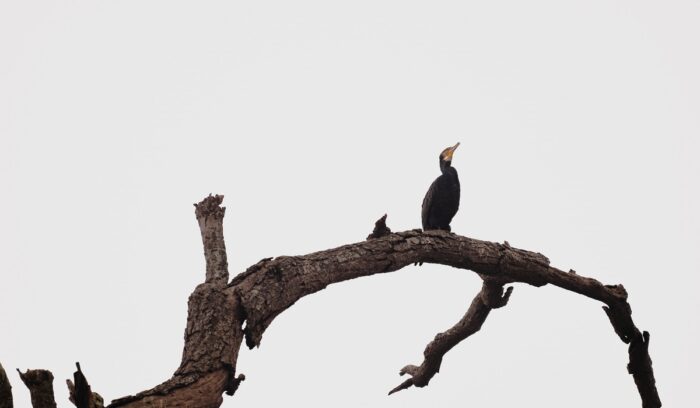
A wetland in western Nepal has become the country’s first official bird sanctuary, marking a landmark moment for conservation in a region that supports over 360 bird species — including more than a dozen facing global population decline. The Ghodaghodi complex, located in Sudurpashchim province, was declared a sanctuary by both the provincial and Ghodaghodi municipal governments, covering 2,563 hectares of lakes, marshes, and forest.
At a glance
- Bird sanctuary designation: The Ghodaghodi complex is Nepal’s first area to receive official bird sanctuary status, protected under new provincial legislation created specifically for this purpose.
- Globally threatened species: More than a dozen birds recorded here face declining populations worldwide, including the great hornbill (Buceros bicornis), lesser adjutant stork (Leptoptilos javanicus), and Indian spotted eagle (Clanga hastata).
- Ramsar wetland: The complex has been inscribed on the global list of important wetlands under the Ramsar Convention, recognizing its international ecological significance.
Why this sanctuary matters
Ghodaghodi sits on the lower slopes of the Siwalik hills — the youngest range in the Himalayan region — and serves as a critical wildlife corridor between the southern plains and the hills above. That position makes it far more than a birdwatching destination.
The area shelters Bengal tigers (Panthera tigris), red-crowned roofed turtles (Batagur kachuga), and the fragrant orchid Aerides odorata. The religiously significant Indian lotus (Nelumbo nucifera) and the rare wild rice species Hygrohiza aristata have also been recorded here. For conservationists, it is the kind of place where protecting one species protects many.
Local governments step up
The designation carries a signal beyond the ecological. Nepal’s federal law has no provisions for declaring a bird sanctuary, so the Sudurpashchim provincial government created separate legislation to make it possible.
“The launch of the first bird sanctuary in the country sends a message that local governments are equally committed to conserving biodiversity,” said ornithologist Hem Sagar Baral, who also serves as Nepal country representative for the Zoological Society of London. He noted that concern had been growing about whether local governments would take ownership of conservation work as protected areas policy shifted toward the federal level. This decision pushes back against that worry directly.
Sudurpashchim’s chief minister Trilochan Bhatta framed the declaration as just the beginning. “Mere declaration of the area as a bird sanctuary is not enough,” he said. “It’s everyone’s duty to conserve the natural, religious and historical importance of this site.”
Threats remain real
The Ghodaghodi complex faces significant pressure. According to the Ramsar Sites Information Service, intensive traditional fishing and agriculture, highway traffic along its southern edge, unplanned temple construction, overgrazing, poaching, and illegal tree felling all pose ongoing risks to the site.
Detailed management procedures for the newly designated sanctuary have not yet been established — a gap that Baral acknowledged openly. “However, detailed procedures on how the site is to be managed from now on is still to be prepared,” he said.
The designation alone does not resolve those pressures. But it creates the legal framework that makes organized protection possible where none existed before.
A model for cross-border cooperation
Because the complex sits close to Nepal’s border with India, Baral sees potential for building on the sanctuary status in another direction. The site could draw more Indian tourists, who already visit the area, and that foot traffic could generate local support for conservation over time.
Organizations like Bird Conservation Nepal have long documented the importance of sites like Ghodaghodi to the country’s remarkable avian diversity. Nepal’s position along major migratory flyways makes such habitats disproportionately valuable — not just for resident species, but for birds traveling thousands of kilometers each season. The IUCN Red List currently classifies several species found here as vulnerable or endangered, giving the sanctuary international as well as national relevance.
“Let’s hope the new initiative will help deal with the threats and conserve the crucial site,” Baral said. That measured optimism — hopeful but eyes open — seems about right for a milestone that is real, significant, and still unfinished.
Read more
For more on this story, see: Mongabay
For more from Good News for Humankind, see:
- Ghana establishes a new marine protected area at Cape Three Points
- Indigenous land rights recognition reaches 160 million hectares ahead of COP30
- The Good News for Humankind archive on Nepal
About this article
- 🤖 This article is AI-generated, based on a framework created by Peter Schulte.
- 🌍 It aims to be inspirational but clear-eyed, accurate, and evidence-based, and grounded in care for the Earth, peace and belonging for all, and human evolution.
- 💬 Leave your notes and suggestions in the comments below — I will do my best to review and implement where appropriate.
- ✉️ One verified piece of good news, one insight from Antihero Project, every weekday morning. Subscribe free.