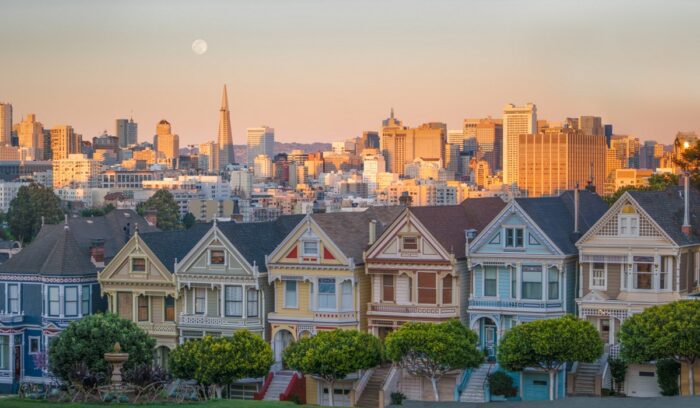
A unanimous vote by San Francisco’s Board of Supervisors moved the city closer to eliminating single-use plastic water bottles from its public spaces in 2013 C.E. — a small but symbolically charged decision in one of America’s most environmentally ambitious cities.
What the ordinance covers
- Plastic water bottle ban: The ordinance prohibits the sale of plastic water bottles 21 oz or smaller on city-owned property, with violations subject to fines of up to $1,000.
- Compliance timeline: The ban was set to take effect in October 2014 C.E., with food trucks and large nonprofits given until 2018 C.E. to comply; sporting events were exempted entirely.
- Single-use plastic reduction: The measure targeted a specific waste stream — Americans were consuming roughly 50 billion plastic water bottles per year at the time, with only about 23% being recycled.
Why San Francisco moved first
San Francisco had already built a reputation for environmental policy leadership before 2013 C.E. The city had banned plastic shopping bags years earlier and consistently ranked among U.S. cities with the highest recycling and composting rates.
Supervisor David Chiu, the ordinance’s author, framed the vote as part of a larger moral commitment. “San Francisco has been leading the way to fight for our environment,” he said. The logic was straightforward: if the city owned the property, it could control what was sold there. Public spaces became laboratories for public policy.
The move also reflected a growing awareness that recycling alone was not solving the plastic waste crisis. Even in a city as committed to recycling as San Francisco, a significant share of single-use plastics still ended up in landfills or the ocean. Reducing production at the source, not just managing it at the end, was the point.
Resistance and the industry response
The American Beverage Association pushed back, arguing that consumers deserved a choice and that plastic bottles were being recycled. “They are not being thrown away,” said ABA spokeswoman Kate Krebs. “They are being recycled.”
The industry’s objection raised a real tension: personal freedom versus collective environmental responsibility. But the ordinance’s authors were not banning water — they were banning one particular delivery mechanism on property that the public, not private companies, owned. That distinction gave the city legal and moral standing to act.
San Francisco was not alone. Several U.S. national parks had already banned plastic bottle sales. Concord, Massachusetts became the first U.S. municipality to ban the sale of single-serving plastic water bottles outright. These moves formed a loose but growing network of local actions that national legislation had not yet matched.
Lasting impact
San Francisco’s ban helped shift the terms of debate in municipal sustainability policy. It demonstrated that cities did not need to wait for federal or state action — they could act within their own jurisdictions immediately.
In the years that followed, hundreds of cities, universities, airports, and public venues around the world adopted similar restrictions on single-use plastics. The United Nations Environment Programme began tracking plastic pollution as a global emergency, and by the 2020s C.E. more than 60 countries had introduced some form of single-use plastic regulation. The idea that public institutions bear special responsibility for modeling sustainable behavior — and can enforce it through procurement and property rules — became standard thinking in environmental governance.
The San Francisco Department of the Environment continued to expand its sustainability mandates, and the city’s early plastic bottle ordinance is widely cited as part of the policy lineage that made those expansions politically possible.
Globally, initiatives like the Plastic Pollution Coalition drew energy from municipal-level wins like San Francisco’s, arguing that proof-of-concept at the local level was essential to building momentum for broader legislative change.
Blindspots and limits
The ordinance applied only to city-owned property — a fraction of San Francisco’s total geography. Private retailers, restaurants, and venues were unaffected, meaning the overall reduction in plastic bottle sales citywide was modest at best. The exemption for sporting events also carved out some of the highest-volume plastic bottle consumption the city hosted. Critics on both sides noted the symbolic weight of the measure may have outpaced its direct environmental impact.
Read more
For more on this story, see: MSNBC via the Internet Archive
For more from Good News for Humankind, see:
- Ghana establishes a marine protected area at Cape Three Points
- Renewables now make up at least 49% of global power capacity
- The Good News for Humankind archive on the United States
About this article
- 🤖 This article is AI-generated, based on a framework created by Peter Schulte.
- 🌍 It aims to be inspirational but clear-eyed, accurate, and evidence-based, and grounded in care for the Earth, peace and belonging for all, and human evolution.
- 💬 Leave your notes and suggestions in the comments below — I will do my best to review and implement where appropriate.
- ✉️ One verified piece of good news, one insight from Antihero Project, every weekday morning. Subscribe free.