Wildlife & land conservation

This archive brings together 265 stories about wildlife recovery, protected lands, habitat restoration, and the communities driving conservation forward. From endangered species rebounds to new national parks and Indigenous-led stewardship, these articles document real, verifiable progress happening around the world. If you want evidence that protecting nature is working, this is where to look.

Herd of caribou

Inuvialuit people and Canadian governments sign deal to create massive new conservation area

The Inuvialuit and the Canadian federal and Yukon governments have signed a new conservation agreement to ensure greater protection for more than 2 million acres of the Yukon’s northeast coast, 1.8% of Yukon’s landmass. The agreement provides protection and conservation of wildlife such as the Porcupine caribou herd, polar bears, and migratory birds. It will also help preserve and promote traditional use amongst Inuvialuit mostly living in Aklavik and Inuvik in the Northwest Territories who access the area.

Alive sturgeon in aquarium

Atlantic sturgeon reintroduced in Sweden for the first time after “functional extinction”

The Atlantic sturgeon – a keystone species – was driven to functional extinction in Europe in the middle of the twentieth century. Supported by a grant from Rewilding Europe’s European Wildlife Comeback fund, a pioneering initiative has seen this iconic fish reintroduced in a Swedish river for the first time. A total of 100 juvenile sturgeon were translocated from a breeding facility in the village of Born auf dem Darß, on Germany’s Baltic Sea coast, which is operated by the Mecklenburg-Vorpommern Research Center for Agriculture and Fisheries in Rostock.

Rainforest scene, for article on Suriname Indigenous land rights

Landmark ruling in Suriname grants protections to local and Indigenous communities

Suriname’s Indigenous land rights just got their first real domestic legal footing, with a court blocking agricultural development across roughly 535,000 hectares of Amazon rainforest. Twelve Indigenous and maroon communities brought the case, and for the first time a Surinamese court — not an international body — affirmed that the government must seek free, prior and informed consent before handing over ancestral land. The communities involved include descendants of Africans who escaped colonial plantations and have stewarded these forests for centuries. Suriname remains one of only three countries on Earth that absorbs more carbon than it emits, and protecting these forests helps keep it that way. Domestic rulings tend to stick, offering a model for Indigenous land defenders across the Amazon basin and beyond.

Bison, for article on Portugal wild bison

Portugal welcomes first wild bison in 10,000 years as part of plan to rewild a quarter-million acres

European wood bison are back in Portugal for the first time since the last Ice Age, with a small herd settling into the Greater Côa Valley. They came from Poland, where more than 4,000 wisent now roam wild — a remarkable turnaround for a species that survived the 20th century with just 50 animals left in zoos. Conservationists hope the bison will reshape the landscape through grazing and trampling, encouraging biodiversity and even helping break up the dense, dry vegetation that fuels Portugal’s wildfires. It’s a small herd with a big role to play, and a hopeful sign of what Europe’s growing rewilding movement can do when given room to breathe.

A person preparing for planting the plant

Campesinos plant nearly a million trees in deforestation hotspot in the Colombian Amazon

More than 700 campesinos from the municipality of Cartagena del Chairá have started restoring more than 11,000 acres of degraded rainforest in one of Colombia’s deforestation hotspots. In collaboration with researchers from SINCHI, the Amazonian Scientific Research Institute, and the Association of Community Action Boards, the families have recorded more than 600 plant and more than 100 animal species in the area.

Vast salt flat

Chile to create network of protected salt flats

Currently, only around 8% of Chile’s salt flats are protected. The new network of protected salt flats will raise that to 25%. This also aligns with the 30×30 goal as outlined by the global Convention on Biological Diversity, which ensures that at least 30% of the planet’s ecosystems are protected by 2030. The protection plan is part of the broader National Lithium Strategy, which seeks to make Chile the world’s lead producer of lithium, a critical component of EV batteries.

A tiny olive ridley sea turtle crawling on sand

Bangladesh achieves major victory in olive ridley turtles conservation

This year, Bangladesh has seen its highest number of olive ridley turtle eggs, thanks to extensive conservation actions, including building awareness among local people and the vigilance of local conservation groups to ensure favorable conditions for the species. The number of eggs has increased by almost 53% compared with the previous year, from 8,096 to 12,425. Those tallies represent a significant jump from the 4,713 eggs recorded in 2020-2021 and 5,763 in 2022-23. The olive ridley is listed as an endangered turtle on the IUCN Red List.

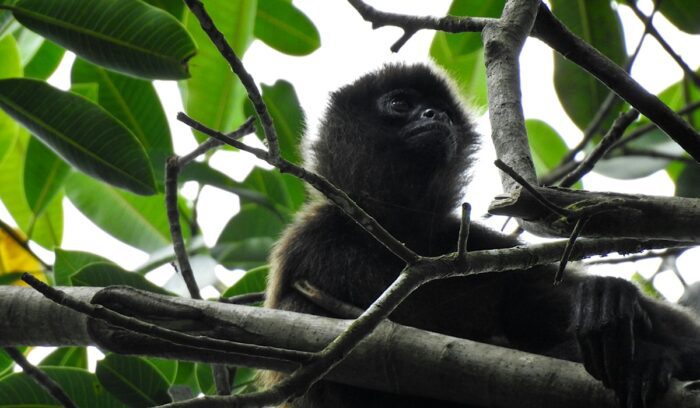
Howler monkey

Brazil takes pioneering action to rewild howler monkeys

Brown howler monkeys, endemic to the Atlantic Forest in Brazil and Argentina, became one of the 25 most threatened primate species following a yellow fever outbreak in late 2016.
In response, Brazilian government agencies and other conservation organizations launched a nationwide population management plan, the first of its kind in the country, focused on coordinating captive facilities with experts who could relocate animals to areas where populations have vanished or declined.

Acacia tree branch

Democratic Republic of the Congo plants more than 800 million trees between 2019 and 2023

Ten percent of the world’s tropical forests are found in the Democratic Republic of the Congo (DRC). But the U.N.’s Food and Agriculture Organization estimates the DRC is losing 1.2 million acres of forest every year. To help address this, a Congolese government program aspired to plant 1 billion trees between 2019 and 2023, aiming to strengthen climate resilience, alleviate poverty and protect biodiversity, and achieved 90% of their goal.