Wildlife & land conservation

This archive tracks meaningful progress in protecting wildlife and preserving land — from habitat restoration and endangered species recoveries to new protected areas and conservation policy wins. These stories focus on what’s working, grounded in evidence and reported with care.

Bear roaming through the misty old-growth forest of the Great Bear Rainforest agreement protected wilderness

Great Bear Rainforest agreement protects millions of acres under Indigenous leadership

The Great Bear Rainforest agreement, signed in February 2016, protected 85% of old-growth trees across 6.4 million hectares of British Columbia’s coast — a temperate rainforest roughly the size of Ireland. Reached after nearly 20 years of negotiation, it placed 26 First Nations at the center as co-managers, embedding Indigenous authority into conservation law.

Danube river band from the predikaloszek view point in Hungary with Visegrad and Nagymaros, for article on Mura-Drava-Danube transboundary conservation

Five countries sign declaration to create world’s first five-nation protected area on “Europe’s Amazon”

In March 2011, environment ministers from Austria, Croatia, Hungary, Serbia, and Slovenia gathered in Gödöllő, Hungary, and signed a declaration to protect a 700-kilometer corridor of wild rivers known as “Europe’s Amazon.” The agreement laid the groundwork for what became, a decade later, the world’s first UNESCO five-country biosphere reserve — a rare instance of rivers drawing nations together.

Eye of reptile, for article on biodiversity convention

UN Convention on Biological Diversity enters into force with 168 signatories

The Convention on Biological Diversity became binding international law on December 29, 1993, committing nations to protect the planet’s living systems as “a common concern of humankind.” Born at the Rio Earth Summit a year earlier, it drew 168 signatures — the largest sign-on to any environmental treaty at that point. It reframed conservation from saving single species to safeguarding the full web of life.

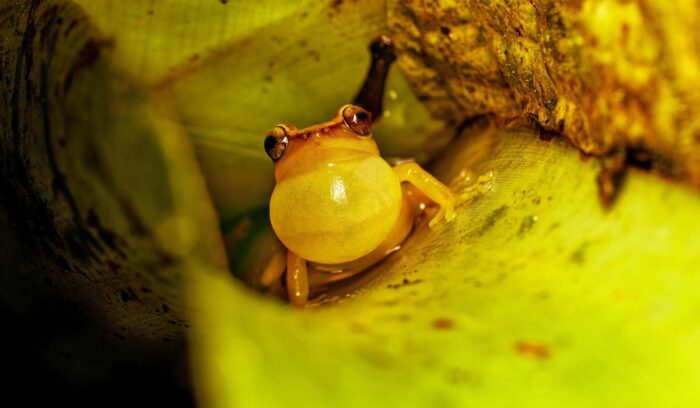
Tree frog, for article on yasuní national park

Ecuador formally establishes Yasuní National Park, protecting Earth’s most biodiverse patch of Amazon

Yasuní National Park was established in 1979, when Ecuador drew a boundary around roughly 10,000 square kilometers of Amazonian rainforest where the equator, Andes, and Amazon converge. A single hectare there holds more insect species than all of North America. The park remains home to the Huaorani and two uncontacted peoples who have lived there for generations.

Black-and-white photo of baby gorilla, for article on Albert National Park

Belgian Congo establishes Albert National Park, Africa’s first national park

Albert National Park opened in 1925, carving out protected wilderness across the volcanic highlands of the Belgian Congo — the first national park on the African continent. American naturalist Carl Akeley had lobbied hard for it after meeting mountain gorillas in the Virunga highlands, and was later buried within its boundaries. A fraught beginning, and an enduring one.

Title page of Sylva, for article on forest conservation

John Evelyn presents Sylva to the Royal Society, launching forest conservation

In 1662, English writer John Evelyn stood before London’s Royal Society and warned that England’s forests were vanishing under the weight of shipbuilding, iron-smelting, and careless felling. His paper Sylva called not just for restraint but for active replanting — one of the earliest formal Western arguments that nature must be tended, not simply taken.