Religion

This archive gathers 60 stories about meaningful progress at the intersection of faith, community, and public life. From interfaith cooperation on climate and poverty to congregations expanding social services, these articles document what religious communities are doing — and achieving — across the U.S. and around the world.

image for article on emergence of Buddhism

Buddhism emerges in India, offering a path beyond suffering

Buddhism took shape in northeastern India around the 5th century B.C.E., when a former prince named Siddhartha Gautama sat beneath a fig tree and worked out why human minds suffer. He taught in everyday languages, reaching merchants, farmers, and women long excluded from sacred learning. Today, more than 500 million people follow the path he described.

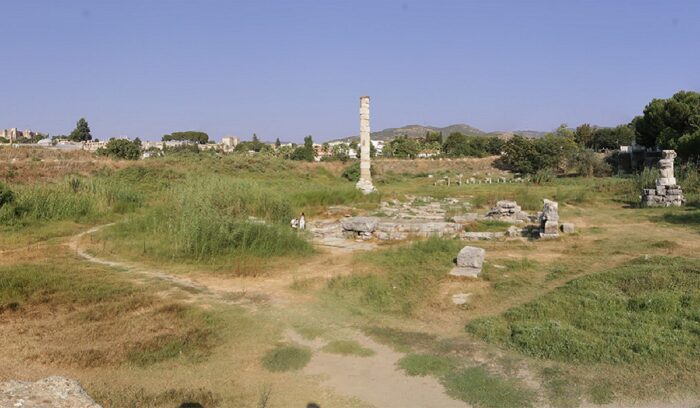
View of the site of the Temple of Artemis, for article on temple of artemis

The Temple of Artemis at Ephesus rises as one of the ancient world’s greatest buildings

The Temple of Artemis at Ephesus was completed around 550 B.C.E., rising from marshy Anatolian ground as one of the first monumental buildings made almost entirely of marble. Its architects stabilized the soft soil with charcoal and sheepskin, and its funding drew from Greek cities and the Lydian king Croesus alike — a wonder built at a cultural crossroads.
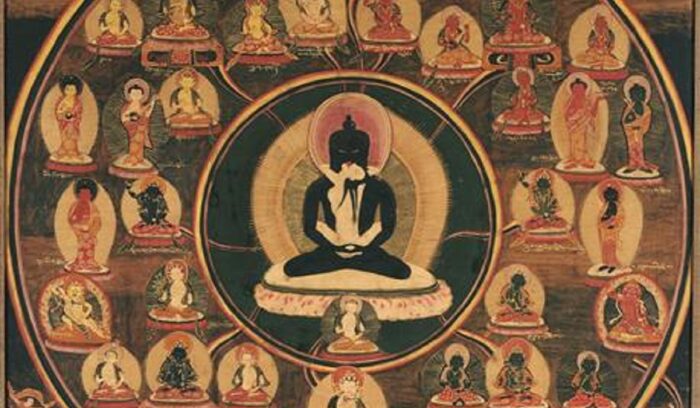
Tibetan Thanka of Bardo. Vision of Serene Deities, for article on bardo thodol

Padmasambhava’s teachings on death are set down, shaping Tibetan Buddhism

The Tibetan Book of the Dead was first committed to writing in 8th-century Tibet, then hidden in the Gampo hills as a terma, or treasure text, until the terton Karma Lingpa unearthed it around the 14th century. Traditionally credited to Padmasambhava and preserved by his student Yeshe Tsogyal, it offers a map for consciousness navigating the passage between death and rebirth.

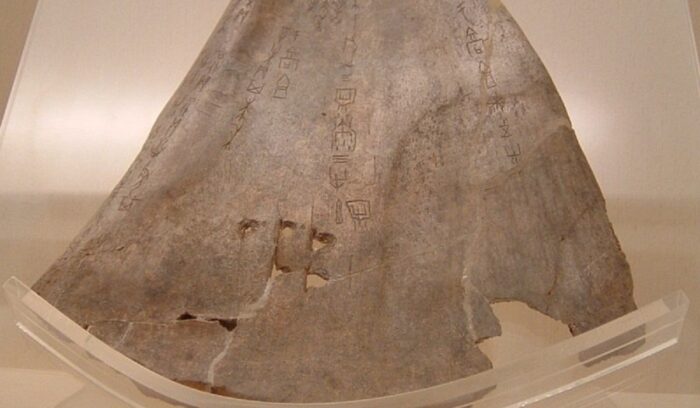
Oracle bone with Old Chinese inscription, for article on oracle bones

Shang dynasty diviners inscribe oracle bones to consult the ancestors

Oracle bones from China’s Shang dynasty, inscribed around 3,200 years ago, preserved royal questions about weather, war, and family illness, burned into ox scapulae and turtle shells. Rediscovered in 1899 when a scholar spotted ancient characters on “dragon bones” sold as medicine, they confirmed the Shang’s existence and revealed the earliest known ancestor of modern Chinese writing.

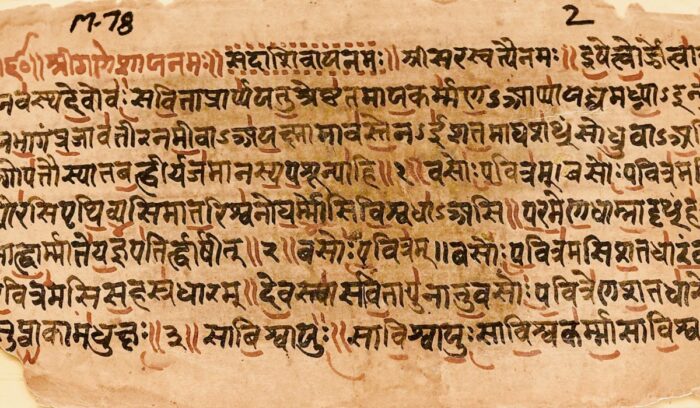
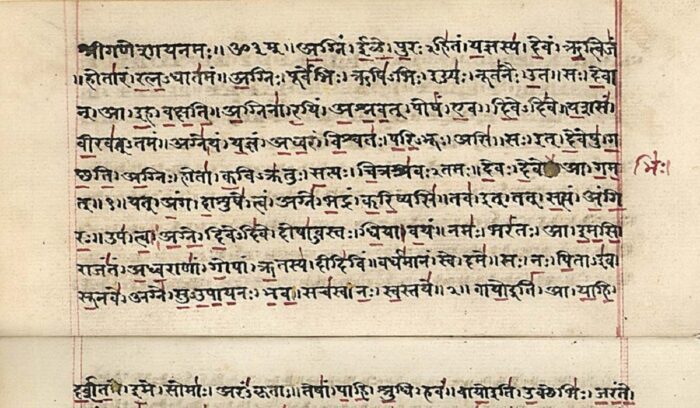
A page from the Vajasneyi samhita found in the Shukla Yajurveda, for article on Yajurveda Vedic ritual mantra

Yajurveda takes shape as a guide to Vedic ritual practice

The Yajurveda took shape around 1200 B.C.E., as priests across the Indian subcontinent gathered the spoken formulas used in fire rituals into one of the world’s most enduring liturgical texts. Its earliest layer holds roughly 1,875 verses, memorized and passed down aloud for centuries before ever being written. Its later Upanishads still echo through philosophy today.

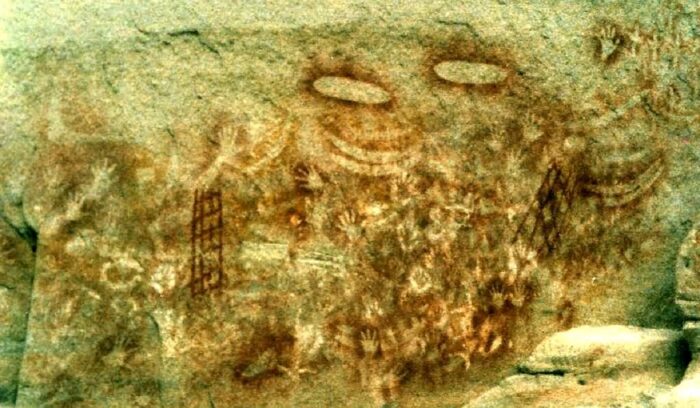
Aboriginal art at Carnarvon Gorge, for article on Aboriginal Australian Dreaming

Aboriginal Australians carry the Dreaming, one of humanity’s oldest living worldviews

Aboriginal Australian Dreaming traditions stretch back an estimated 50,000 to 65,000 years, making them among the oldest continuous cultural systems on Earth. Across hundreds of distinct nations, Dreaming stories weave law, kinship, and ecology into the land itself — encoding knowledge so durable that some oral records preserve sea-level changes from over 7,000 years ago.