
Global suicide rate has declined by 29% since 2000, saving 2.8 millions lives
There is no one reason for the global decline, but it is particularly notable among young women in China and India, middle-aged men in Russia, and the elderly.
Progress on mental health and addiction is real — and often underreported. This archive covers treatment breakthroughs, policy shifts, community-led programs, and research advances that are improving lives. It’s evidence that change is possible.

There is no one reason for the global decline, but it is particularly notable among young women in China and India, middle-aged men in Russia, and the elderly.

A small clinical trial published last week in the Journal of Psychopharmacology found that therapeutic doses of MDMA, in concert with psychotherapy, reduced the severity of most participants’ PTSD symptoms.

The US Food and Drug Administration has just granted a “Breakthrough Therapy” designation to a treatment that uses psychedelic mushrooms as a therapy for treatment-resistant depression.

Robotics startup LuxAI has created QTrobot, a bot designed to help children with autism learn valuable social skills.

The Empire State’s law, which was reportedly written in 2015, says mental health is “an integral part of our overall health and should be an integral part of health education in New York schools.”

The researchers analyzed the language used by subscribers on the r/depression subreddit, concluding that users’ language improved in nine of 10 categories, suggesting r/depression prompted a “positive emotion change” in users.

The U.S. Food and Drug Administration today announced a new comprehensive plan for tobacco and nicotine regulation that will serve as a multi-year roadmap to better protect kids and significantly reduce tobacco-related disease and death.

Norwegian prison reform began in 1968, when a group of activists, lawyers, and formerly incarcerated people founded KROM to challenge a system where recidivism hovered around 60 to 70 percent. Early wins came slowly — forced labor ended in 1970, juvenile centers closed in 1975 — but the reframing they started reshaped how a country could think about justice.
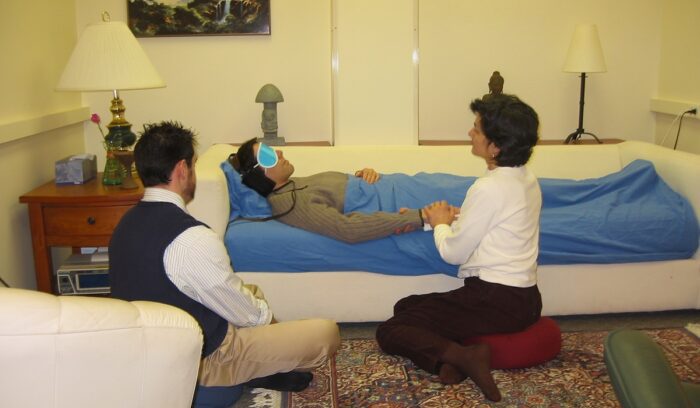
Psychedelic therapy began in the early 1950s at a Saskatchewan psychiatric hospital, where Abram Hoffer and Humphrey Osmond gave LSD to patients struggling with alcoholism in carefully guided sessions. Osmond would later coin the word “psychedelic” in a 1957 letter to Aldous Huxley. Seven decades on, their prepare-administer-integrate framework is quietly reshaping modern psychiatry.