International cooperation

International cooperation shapes some of the most consequential progress happening across the globe. This archive covers 151 stories about treaties signed, coalitions formed, and shared problems tackled by countries working together — from climate agreements and public health partnerships to nuclear safeguards and humanitarian aid. These are the moments when nations choose collaboration over conflict.

Sunset by smokestacks, for article on fossil fuel phaseout

More than 50 nations attend world-first conference on phasing out fossil fuels

Fossil fuel phaseout talks just crossed a real threshold: for the first time, more than 50 nations sat down together specifically to plan a way off coal, oil, and gas. The two-day gathering in Santa Marta, Colombia, brought together an unusually wide mix — major producers like Australia, Norway, and Canada alongside Pacific island nations like Tuvalu and Vanuatu, with Europe and emerging economies in between. No binding deals were expected, but the recommendations will feed into a voluntary roadmap being shaped under Brazil’s COP30 leadership. It’s a small, hopeful shift: producers and consumers finally talking openly about a transition that, until recently, was almost taboo to name out loud.

Offshore wind turbines rising from the North Sea at dusk for an article about the North Sea wind hub

Ten nations pledge €11 billion for a 100GW North Sea wind hub

North Sea wind hub: Ten European nations have pledged €11 billion to build a 100-gigawatt offshore wind network in the North Sea, enough clean electricity to power roughly 100 million homes. The commitment, formalized through the Esbjerg Declaration, is the largest coordinated offshore wind investment in European history. Beyond the raw numbers, the agreement marks a fundamental shift from competing national energy projects toward a shared multinational grid spanning northwestern Europe. It directly addresses Europe’s dependence on imported fossil fuels while setting ambitious targets of 100GW by 2030 and 300GW by 2050.

Silhouette of palm tree

Barbados, Belize, Dominica, and St Vincent launch EU-style deal to let citizens work freely across borders

This groundbreaking pact has created a new, flexible labor market across the Caribbean. Citizens of Barbados, Belize, Dominica, and St Vincent can now live and work in any of the four countries without needing complex work permits. This freedom of movement is expected to significantly boost regional economic resilience by addressing labor shortages. The initiative also strengthens social ties and promotes family stability across the participating nations.

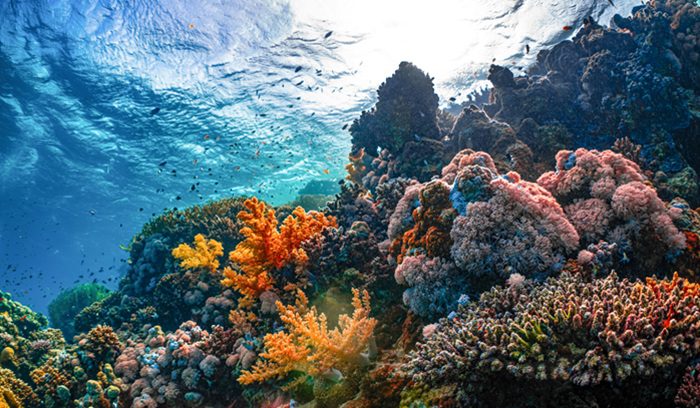
Sunlight filtering through open ocean water for an article about the High Seas Treaty entering into force

The high seas treaty enters into force, giving two-thirds of the ocean its first legal protection

The High Seas Treaty entered into force on January 17, 2026, giving the roughly two-thirds of the ocean beyond national borders binding legal protection for the first time in history. After nearly 20 years of negotiations, 60 nations ratified the agreement by September 2025, triggering its historic implementation. The treaty empowers the international community to establish marine protected areas in international waters, require environmental impact assessments for deep-sea activities, and share the benefits of marine genetic resources equitably among all nations. What once had no legal guardian now does.

Solar panels, for article on utility-scale solar farm

Australia to invest $125m in Pacific island off-grid and community scale renewables

The funding, which comprises a $75 million investment through the REnew Pacific program and $50 million through the Australia-Pacific Partnership for Energy Transition, was announced at the COP29 United Nations climate summit. The REnew Pacific program will help deliver off-grid and community-scale renewable energy in remote and rural parts of the Pacific, enabling lighting, access to water, improved agriculture, better food security, quality education and health services, reliable communications connectivity and enhanced incomes. The $50 million Partnership for Energy Transition funding will capture renewable energy investment benefits such as energy transition modelling, grid studies, feasibility studies and university collaborations.

Ukrainian flag

Spain to give Ukraine €1 billion in military aid in decade-long defense deal

Although the precise details of the agreement have not been made public, the Spanish government said its assistance would “allow Ukraine to prioritize its capacities, including its air defenses.” The bilateral deal was agreed two days after Russia’s onslaught in the north-eastern Ukrainian city of Kharkiv killed 18 people, and as E.U. leaders grow increasingly exasperated with Hungary’s efforts to block aid to Ukraine.