
Japan’s Marubeni to halve coal-fired power capacity by 2030
Japan’s Marubeni Corp said it would no longer start new coal-fired power plant projects and will halve its net coal power generating capacity of about 3 gigawatts (GW) by 2030.
The climate crisis demands action — and action is happening. This archive tracks real progress: policy wins, clean-energy milestones, community resilience, and scientific advances that show meaningful change is possible. Stories here come from every corner of the world.

Japan’s Marubeni Corp said it would no longer start new coal-fired power plant projects and will halve its net coal power generating capacity of about 3 gigawatts (GW) by 2030.

Hydrogen-powered trains moved from concept to reality when two passenger trains began quietly serving real commuters across rural northern Germany — on routes too sparse to justify overhead electric lines, where diesel had been the only option. The trains emit nothing but steam and water, matching diesel on practicality, and other countries quickly began exploring the technology after seeing it work in the real world. The bigger challenge ahead is cost: green hydrogen remains significantly more expensive than diesel at scale, and the supply infrastructure is still maturing.

The schools have 40 MW of onsite renewable energy generation, with an additional 20 to 30 MW in planning stages.

Barcelona, Basel, Berlin, Boston, Chicago, Copenhagen, Heidelberg, London, Los Angeles, Madrid, Melbourne, Milan, Montréal, New Orleans, New York City, Oslo, Paris, Philadelphia, Portland, Rome, San Francisco, Stockholm, Sydney, Toronto, Vancouver, Warsaw and Washington, DC have all seen their emissions fall over the last five years.

ChargePoint, one of the world’s largest charging station networks for electric vehicles, is targeting a near fifty-fold increase in its global network of loading spots by the middle of next decade.

Carlsberg’s snap pack shows how rethinking a single everyday product can remove a genuinely harmful material from the environment at scale. The adhesive holds cans together through shipping and refrigeration, then releases cleanly — and because it bonds directly to aluminium, it recycles right alongside the can with no extra step for consumers. That adds up to more than 1,200 tonnes of plastic eliminated annually from one company’s packaging alone. Aluminium production still carries its own carbon costs, so this isn’t a complete solution — but it’s a concrete, verifiable step that other brewers and regulators could build on.

Gov. Jerry Brown signed a bill Monday that puts California — the world’s fifth largest economy if it was an independent country — on an ambitious path: using 100% clean electricity by 2045.

Tesco, Network Rail, and Anglian Water join new coalition that will today set out plans to replace 18,000 diesel vans with electric models by 2028.
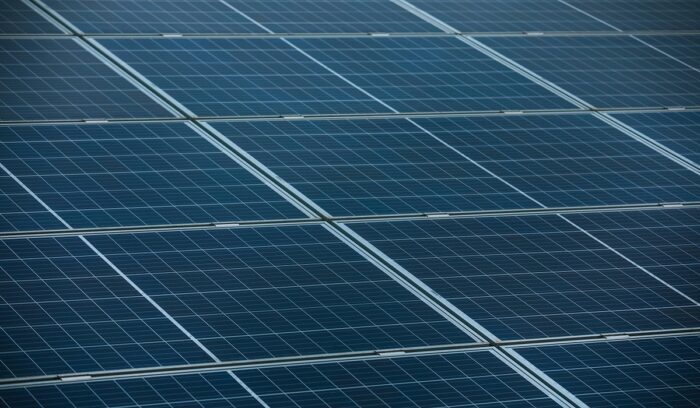
Printable solar cells could quietly rewrite who gets access to clean energy — and how fast. Developed at the University of Newcastle, these paper-thin panels cost under $10 per square meter and can be installed with adhesive tape by a small crew in a single day. The technology is less efficient than silicon and degrades faster, so durability remains an open question any rollout must honestly reckon with. But if the economics hold, solar could shift from a capital investment into something closer to a subscription service — accessible to renters, small businesses, and communities conventional panels have never reached.

The mayors of Copenhagen, Johannesburg, London, Los Angeles, Montreal, New York City, Newburyport, Paris, Portland, San Francisco, San Jose, Santa Monica, Stockholm, Sydney, Tokyo, Toronto, Tshwane, Vancouver and Washington, DC also pledged to ensure all buildings in the cities, old or new, will meet net-zero carbon standards by 2050.