Climate crisis

Aerial view of solar panels in an Australian landscape for an article about Australia emissions target

Australia sets its most ambitious climate target, aiming for 62–70% emissions cut by 2035

Australia’s greenhouse gas emissions target has reached a new milestone, with the Albanese Government committing to cuts of 62–70% below 2005 levels by 2035 — the country’s most ambitious climate pledge ever made. The commitment is backed by a detailed Net Zero Plan covering six economic sectors, giving investors, industries, and workers a clear roadmap rather than a headline number alone. Treasury modeling projects the transition will support economic growth and keep electricity prices lower than an unplanned fossil fuel exit would produce. With Australia seeking to co-host COP31 alongside Pacific Island nations, this pledge carries significant diplomatic weight on the world stage.

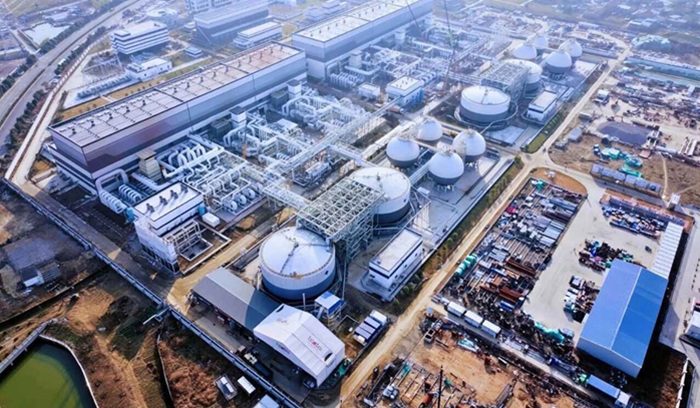
Aerial view of a coastal industrial facility at dusk for an article about osmotic power plant technology in Fukuoka Japan

Japan switches on its first osmotic power plant in Fukuoka

Osmotic power has moved from laboratory concept to working reality with the opening of Japan’s first salinity gradient energy facility in Fukuoka. The plant harnesses the natural pressure difference between fresh water and concentrated brine waste from an adjacent desalination plant, generating clean electricity around the clock without fuel or weather dependence. Estimated to produce enough power for roughly 220 households annually, it is only the second facility of its kind in the world built for continuous operation. Its significance lies in the blueprint it offers: osmotic plants can attach to existing desalination infrastructure worldwide, turning a disposal problem into a steady power source.

Rows of solar panels in a sunlit Brazilian landscape for an article about Brazil renewable energy

Wind and solar power more than a third of Brazil’s electricity for the first time

Brazil renewable energy hit a landmark milestone in August 2025, with wind and solar supplying 34% of the country’s electricity — up from 24% for all of 2024. The achievement came under real pressure, as hydropower dropped to a four-year low due to drought, yet Brazil avoided blackouts as renewables filled the gap. Carbon emissions from Brazil’s power sector have fallen roughly 31% since 2014, even as demand grew. Brazil is now the only G20 nation on track to meet COP28 renewable energy targets, making this a significant reference point for clean energy transitions worldwide.

Aerial view of dense tropical rainforest canopy for an article about the Maya Biosphere Reserve oil field closure

Guatemala permanently closes major oil field inside protected rainforest

Guatemala’s Maya Biosphere Reserve has taken a landmark step forward as the government permanently closed the Xan oil field rather than renew its operating concession. The facility once produced nearly 90% of Guatemala’s oil while operating inside a protected national park, a arrangement conservationists long considered incompatible with the reserve’s ecological importance. The former infrastructure is now being converted into a joint military and police security hub to combat illegal ranching, logging, and drug trafficking. A dedicated .5 million conservation fund will support local communities, restoration projects, and long-term monitoring across one of the most biodiverse tropical forest corridors in the Americas.

Rows of solar panels stretching across a large installation at sunset for an article about solar power installations

World installs record 597 gigawatts of solar power in a single year

Solar power shattered records in 2024, with the world installing 597 gigawatts of new capacity in a single year — a 33% increase over 2023 and the largest annual addition of any electricity source in history. Confirmed by SolarPower Europe, this marks the first time solar has claimed the top spot for new electricity generation worldwide. Driven by a 90% drop in panel costs over the past decade, solar is now the cheapest energy option in most major markets. The milestone represents real infrastructure, not promises — and signals a fundamental shift in how the world powers itself.

Solar panels in a field at sunset in India for an article about India clean energy reaching a record 30% of utility electricity

India’s clean energy hits a record 30% of utility electricity for the first time

India clean energy hit a major milestone in early 2025, with clean sources generating more than 30% of the country’s utility electricity for the first time. Indian power plants produced a record 236 TWh of clean electricity in the first half of the year, a 20% increase over the same period in 2024. Remarkably, fossil fuel consumption actually dropped 4% even as overall electricity demand continued rising. With non-fossil sources now accounting for nearly 50% of installed capacity, India is ahead of its own 2030 targets, demonstrating that large, fast-growing economies can expand electricity access while cutting fossil fuel dependence.

Plastic waste floating in a Lagos canal for an article about the Lagos plastics ban — 12 words.

Lagos bans single-use plastics in one of Africa’s most polluted cities

Lagos plastics ban took effect July 1, 2025, prohibiting styrofoam containers, plastic cutlery, plates, and straws across Nigeria’s commercial capital of 15 million people. The city generates at least 13,000 tons of waste daily, with plastic clogging canals and worsening seasonal flooding in low-income neighborhoods. The ban builds on a 2024 federal policy targeting similar items, signaling coordinated national momentum. What makes this significant is that it carries real enforcement consequences — including business closure for repeat violators — setting it apart from environmental pledges with no teeth.

Hands pressing a seedling into dark soil for an article about tree planting Ethiopia

Ethiopia mobilizes millions to plant 700 million trees in a single day

Ethiopia’s Green Legacy Initiative reached a historic milestone on July 31, 2025, when millions of citizens planted 700 million seedlings in a single day as part of the country’s sweeping reforestation campaign. Prime Minister Abiy Ahmed joined schoolchildren and civil servants nationwide, reflecting the program’s emphasis on genuine civic participation over top-down mandates. Launched in 2019 with a target of 50 billion trees by 2026, the initiative addresses decades of devastating deforestation that has eroded soils and threatened food security for millions. Questions about seedling survival rates and ecological oversight remain, but Ethiopia’s effort stands as one of the most ambitious nature-based climate solutions attempted anywhere on Earth.

Solar panels on a field in Italy for an article about the Vatican solar farm carbon-neutral state plan

Vatican City signs solar deal that could make it the world’s first carbon-neutral state

Vatican solar farm plans mark a historic step toward making the Holy See the world’s first carbon-neutral state. The Vatican has signed an agreement with Italy to convert a 430-hectare extraterritorial property north of Rome into a solar facility capable of meeting all of Vatican City’s electricity needs. The site carries complicated history, having hosted Vatican Radio transmission towers linked to community health concerns for decades. Backed by papal commitment, a bilateral agreement, and a concrete budget under €100 million, this project demonstrates that institutions can align stated values with structural environmental action.

A new residential building under construction in New York for an article about New York gas ban

New York becomes the first U.S. state to ban gas in new buildings

New York’s statewide gas ban in new construction became law on July 25, 2025, making New York the first U.S. state to require all-electric systems in new buildings. The State Fire Prevention and Building Code Council approved rules mandating heat pumps and induction stoves in new construction under seven stories starting December 31, 2025. A federal court upheld the policy just days earlier, signaling that states have legal authority to pursue building decarbonization despite industry challenges. With buildings responsible for nearly a third of New York’s emissions, the move addresses both climate goals and public health, particularly in communities disproportionately harmed by fossil fuel pollution.