
U.S. Congress abolishes the African slave trade
The U.S. Congress passed an act to “prohibit the importation of slaves into any port or place within the jurisdiction of the United States…from any foreign kingdom, place, or country.”
Sub-Saharan Africa spans dozens of countries south of the Sahara, each with distinct challenges and achievements. This archive collects milestones in health, education, conservation, and economic opportunity from across the region — reported with context and care.

The U.S. Congress passed an act to “prohibit the importation of slaves into any port or place within the jurisdiction of the United States…from any foreign kingdom, place, or country.”

The Kingdom of Dahomey took shape around 1600 on the Abomey Plateau in present-day Benin, growing from a small inland polity into one of West Africa’s most organized states. Under King Agaja, it fielded a standing army of roughly 10,000 and reached the Atlantic coast by 1727. Its legacy — including Vodun traditions still practiced across the diaspora — remains morally complex and deeply studied.

Luanda was founded on January 25, 1576, when Portuguese explorer Paulo Dias de Novais came ashore on Angola’s Atlantic coast with a hundred settler families and four hundred soldiers. His fortified outpost rose in Ambundu territory, where established trade networks already shaped the region. Today it’s home to more than 8.8 million people.

Vasco da Gama’s fleet sighted the Seychelles on 15 March 1503, when scrivener Thomé Lopes logged a rugged volcanic island rising from the Indian Ocean — almost certainly Silhouette. No one went ashore, and the archipelago stayed uninhabited for another 267 years. It was a small notation that quietly pulled the islands into the world’s maps.
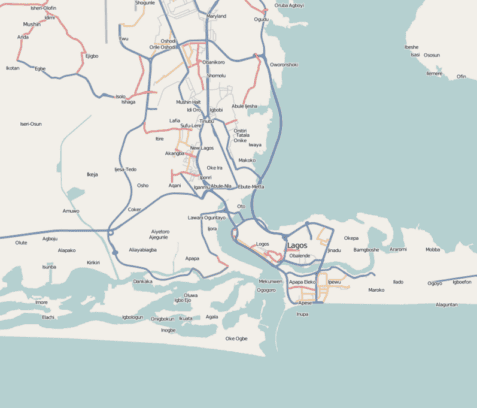
Lagos began around the mid-1400s as Eko, a farmstead settlement founded by the Awori, a Yoruba subgroup who knew the creeks and barrier islands of Lagos Lagoon intimately. From that quiet coastal community grew what is now Africa’s largest city, home to an estimated 17 to 21 million people today.

The Songhai people reclaimed Gao around 1430 C.E., breaking free from a Mali Empire unraveling under succession crises. From that riverside trading city on the Niger, they built what would grow into one of the largest empires in African history, anchoring Timbuktu’s libraries and the trans-Saharan gold trade for generations to come.

The Jolof Empire rose across West Africa’s savannas around 1350 C.E., as Wolof-speaking peoples broke free of Mali’s weakening grip and united under a single ruler. Oral tradition credits a mysterious stranger, Ndiadiane Ndiaye, who emerged from the Senegal River and was offered kingship after settling a village dispute. Its confederation shaped Wolof identity for centuries to come.

The Mali Empire was born around 1235 C.E., when Sundiata Keita led a coalition of twelve Manding kingdoms to victory over the Sosso at the Battle of Kirina. In its wake came the Kouroukan Fouga, a charter of rights and governance — a reminder that constitutional thinking has emerged along many human paths.

Timbuktu became a permanent settlement around 1125 C.E., when a Tuareg dry-season camp at the edge of the Sahara finally put down roots. Sitting about 20 kilometers north of the Niger River, it grew into a crossroads for salt, gold, and scholarship. Two centuries before Mansa Mūsā’s famous pilgrimage, its foundation was already quietly being laid.

The Kingdom of Allada took root in southern Benin sometime in the 12th or 13th century, founded by Aja migrants from Tado on the Mono River. By the mid-1400s the city held around 30,000 people, and centuries later three brothers divided the inheritance — seeding Allada, Dahomey, and the city now called Porto Novo.