Southeast Asia

Southeast Asia spans more than 600 million people across diverse nations, cultures, and ecosystems. This archive gathers milestones and solutions stories from the region — covering health, environment, governance, and more. Follow the progress happening across countries like Vietnam, Indonesia, the Philippines, Thailand, and beyond.

African girl sleeping on mother's shoulder, for article on global child mortality

‘Historic milestone’ as global child mortality hits record low of 4.9 million in 2022

Child deaths worldwide have fallen to 4.9 million in 2022 — the lowest number ever recorded, and roughly half the toll of the year 2000. Behind that drop is decades of unglamorous, working-everyday care: vaccines, bed nets, oral rehydration, skilled midwives, and community health workers showing up in their own neighborhoods. Rwanda offers a remarkable glimpse of what’s possible, having cut its under-five mortality rate by more than 80% since the aftermath of the 1994 genocide through community-based insurance and a serious investment in primary care. The number is still far too high, and newborns and children in conflict zones remain especially vulnerable. But the trend is one of humanity’s quiet, steady triumphs — proof that coordinated care, sustained over decades, saves millions of lives.

River dolphin, for article on river dolphin declaration

11 countries sign global pact to protect endangered river dolphins

River dolphins just got their first global lifeline: 11 countries have signed the Global Declaration for River Dolphins, a pact aiming to double Asian populations and halt declines across South America by 2030. It’s a meaningful turn for a group of species that has lost nearly three-quarters of its numbers since the 1980s. The hope isn’t abstract — China’s Yangtze finless porpoise population grew 23% over five years under strict protections, and the Indus river dolphin has nearly doubled in two decades. Because dolphins signal the health of the rivers nearly a billion people depend on, their recovery points toward something larger: that coordinated, community-rooted conservation can still pull ecosystems back from the brink.

Person receiving nasal spray, for article on intranasal COVID-19 vaccine

Novel nasal COVID-19 vaccine offers longer, better immunity than jabs

A nasal COVID-19 vaccine developed at Duke-NUS Medical School in Singapore is showing real promise: in hamster studies, it produced more central memory T cells than standard injections, hinting at protection that could last considerably longer. By delivering the vaccine right where the virus enters the body, researchers also saw stronger antibody responses against newly emerging variants. The team has filed a patent that covers other respiratory pathogens too, opening doors for future flu and RSV vaccines. Human trials are still ahead, but for anyone weary of frequent boosters — especially elderly and immunocompromised people — a needle-free shot offering broader, longer protection could meaningfully reshape how the world lives alongside evolving respiratory viruses.

Waving a pride flag, for article on LGBTQ+ discrimination ban

Thailand to legalize same-sex marriage

The Southeast Asian country will become the third Asian nation, after Taiwan and Nepal, to legalize same-sex marriage. A new amendment to its Civil and Commercial Code will change the words “men and women” and “husband and wife” to “individuals” and “marriage partners.” The next step will be an amendment to the country’s pension fund law to recognize same-sex couples.

Sumatran hillside, for article on ancestral forest rights

Indonesian government recognizes ancestral forests in Aceh for first time

Ancestral forest rights just took a historic step forward in Indonesia: eight traditional communities in Aceh received legal title to 22,549 hectares of forest they have stewarded for generations. It’s the first time the country’s environment ministry has formally recognized the mukim system, a centuries-old way of governing land on the northern tip of Sumatra. Communities plan to zone protected areas, safeguard clean water, and grow crops like cacao and betel palm with the state’s backing. The timing matters, too, since Indonesia’s new carbon market could turn that stewardship into income. When Indigenous communities hold real title to their land, forests tend to stay standing — and that’s a quiet but powerful climate story unfolding worldwide.

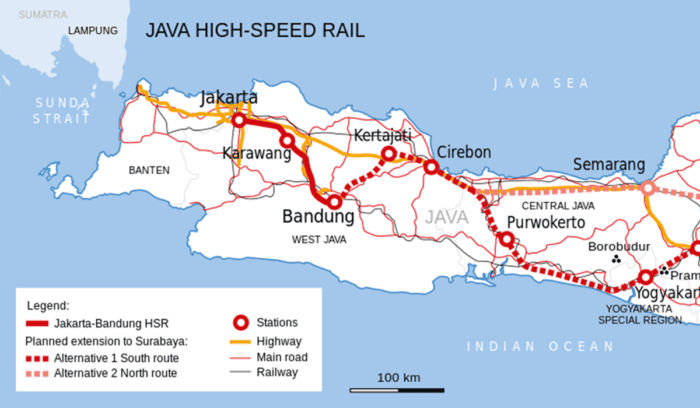
Java train map, for article on Indonesia high-speed rail

Indonesia opens Southern Hemisphere’s first high-speed train

High-speed rail just arrived in the Southern Hemisphere for the first time, with Indonesia’s new Jakarta–Bandung line cutting a three-hour trip down to 46 minutes. Trains glide along the 142-kilometer route at around 350 km/h, linking two cities home to nearly 14 million people on one of the most densely populated islands on Earth. Plans are already in motion to extend the corridor to Surabaya, which could turn an eight-hour journey across Java into a two- or three-hour ride. Beyond the convenience, electrified rail is the cleanest way to move people long distances, and tends to pull travelers off short-haul flights. For the wider Global South, it’s a hopeful sign that world-class low-carbon transport isn’t reserved for wealthier corners of the map.