South America

This archive covers progress stories and milestones from across South America, spanning countries from Brazil and Colombia to Argentina and Peru. Expect reporting on conservation wins, public health advances, economic shifts, and community-led efforts shaping life across the continent.

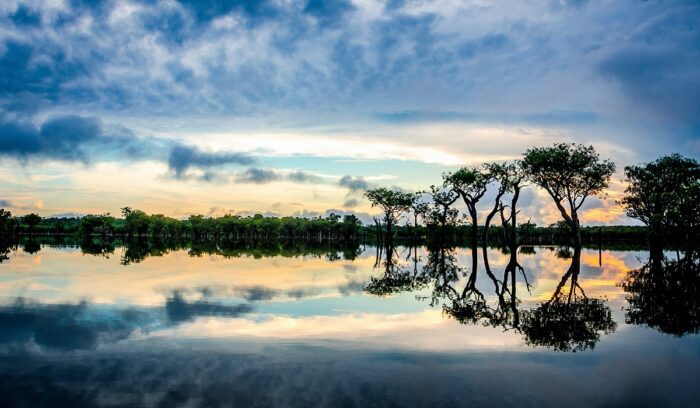
Colombia jungle at sunset, for article on Heritage Colombia

Colombia launches $245-million initiative to create and maintain protected areas

Heritage Colombia is one of the most significant conservation investments the country has ever made — pooling $245 million from governments, international institutions, and private donors to protect nearly 80 million acres of land and sea over the next decade. Colombia holds roughly 10% of the world’s biodiversity, making it one of the most ecologically critical places on Earth to get this right. Crucially, local communities are central to the design, not an afterthought. If it succeeds, Heritage Colombia could become a replicable model for how nations fund lasting, community-rooted conservation at scale.

Coral and fish, for article on coral reef restoration

Colombia launches largest ocean reef restoration project in the Americas

Colombia’s reef restoration effort is one of the most ambitious marine recovery programs anywhere on Earth — a government-backed push to plant one million coral fragments across 494 acres of degraded Caribbean seafloor. It pairs underwater nurseries and scientific method with indigenous and coastal communities whose knowledge of local waters runs deep. That combination matters: restoration ecologists consistently find that community-rooted programs outperform purely technical ones at scale. If it holds, this project offers a replicable model for reef recovery across the Caribbean and beyond.

Francia Marquez, for article on Francia Márquez vice president

Colombia elects first Black woman vice president, Francia Marquez

Francia Márquez became Colombia’s first Black woman vice president on June 19, 2022, winning alongside Gustavo Petro with just over half the national vote. A former housekeeper and single mother from Cauca, one of Colombia’s poorest provinces, she rose to office through years of grassroots organizing against illegal gold mining — work that earned her the Goldman Environmental Prize and, along the way, death threats she refused to back down from. Now leading a new equality ministry, she’s focused on women’s rights, rural health care, and education for communities long shut out. Her election doesn’t undo generations of exclusion, but it changes what’s imaginable — for Afro-Colombian girls, for environmental defenders, and for movements everywhere insisting the overlooked belong at the table.

Fish, for article on fisheries transparency initiative

Ecuador becomes first Latin American country committed to Fisheries Transparency Initiative standards

Fisheries transparency just gained a major foothold in Latin America: Ecuador has become the first country in the region to join the Fisheries Transparency Initiative, pledging to publish vessel records, catch data, subsidies, and the identities of who ultimately profits. The commitment was announced in Manta, home to much of the country’s tuna fleet, and it opens a door that journalists and even government scientists have spent years knocking on without answer. A new national working group will bring civil society and industry to the table alongside officials, with annual independent reviews to keep progress honest. For oceans worldwide, where opacity has long shielded overfishing and illegal catch, Ecuador’s step offers a replicable model — and a reminder that sunlight remains one of conservation’s most powerful tools.