North & Central America

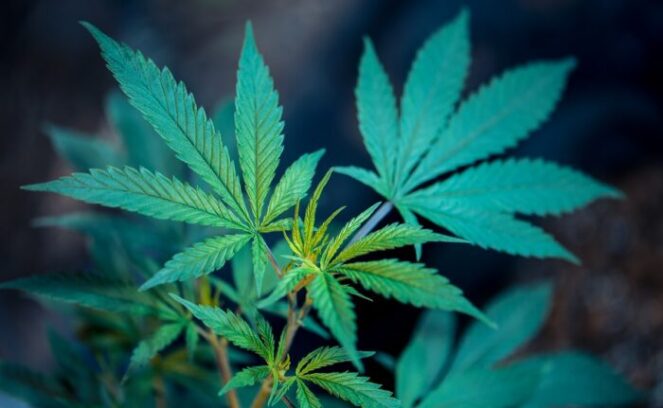
Cannabis leaf symbolizing the cannabis legalization movement

California voters legalize recreational cannabis with Proposition 64

California legalized recreational cannabis in November 2016, when 57% of voters approved Proposition 64 — making the nation’s largest state, and one of the world’s biggest economies, an adult-use market. The measure built on California’s 1996 medical cannabis law and helped shift legalization from fringe idea to mainstream American policy.

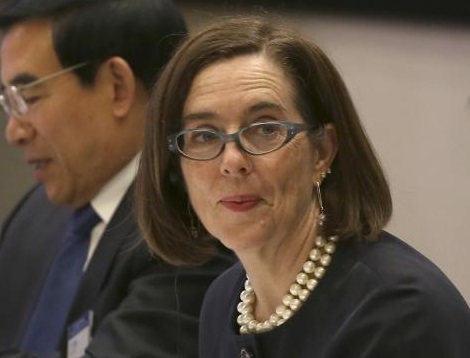
Governor Kate Brown, the first openly bisexual governor in U.S. history, portrait photo

Oregon voters elect Kate Brown as the first openly bisexual U.S. governor

In November 2016, Oregon voters elected Kate Brown governor, making her the first openly LGBT person — and first openly bisexual person — elected governor of any U.S. state. Brown had already spent decades in Oregon politics, winning the Secretary of State race in 2008. Her victory offered lasting proof that identity alone would not disqualify a candidate at the highest levels.

Vast California desert landscape under clear blue sky for an article about Desert Renewable Energy Conservation Plan

U.S. sets aside 10.8 million acres in California for clean energy and conservation

The California desert got a landmark blueprint in September 2016, when the federal government finalized a plan covering 10.8 million acres of public land. Eight years in the making, it carves out zones where solar, wind, and geothermal can scale up — potentially 27,000 megawatts — while permanently shielding wildlife habitat and conservation lands from development.

Boston skyline where equal pay law legislation has been a landmark achievement for workers

Massachusetts passes strongest equal pay law in the nation

Massachusetts rewrote its equal pay law in the summer of 2016, updating a 1945 statute for the first time in over 70 years. The bill, signed by Governor Charlie Baker, became the first in the nation to ban employers from asking applicants about salary history. Within two years, more than a dozen states had followed its lead.

Bear roaming through the misty old-growth forest of the Great Bear Rainforest agreement protected wilderness

Great Bear Rainforest agreement protects millions of acres under Indigenous leadership

The Great Bear Rainforest agreement, signed in February 2016, protected 85% of old-growth trees across 6.4 million hectares of British Columbia’s coast — a temperate rainforest roughly the size of Ireland. Reached after nearly 20 years of negotiation, it placed 26 First Nations at the center as co-managers, embedding Indigenous authority into conservation law.

Lighthouse symbolizing guidance in ranked-choice voting elections

Maine voters approve ranked-choice voting in historic ballot win

Ranked-choice voting went statewide for the first time in the U.S. when Maine voters approved it on Election Day 2016, passing the ballot initiative with about 52 percent support. The shift came after two governor’s races won with pluralities, including one victory at just 37 percent. A small state quietly rethinking what majority rule means.

Toronto skyline at dusk, backdrop for discussions on Ontario's basic income pilot program

Ontario plans basic income pilot to lift residents out of poverty

Basic income came to Ontario in 2016, when the province launched one of North America’s most ambitious poverty experiments. About 4,000 low-income residents in Hamilton, Thunder Bay, and Lindsay received monthly payments, and early results pointed to better mental health and food security. Cut short in 2018, the pilot still reshaped how the world debates a guaranteed income floor.

Canadian flag representing the country's high-speed internet basic service national standards

Canada declares high-speed internet a basic service for all citizens

High-speed internet became a basic right in Canada in December 2016, when regulators declared broadband as essential as phone or postal service. The ruling set a national target of 50 Mbps download speeds for every household and created a $750 million fund to reach rural, remote, and Indigenous communities long left behind by private providers.