Europe

This archive covers progress stories and milestones from across Europe, spanning health, climate policy, social equity, and scientific research. From small-nation experiments to E.U.-wide initiatives, these reports highlight what is working and why.

EU flags representing international oversight amid U.K. mass surveillance concerns

E.U. court rules U.K. mass surveillance program illegal

Europe’s top court struck a blow against U.K. mass surveillance in 2016, ruling that blanket retention of citizens’ web history, location, and app data couldn’t be justified in a democracy. The case, brought by two MPs from opposing parties, challenged laws letting 48 public bodies access a year of everyone’s data. It drew a clear line: targeted surveillance, yes — indiscriminate collection, no.

A modern passenger train on a rural track at dusk for an article about hydrogen passenger train

Germany unveils the world’s first hydrogen passenger train

The Coradia iLint rolled into Berlin’s InnoTrans rail expo in 2016, looking ordinary except for one detail: its exhaust was water vapor. Six years later, fourteen of these hydrogen-powered trains entered regular service in Lower Saxony, Germany, replacing diesel on a regional line. It was the first working proof that zero-emissions rail could reach beyond electrified tracks.

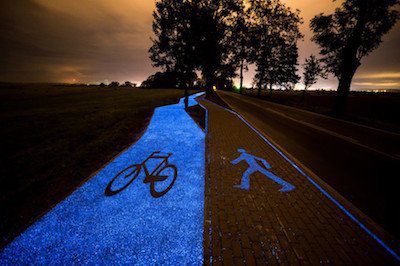
Glowing engine powering a glow-in-the-dark bicycle path at night

Poland’s glow-in-the-dark bicycle path runs entirely on solar power

A glow-in-the-dark bicycle path opened in the rural Polish town of Lidzbark Warminski, emitting deep blue light for up to 10 hours a night without touching the electrical grid. Luminophore particles embedded in the 328-foot surface soak up sunlight by day and release it after dark. A small, quiet experiment in making rural roads safer — and unexpectedly beautiful.

image for article on right to disconnect

France gives workers the legal right to disconnect from work email

The right to disconnect became French law in 2016, giving workers at companies with more than 50 employees formal protection to ignore emails after hours. It followed a government report on “info-obesity” and a survey finding a third of French workers were using devices for work every single day. A quiet but meaningful reframing of rest.

Engine, for article on combustion engine ban

Germany’s Bundesrat calls for E.U. ban on combustion engines by 2030

In autumn 2016, Germany’s Bundesrat did something no national legislative body had done before: it urged the EU to stop registering new gasoline and diesel cars after 2030. The vote was non-binding, but coming from the home of Volkswagen and BMW, it moved a once-fringe idea into serious policy — language the EU would echo in binding law years later.