Major French dictionary adds non-binary pronouns for the first time
An entry for iel and iels was added to the dictionary Le Robert that says: “Third person subject personal pronoun – singular and plural – used to refer to a person of any gender.”
This archive covers progress stories and milestones from across Europe, spanning health, climate policy, social equity, and scientific research. From small-nation experiments to E.U.-wide initiatives, these reports highlight what is working and why.
An entry for iel and iels was added to the dictionary Le Robert that says: “Third person subject personal pronoun – singular and plural – used to refer to a person of any gender.”
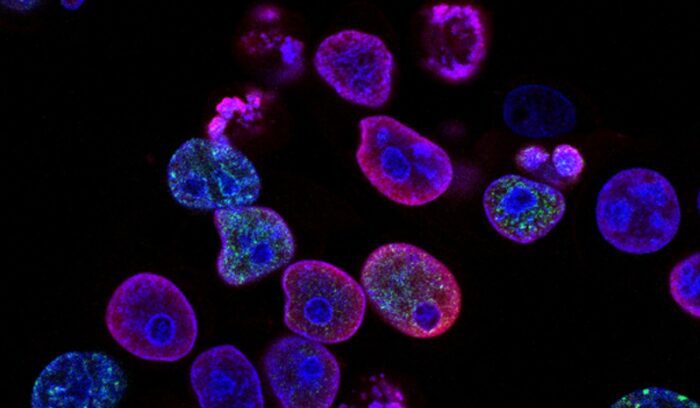
Overall, 29.1% of patients in the highest-dose group were in remission three weeks after treatment, compared to 7.6% of those in the control group.
After a captive-breeding program in Spain, Dama gazelles have been reintroduced in protected reserves in Tunisia, Morocco, and Senegal and number roughly 4,000.
Employers now face penalties for contacting workers outside of office hours. Companies will also have to help pay for expenses incurred by remote working.
According to a 2019 study, which is based on surveys of children aged six to nine, 40% of Spanish minors are above their recommended weight.
Albania, Bhutan, Costa Rica, Democratic Republic of Congo, Ethiopia, Iceland, Namibia, Nepal, Norway, and Paraguay all now generate more than 97% of their electricity from renewable sources.
The ABP fund is a wealthy and influential investor that manages the pension savings of more than 3 million Dutch workers and has some 15 billion euros invested in fossil fuel production.
It is the first ever internationally-agreed tool to safeguard environmental defenders and marks an important step in upholding the universal right to a clean, healthy and sustainable environment.
Luxembourg legalized home cannabis cultivation in October 2021, allowing adults 18 and over to grow up to four plants at their primary residence — becoming the first country in Europe to take this step. Possession of up to three grams was downgraded from a criminal offense to a misdemeanor, with fines dropping from as much as €2,500 to as little as €25. Justice Minister Sam Tanson framed the change as harm reduction, aiming to pull everyday users out of an illegal supply chain she described as full of “misery.” The government also signaled plans to channel future revenue from regulated sales into prevention, education, and addiction care. It’s a quietly significant moment for European drug policy — a small country choosing public health over prohibition, and giving its neighbors something concrete to learn from.
SSAB plans to begin producing its fossil-free steel at scale in 2026, while Volvo plans to have an entirely climate-neutral business by 2050, including its supply chain.