Europe

This archive covers progress stories and milestones from across Europe, spanning health, climate policy, social equity, and scientific research. From small-nation experiments to E.U.-wide initiatives, these reports highlight what is working and why.

Stéphanie Frappart, for article on World Cup referee

Stéphanie Frappart makes history as first-ever female World Cup referee

Stéphanie Frappart made history on December 1, 2022, when she blew the opening whistle for Costa Rica vs. Germany — the first woman ever to referee a men’s FIFA World Cup match. She led an all-female team that day, joined by Brazil’s Neuza Back and Mexico’s Karen Díaz Medina, and called the game so cleanly that her performance drew no controversy at all. That quiet competence was the whole point: she earned the spot through the same FIFA assessment process as everyone else, building on a decade of firsts in Ligue 1, the UEFA Super Cup, and the Champions League. Her story is a reminder that real equality often arrives not with fanfare, but with someone simply doing the job well.

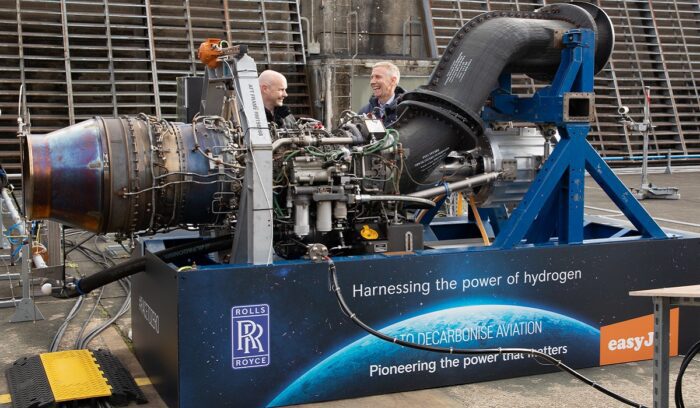
Rolls-Royce & easyJet hydrogen engine, for article on hydrogen jet engine

World’s first test run of a hydrogen jet engine proves a success

Hydrogen-powered flight moved from theory to reality when Rolls-Royce and easyJet successfully ran a modern jet engine on green hydrogen produced entirely from wind and tidal energy. Unlike battery-electric approaches, hydrogen burns clean — releasing water vapor instead of carbon dioxide — and this test proved a real engine can handle it. Aviation has been one of the hardest sectors to decarbonize, so a confirmed proof of concept opens a genuine path forward. Every major breakthrough in flight history started exactly here: on the ground, with an engine, and a question that finally got answered.

Lynx, for article on Iberian highlands rewilding

Lynx, wild horses and vultures return to eastern Spain in latest rewilding project

Rewilding Europe’s first project in Spain is bringing an 850,000-acre mountain landscape back to life — and the early signs are genuinely hopeful. Wild horses are already breeding, black vultures are being released at up to 15 a year, and Iberian lynx are expected within two years. The project is also designed around local communities, creating economic incentives for nature-based tourism and forest protection. Stories like this show that recovery is possible when wildlife, people, and landscape are treated as one connected system.

Blood cells under microscope, for article on smart insulin, for article on lab-grown blood cells

First human patients receive transfusions of lab-grown blood cells

Lab-grown blood cells have reached a genuine turning point: manufactured red blood cells grown from stem cells have been safely transfused into human patients for the first time. What makes these cells special is their freshness — unlike donated blood, every lab-grown cell is the same age, meaning they should last closer to the full 120-day lifespan and reduce repeat transfusions. Early participants completed the process with no adverse effects. For millions worldwide living with blood disorders or rare blood types, this science crossing into human trials is the kind of progress that quietly changes everything.