
Greenpeace reports decade of significant progress on sustainable seafood among U.S. retailers
Overall, 90 percent of the retailers profiled received passing scores, ten years after every single retailer failed the first assessment.
This archive covers meaningful advances in food systems, nutrition research, sustainable agriculture, and equitable food access. From regenerative farming to breakthroughs in reducing hunger, these good news stories document what’s actually working — and who’s making it happen. Good food news, grounded in evidence.

Overall, 90 percent of the retailers profiled received passing scores, ten years after every single retailer failed the first assessment.

The global chain announced yesterday that it has installed urban gardens at 600 of its hotels.

Hawaii governor David Ige signed a bill banning the use of the pesticide chlorpyrifos, which has been linked to increased risk of learning disabilities, lower IQs, developmental delays, and behavior problems in children.
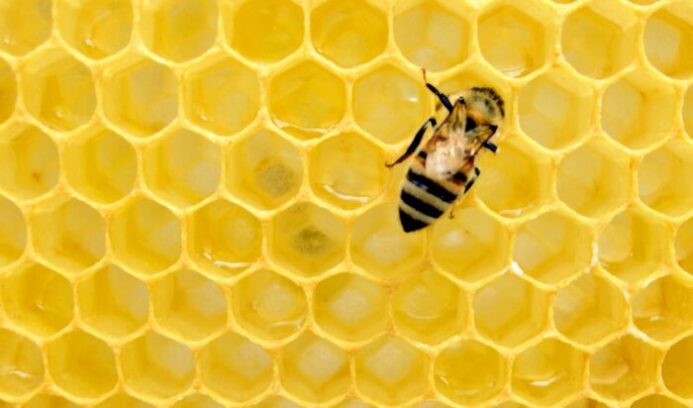
EU countries voted on Friday for a near-total ban on insecticides blamed for killing off bee populations, in what campaigners called a “beacon of hope” for the winged insects.
The agreement, organised by Government-backed waste charity Wrap, is a world-leading collaborative effort by Britain’s biggest consumer companies to tackle the scourge of plastic waste on the environment.

Food preservation took a quiet leap forward in 1809, when French confectioner Nicolas Appert discovered that food cooked inside a sealed glass jar simply didn’t spoil. He’d earned the insight through roughly a decade of trial and error, claiming a 12,000-franc government prize the following year — half a century before anyone understood why it worked.

School lunch programs trace back to 1790s Munich, where American-born exile Benjamin Thompson opened the Poor People’s Institute. He fed children while teaching them to read and write, treating a hot meal as a practical investment rather than charity. Today, roughly 380 million schoolchildren worldwide receive meals through programs built on that quiet insight.

Artificial refrigeration began in a Scottish laboratory in 1755, when physician William Cullen used a vacuum pump over a flask of ether to coax a thin crust of ice into existence. It had no practical use in his lifetime. But the principle he glimpsed — cold as a human act, not a gift of weather — would eventually reshape how and where people live.

Fishing reel history traces back to 1195 C.E., when Chinese court painter Ma Yuan depicted a solitary angler on a winter lake — the earliest unambiguous image of a reel ever found. Chinese texts had described such “angling lathes” since the 3rd century. The painting captures a quiet moment where centuries of accumulated know-how finally became visible.

The multi-tube iron seed drill appeared in Chinese fields around 150 B.C.E., during the Han dynasty, quietly transforming how grain was planted. Instead of scattering seeds by hand, farmers guided them through iron tubes into even rows at consistent depth. Europe wouldn’t adopt similar technology for another 1,700 years.