Nations

This archive tracks meaningful progress at the national level — policy wins, governance reforms, and milestones that show countries moving toward greater well-being, equity, and sustainability. Across 68 stories, you’ll find evidence that nations can and do change for the better.

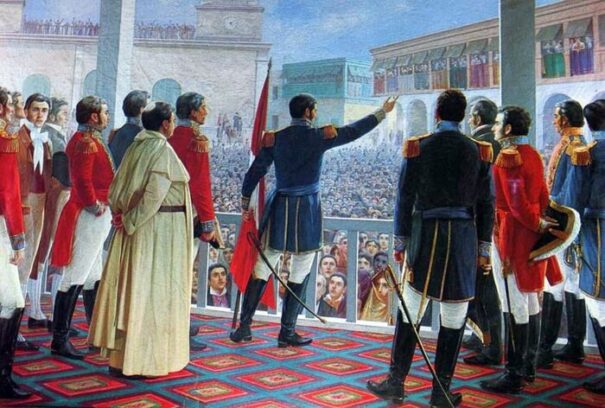
La Independencia del Perú, for article on Peru independence declaration, for article on argentina independence declaration

Congress of Tucumán declares Argentina’s independence from Spain

Argentina’s independence was declared on July 9, 1816, when 33 deputies gathered in the city of Tucumán and voted unanimously to break from Spain. They called their new country the United Provinces of South America, and had the declaration translated into Quechua and Aymara — a rare acknowledgment that the nation they were founding was older than its colonizers.

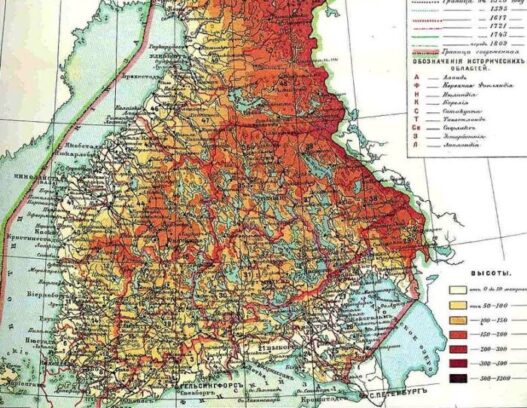
Map of Finland, for article on Finnish autonomy

Finland gains autonomy within the Russian Empire

Finnish autonomy began on September 17, 1809, when the Treaty of Fredrikshamn ended six centuries of Swedish rule and handed Finland to Russia — with a twist. Tsar Alexander I let Finland keep its laws, faith, and a senate run by Finns themselves. That protected space quietly nurtured the identity Finland would carry into independence in 1917.

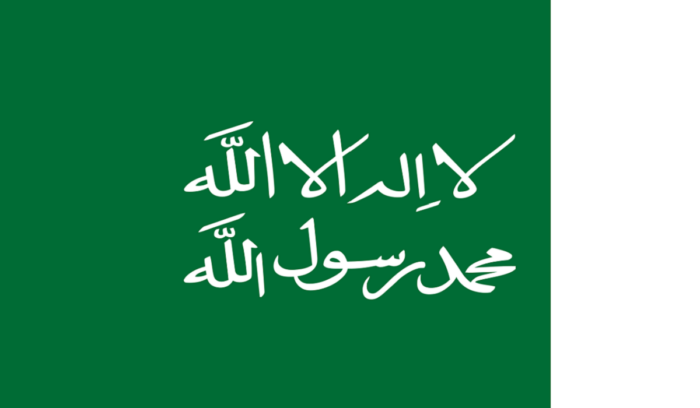
Flag of Emirate of Diriyah, for article on emirate of Diriyah

Muhammad bin Saud and Ibn Abd al-Wahhab found the Emirate of Diriyah

In 1744, in the Najdi town of Diriyah, a ruler and a religious reformer shook hands on a pact that would eventually give rise to Saudi Arabia. Muhammad bin Saud offered shelter and political backing; Muhammad ibn Abd al-Wahhab offered religious legitimacy. From that modest desert compact grew one of the Arab world’s most enduring state-building experiments.

Flag of Polish–Lithuanian Commonwealth, for article on Polish-Lithuanian Commonwealth

The Union of Lublin formally creates the Polish–Lithuanian Commonwealth

The Union of Lublin, signed on 1 July 1569, merged Poland and Lithuania into a federated state that would stretch across roughly a million square kilometers at its peak. It was a negotiated marriage, not a conquest, with a shared parliament and elected king. The arrangement held for over two centuries, quietly shaping European ideas about constitutional government.

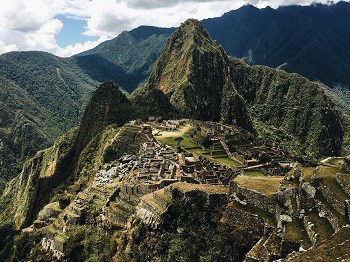
px Flag of the Iroquois Confederacy, for article on Haudenosaunee Confederacy, for article on machu picchu construction

Five nations found the Haudenosaunee Confederacy, a great league of peace

The Haudenosaunee Confederacy united five northeastern nations—Mohawk, Oneida, Onondaga, Cayuga, and Seneca—under a shared constitution sometime before European contact, with scholars placing its founding anywhere from 1142 to 1660 C.E. Guided by Deganawidah, Hiawatha, and Jigonsaseh, a Grand Council of 50 sachems governed by consensus, building one of the most sophisticated political systems in the pre-contact Americas.