Wildlife & land conservation

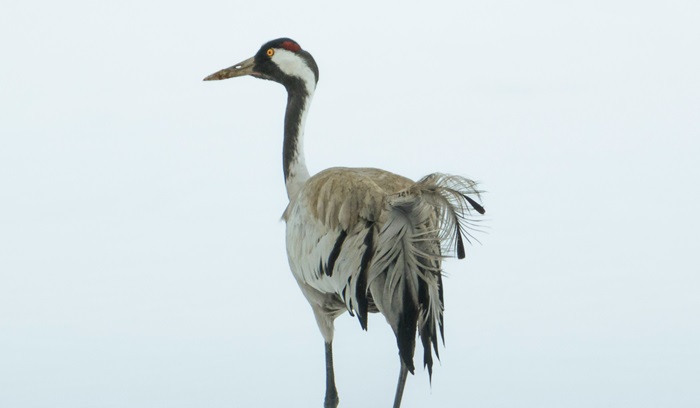
Crane bird in the snow

Critically endangered Siberian crane populations have increased by nearly 50% over last decade

The Siberian crane, known for its extremely long and arduous annual journeys, is one of the world’s rarest cranes. Its western and central populations are nearly extinct today. Most Siberian cranes that remain belong to the eastern population, which migrates between northeastern Russia and China. By 2012, researchers estimated there were around 3,500-4,000 individuals left in this eastern population. The latest bird counts from Russia and China suggest their numbers have nearly doubled to 7,000 individuals thanks to concerted habitat protection efforts.

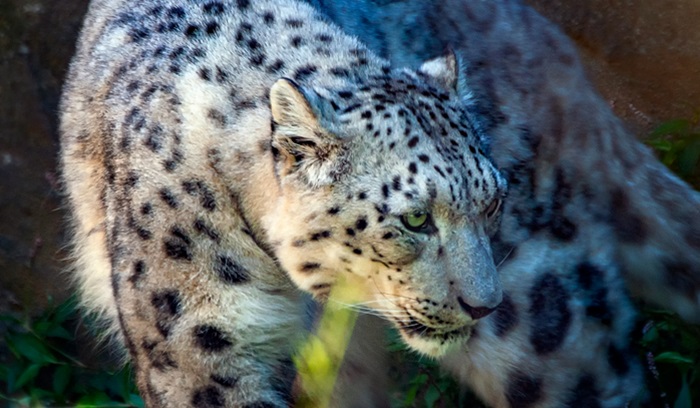
Snow leopard

Kazakhstan’s snow leopard population reaches near-historic levels

The snow leopard population in Kazakhstan has rebounded to near-historic levels, with an estimated 152 to 189 individuals now residing in the country. This marks a significant achievement in conservation efforts, as such numbers were last observed in the 1980s. Since 2018, Kazakhstan has implemented a snow leopard conservation project under the United Nations Development Program (UNDP). UNDP initiatives have improved protection in 14 natural areas across the country through the use of advanced technologies, including camera traps, drones, and thermal imaging devices. As a result, the snow leopard population has increased by more than 26% since 2019.

Onager

Asiatic wild asses return to Saudi Arabia after 100 years

It’s been a century since an onager or Asiatic wild ass was last seen in Saudi Arabia. But in April this year, seven onagers were relocated from neighboring Jordan into one of Saudi Arabia’s nature reserves. One of the onagers has even birthed a female foal since then. Saudi Arabia was historically home to the Syrian wild ass , an onager subspecies that was hunted into extinction in the 1920s. But with the Syrian onager gone forever, it’s closest living relative, the Persian onager from Jordan, “was deemed the best alternative sub-species with which to re-populate the Middle East.”

Turkmenistan flag

Turkmenistan to join global wildlife trade convention CITES

The Central Asian nation is set to join the Convention on International Trade in Endangered Species of Wild Fauna and Flora (CITES) beginning in 2025. Home to many charismatic and widely traded species, such as the Persian leopard, snow leopard, peregrine falcon and markhor goat, this move is a step toward regulating the legal wildlife trade and preventing the illegal trade in Turkmenistan and the whole of Central Asia.

Teepees under the northern lights

Indigenous governments in the Canada’s Northwest Territories sign $375M deal to protect their land

Canada’s federal government contributed $300 million to the initiative, while private donors contributed $75 million. Funds are expected to be received starting in mid-2025 and flow for 10 years after that. The funds can be used to establish new protected and conservation areas as identified by Indigenous governments and to support guardian and stewardship programs. The money can also be used for things like eco-tourism and traditional economic activities, climate research, and on-the-land language and culture programs . It’s one of the largest Indigenous-led conservation efforts in the world, according to a news release.

Brazil renews plan to restore 30 million acres of degraded land

Brazil recently announced a plan to restore an area of degraded land about half the size of the U.K. by 2030, in a bid to combat climate change and biodiversity loss. The Planaveg 2.0 initiative, launched at the U.N. biodiversity summit, COP16, in Colombia on Oct. 28, aims to restore 30 million acres, about half of Brazil’s degraded land area. Home to 15-18% of the world’s known species, Brazil is the most biodiverse nation on Earth, making it a key player in global ecosystem restoration.

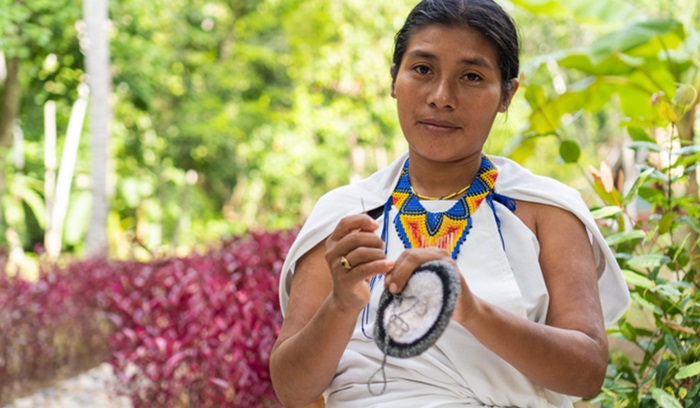
Colombian woman in traditional clothing weaving looking at the camera

Colombia’s new decree recognizes Indigenous people as environmental authorities

Indigenous peoples in Colombia have been granted the authority to protect, manage, and conserve biodiversity within their territories according to their knowledge. Colombian President Gustavo Petro has issued a decree that lays out the standards required for Indigenous authorities to issue regulations regarding the protection, preservation, use, and management of natural resources in their territories and effective coordination with state authorities. These powers will be exercised according to their self-government structures.

Salmon run

Salmon return to Klamath River for first time in 112 years

On October 16, biologists with the Oregon Department of Fish and Wildlife spotted the fish above the former site of the J.C. Boyle Dam in the Upper Klamath River. The dam was one of four that had blocked the salmon’s migration between the Klamath Basin and the Pacific Ocean. Each of those dams was recently deconstructed in the largest dam removal project in United States history, which has restored the river to its natural, free-flowing state.

Morning fog over the brazilian rainforest in Brazil

Brazil upgrades park to protect South America’s tallest tree

South America’s tallest tree, a 400-year-old red angelim in the northern tip of the Brazilian Amazon, is the star of a newly created conservation area called the Giant Trees of the Amazon State Park. The area was officially sectioned off from the larger Paru State Forest for stronger protection. Now, the 1.38-million-acre Giant Trees of the Amazon State Park has been upgraded to the “full protection” category. This means that activities like logging, permitted under the “sustainable use” category when it was previously part of Paru State Park, can no longer be proposed in its bounds.

Good news for wildlife conservation

Republic of Congo to catalyze investment in high-integrity forests

Conservation authorities in the Republic of Congo have launched a plan to invest in the protection of “high-integrity forests” in Nouabalé-Ndoki National Park, treating these ecosystems as an asset class. The new initiative aims to fill a funding gap to protect the ROC’s forests by selling high-integrity forest (HIFOR) units, defined as representing “one hectare of healthy, high integrity tropical forest actively conserved within a large landscape for decades.”