Climate crisis

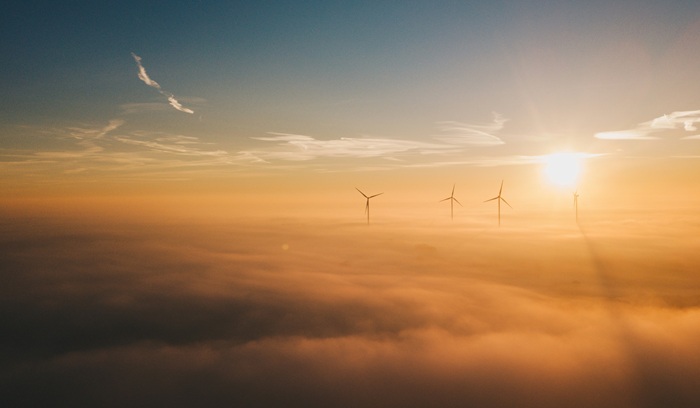
Sun shining with wind turbines rising above clouds

More than 90% of global new renewable energy capacity is now cheaper than fossil fuels

The global switch to renewable energy has passed a “positive tipping point,” according to two United Nations reports. Solar is now 41% cheaper than fossil fuels worldwide. Not long ago, it was four times the cost. Offshore wind is now also 53% cheaper and the most affordable source of new renewable energy. Even more, costs for renewables are expected to keep dropping as technology matures and supply chains strengthen.

California flag

California becomes world’s largest economy to be powered by two-thirds clean energy

The state released new data showing California’s continued progress toward a clean energy future with 67% of the state’s retail electricity sales in 2023 coming from renewable and zero-carbon electricity generation — compared to just 61% the previous year and around 41% a decade ago. Then, in 2024, the state added a record-breaking 7,000 MW of clean capacity to the grid, the largest single-year increase in clean energy capacity in state history.

Solar in the foreground, wind turbines in the background

India now gets 50% of its energy from non-fossil sources

The world’s most populous nation has achieved the milestone of generating a majority of its installed electricity capacity from non-fossil fuel sources — five years ahead of its 2030 target under the Paris Agreement. India’s renewable power output rose at its fastest pace since 2022 in the first half of 2025, while coal-fired generation declined nearly 3%. The country added nearly 28 GW of solar and wind in 2024 and had already added 16 GW of wind and solar capacity by June 2025.

Solar farm

Solar was E.U.’s biggest source of power for the first time ever in June 2025

At least 13 E.U. countries saw solar output hit a new monthly high in June, according to an analysis from energy think tank Ember. Solar amounted to more than 40% of generation in the Netherlands and 35% in Greece. Coal generated just 6 percent of electricity, a new monthly low. Fifteen E.U. countries are now coal-free, including Austria, Belgium, and Ireland. Analysts say that the June surge in solar power helped Europe weather a brutal heat wave, which saw temperatures soar upwards of 110 degrees F Analysts say that the June surge in solar power helped Europe weather a brutal heat wave.

Solar farm

China achieves historic 1 TW solar capacity milestone

China has continued its reign as the undisputed global leader in renewable energy, with its solar capacity now surpassing a whopping 1 terawatt (TW). According to the Energy Information Administration, the total global electricity capacity in 2022 was less than 9 TW. From January to May, new solar installations totaled 197 GW, up 388% from the same period last year. In May alone, China added 92 GW of new capacity, a 105% increase from April and the highest monthly figure on record. China reached its first 1 GW of installed solar just 15 years ago in 2010.

Irish flags

Ireland shuts down its last coal-fired power plant

Ireland has become the 15th coal-free country in Europe, having ended coal power generation at its 915 MW Moneypoint coal plant in County Clare. Initially commissioned in the mid-1980s by ESB, Moneypoint was intended to help Ireland offset the impact of the oil crises in the 1970s by providing a dependable source of energy. But with Ireland now generating a lot more renewable energy, coal burning is no longer such an urgent need.

Illustration of the concept of nuclear fusion

U.K. to offer fusion energy industry $3.3 billion funding boost over next five years

More than £2.5bn of investment into fusion energy over the next five years has been announced as part of the British government’s Spending Review. It said the money would “cement” Oxfordshire’s role as a “world-leading hub” for the technology, while funds would also be invested into plans to build a fusion power plant in Nottinghamshire. Nuclear fusion is the same energy process that powers the stars, which scientists say has the potential of virtually unlimited supplies of low-carbon, low-radiation energy and is often called the “holy grail” of clean energy.

Indian Railways train

Indian Railways to achieve net zero targets in 2025 – 5 years ahead of schedule

Indian Railways operates roughly 12,000 trains daily, carrying over one billion tons of goods and more than 8.5 billion passengers annually. Now, over 90% of the nationwide railways’ traction energy comes from electric rather than fossil sources, with plans to increase this to 95% by 2030. This shift has led to a substantial decrease in operational costs and direct greenhouse gas emissions, with a reduction of 2.2 million tons of CO2 expected by the end of 2025.

Aerial view of Hawaii coastline

Hawaii becomes first U.S. state to charge tourist ‘Green Fee’ to fund climate resilience

Act 96 will raise the state’s current transient accommodations tax by 0.75% for a total of 11% placed upon the nightly lodging rate, effective Jan. 1, 2026. The fee will apply to travelers staying in hotels, short-term vacation rentals, and for the first time ever, cruise ships. Tourist taxes are quickly emerging worldwide as more destinations face the impacts of over-tourism and climate change. Last year, Greece, Bali, and the Galápagos Islands all implemented or raised their fees on travelers to contribute to sustainability programs.

Coal plant on the water

No new coal plants planned for South America for the first time since the 1800s

When the Paris Agreement was signed in 2015, South America had eighteen coal-fired plants on the drawing board, reflecting global uncertainty about the role coal would play in powering emerging economies. Today, that uncertainty has vanished. Coal, once perceived as a staple of industrialization and economic stability, has essentially vanished from the continent’s energy future.