Wildlife & land conservation

This archive brings together 265 stories about wildlife recovery, protected lands, habitat restoration, and the communities driving conservation forward. From endangered species rebounds to new national parks and Indigenous-led stewardship, these articles document real, verifiable progress happening around the world. If you want evidence that protecting nature is working, this is where to look.

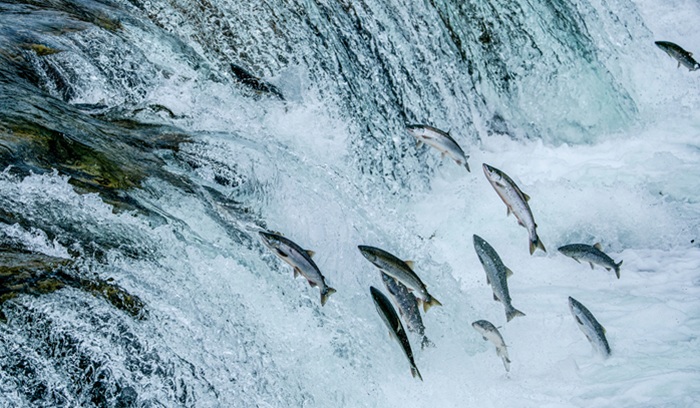
A Chinook salmon swimming upstream in a clear river for an article about Klamath River salmon return

Salmon return to the Klamath River for the first time in over 100 years

Klamath River salmon have returned to Oregon waters for the first time since 1912, arriving within weeks of the final dam coming down. An autumn-run Chinook was confirmed in a tributary upstream from where the J.C. Boyle Dam once stood, stunning biologists who expected the recovery to take years. The milestone follows the largest dam removal project in U.S. history, which reopened more than 400 miles of river habitat. Driven by decades of persistence from the Yurok, Karuk, and other tribal nations, the restoration shows what becomes possible when Indigenous leadership guides conservation on ancestral lands.
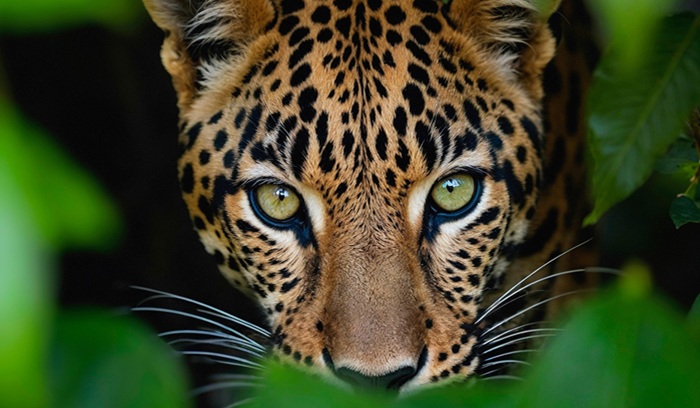
A wild jaguar moving through dense tropical forest, for an article about Mexico jaguar population recovery

Mexico’s jaguar population surges 30% as communities and scientists join forces

Mexico’s wild jaguar population has grown by roughly 30%, with a 2025 census confirming 5,326 individual animals across 15 states — the largest mammal census ever conducted in the country. Researchers deployed nearly 1,000 camera traps over 90 days, using each jaguar’s unique rosette pattern to avoid double-counting. The recovery reflects coordinated work between scientists, government agencies, and Indigenous and rural communities whose land stewardship proved essential to the effort. It demonstrates that large predator populations can rebound within years when conservation is genuinely community-rooted.

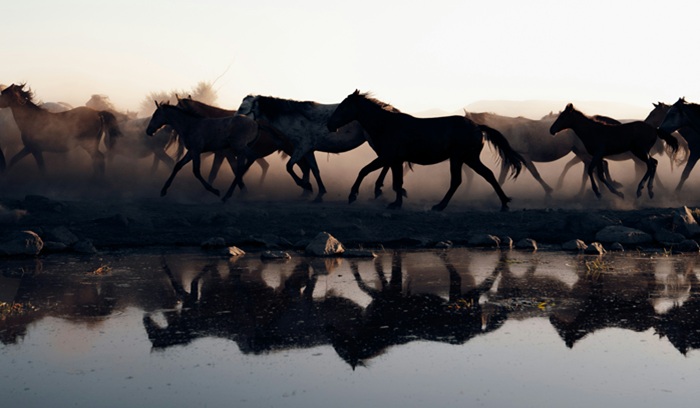
A herd of wild horses grazing on an open highland plateau for an article about wild horse rewilding in Spain

Wild horses return to Spain’s Iberian highlands after 10,000 years

Wild horse rewilding in Spain’s central highlands marks a milestone not seen since the last Ice Age, with primitive Iberian breeds returning after a 10,000-year absence. Led by Rewilding Europe and local partners, the project restores a keystone species whose grazing reduces wildfire fuel loads, opens habitat corridors, and disperses seeds across a landscape long diminished by shrub encroachment. Unlike top-down conservation efforts, this initiative was built with landowners and residents from the start, framing the horses’ return as an economic opportunity through nature-based tourism alongside ecological recovery. The horses are back, and the land is already changing.

Aerial view of dense tropical rainforest canopy for an article about the Maya Biosphere Reserve oil field closure

Guatemala permanently closes major oil field inside protected rainforest

Guatemala’s Maya Biosphere Reserve has taken a landmark step forward as the government permanently closed the Xan oil field rather than renew its operating concession. The facility once produced nearly 90% of Guatemala’s oil while operating inside a protected national park, a arrangement conservationists long considered incompatible with the reserve’s ecological importance. The former infrastructure is now being converted into a joint military and police security hub to combat illegal ranching, logging, and drug trafficking. A dedicated .5 million conservation fund will support local communities, restoration projects, and long-term monitoring across one of the most biodiverse tropical forest corridors in the Americas.

Tall older-growth trees in a dense Pacific Northwest forest for an article about Washington legacy forests protection

Washington state permanently protects 77,000 acres of legacy forests

Legacy forests in Washington State gained permanent protection on August 26, 2025, when Public Lands Commissioner Dave Upthegrove signed an order shielding 77,000 acres of ecologically rich older forest from logging. Officials at the Department of Natural Resources called it the most significant forest conservation decision in a generation. The protected stands store exceptional amounts of carbon, support wildlife corridors, and could develop old-growth characteristics within decades if left undisturbed. Sustained public activism, including tree-sit protests, helped drive the decision, demonstrating how civic pressure can produce concrete policy change on a measurable timeline.

Aerial view of dense tropical rainforest canopy for an article about Mayan forest protection

Three nations sign agreement to protect 14 million acres of Mayan forest

Mayan forest protection took a historic step forward on August 15, 2025, when the leaders of Mexico, Guatemala, and Belize signed an agreement to safeguard more than 14 million acres of tropical forest as the Great Mayan Jungle Biocultural Corridor. The deal covers the Selva Maya, the largest continuous tropical forest in the Americas north of the Amazon, anchored in part by Belize’s biodiverse Bladen Nature Reserve. What sets this agreement apart is its formal integration of Indigenous Maya governance into conservation oversight, recognizing that cultural stewardship and ecological protection are inseparable. Significant challenges remain, but the commitment represents one of the most ambitious multilateral conservation efforts in the Western Hemisphere.

Aerial view of a vegetated wildlife overpass spanning a busy highway for an article about Greenland wildlife overpass

Colorado’s Greenland wildlife overpass is now the largest in the world

Colorado’s Greenland Wildlife Overpass, completed in December 2025, is now the largest wildlife crossing on Earth — nearly an acre wide and built to reconnect elk, pronghorn, and mule deer across one of the state’s busiest highways. The structure links 39,000 acres of conserved Douglas County land with over one million acres of Pike National Forest, restoring a migration corridor fragmented by Interstate 25. As part of an 18-mile system of crossings and fencing, it is projected to reduce wildlife-vehicle collisions by up to 90 percent. At 5 million, the investment is modest compared to the cumulative cost of doing nothing.

An Amur leopard resting in a snowy forest for an article about Amur leopard recovery

Amur leopard numbers have grown fivefold in Russia’s Far East

Amur leopard recovery has reached a milestone that conservation scientists once considered nearly impossible. Wild populations of the world’s rarest big cat have grown from roughly 25 individuals in the late 1990s to an estimated 130 in Russia’s Far East today, a fivefold increase driven by targeted habitat protection, anti-poaching patrols, and coordinated diplomacy between Russia and China. The 2012 creation of Land of the Leopard National Park — deliberately mapped around every known breeding territory — proved decisive in allowing both the leopards and their prey to rebound. Camera trap data confirming cross-border movement signals that the population is actively expanding rather than merely holding ground. Genetic fragility remains a serious concern, but this recovery stands as evidence that sustained, science-backed effort can reverse even catastrophic decline in large predators.

Aerial view of boreal forest and lakes in Canada for an article about Canada land conservation

Canada commits .3 billion to protect nearly 30% of its land and water

Canada land conservation is receiving a historic .3 billion federal investment over five years, targeting protection of at least 17% of the country’s land and freshwater with a longer-term goal of 30% by 2030. The funding is already expanding national and provincial parks across the country, including Indigenous co-managed wilderness areas in Alberta. This matters because Canada holds 20% of Earth’s wild forests and nearly a third of its land-stored carbon, making its conservation choices globally significant. With over half of monitored Canadian species in decline since 1970, scientists say bold, sustained action is urgently needed.

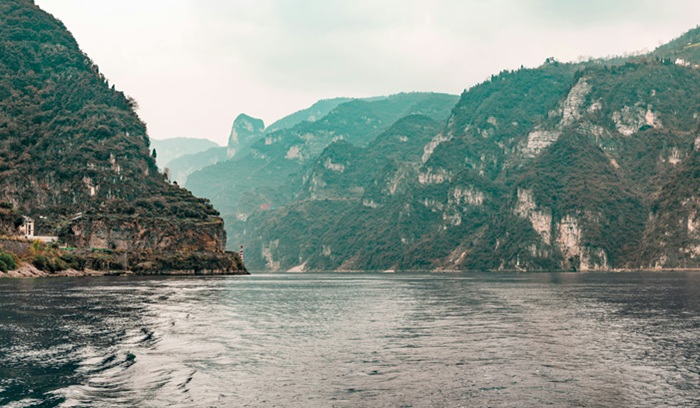
Aerial view of a free-flowing river winding through green hills for an article about Yangtze River restoration

China tears out 300 dams on a Yangtze tributary to bring back endangered fish

Yangtze River restoration is advancing through one of the largest dam removal efforts in history, with China demolishing more than 300 dams and shutting down 342 small hydropower stations along the Chishui River. Critically endangered Yangtze sturgeon, a species that has survived for 140 million years, are already returning to previously blocked spawning grounds. Combined with a decade-long fishing ban imposed in 2020, the coordinated effort is producing measurable ecological recovery within years. The project adds significant momentum to a global dam removal movement and demonstrates that political will can reverse decades of river degradation at scale.